

Comprehensive Guide to LED Display Technology: Engineering, Manufacturing, and Industry Standards
In the rapidly evolving field of display technology, Light Emitting Diode (LED) displays have emerged as a dominant solution across diverse applications ranging from consumer electronics to large-scale outdoor advertising and industrial control systems. As a professional LED display engineer, I aim to provide a detailed and authoritative explanation of the engineering principles, manufacturing process, technical parameters, industry standards, and practical insights that define modern LED display technology. This comprehensive guide serves international audiences interested in understanding how LED display solutions are developed, optimized, and deployed effectively.
1. Introduction to LED Display Technology
LED displays utilize semiconductor diodes that emit light when electrically biased in the forward direction. The core of LED technology is the ability to generate high brightness, vibrant color outputs with remarkable energy efficiency and wide viewing angles. Compared to traditional LCD or plasma displays, LEDs offer faster response times, superior scalability, and expansive color gamuts.
The commercial LED display market primarily divides into two major categories: LED LCD backlighting used in televisions and monitors, and direct-view LED displays composed of arrays of individual LEDs used for video walls, billboards, and informational signage.
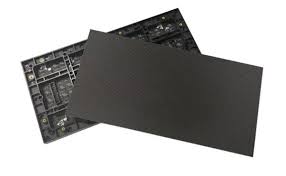
2. LED Display Engineering Fundamentals
A typical direct-view LED display panel consists of several key components:
- LED Chips: The fundamental light source which can be monochromatic or RGB (Red, Green, Blue) triads to produce full-color images.
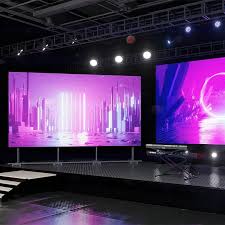
- LED Package and Encapsulation: Protects LEDs and shapes the emitted light. Modern packages often use phosphor coatings for white light conversion.
- Driving Circuits: Include constant current drivers that control brightness, color, and power efficiency.
- Control Systems: Advanced FPGA or microcontroller-based systems convert image data into control signals for pixel modulation.
The display’s pixel pitch (distance between adjacent LED pixels) is the primary determinant of resolution and viewing distance. Typical pixel pitches range from 0.7mm for ultra-fine indoor screens to over 10mm for large outdoor billboards. Smaller pixel pitches provide finer detail but are costlier and require more complex manufacturing.
3. Manufacturing Processes and Quality Control
Manufacturing LED displays involves tightly controlled processes that guarantee performance, reliability, and longevity:
- LED Chip Fabrication: Based on gallium nitride (GaN) or gallium arsenide (GaAs) semiconductors grown through Metal-Organic Chemical Vapor Deposition (MOCVD).
- Die Bonding and Wire Bonding: Attaching the LED chip to the package substrate and creating electrical connections.
- Encapsulation and Lens Formation: To optimize brightness distribution and influence viewing angles.
- PCB and Module Assembly: Integrating LEDs on printed circuit boards arranged into modules.
- Calibration and Testing: Pixel color calibration (using spectroradiometers), brightness uniformity tests, and environmental stress tests (humidity, temperature cycling, vibration).
Industry-leading manufacturers employ Six Sigma methodologies and ISO 9001 certified processes to minimize defects and maximize yield.
4. Technical Parameters Critical for LED Displays
- Luminance (Brightness): Measured in candela per square meter (cd/m²). Typical indoor LED displays operate at 800-1,500 cd/m², while outdoor screens may exceed 5,000 cd/m² to combat ambient sunlight.
- Contrast Ratio: Ratio between the luminance of the brightest white and the darkest black. High contrast ensures image clarity, often exceeding 5000:1 in premium LED displays.
- Color Gamut and Accuracy: Expressed in CIE 1931 or CIE 1976 chromaticity diagrams; modern RGB LED displays can cover 90-98% of the DCI-P3 or Rec. 2020 color spaces, critical for cinema and broadcast.
- Viewing Angle: Often ±160 degrees horizontally and vertically for uniform brightness and color.
- Refresh Rate: High refresh rates (≥1920 Hz) minimize flicker and motion artifacts, important for live events and broadcast.
5. Industry Standards and Compliance
International standards guide LED display manufacturing and deployment:
- IEC 62471 (Photobiological Safety): Ensures LED emissions are safe for human eyes.
- UL Certification: Electrical safety standards applicable especially for indoor product installations.
- RoHS Compliance: Restricts hazardous substances in electronic components.
- Energy Star: Increasingly adopted to guarantee energy efficiency.
- IP Ratings (Ingress Protection): For outdoor displays, IP65 or higher ensures protection from dust and water jets.
Compliance with these standards not only ensures safety and durability but also facilitates global market acceptance.
6. Case Studies in LED Display Engineering
- Times Square Billboard Upgrade (2023): A 1,500 m² direct-view LED display featuring 2.5mm pixel pitch and 6,000 cd/m² brightness was installed, utilizing highly sophisticated thermal management and custom FPGA control for synchronized video playback spanning multiple modules.
- Indoor Retail Display Solutions in Europe: Manufacturers succeeded in delivering cost-effective 0.9mm pitch direct-view LED panels with ultra-low latency (less than 2ms), optimized for augmented reality applications.
- Sports Stadium Large Scale Displays: Innovatively combined HDR (High Dynamic Range) LED technology with dynamic calibration via embedded sensors to maintain uniform display quality under varying sunlight conditions.
7. Future Trends and Innovations
The LED display industry continues to push boundaries through several technological innovations:
- MicroLED Displays: Featuring micrometer-scale LEDs integrated at the wafer level, promising unprecedented pixel density and energy efficiency.
- Flexible and Transparent LED Panels: Emerging materials and encapsulation methods allow displays on curved surfaces and glass, expanding design possibilities.
- AI-Driven Calibration and Maintenance: Leveraging machine learning to detect and automatically correct pixel anomalies in real-time.
- Quantum Dot Enhancement: Enhancing brightness and color accuracy by integrating quantum dot films with LED systems.
These advancements indicate a future where LED displays become more immersive, energy-efficient, and seamlessly integrated into diverse environments.
8. Practical Recommendations for Engineering and Deployment
For engineers working on LED display projects, several practical pointers ensure successful outcomes:
- Thermal Management: High-brightness LEDs generate heat that must be dissipated via heat sinks or active cooling to maintain performance and lifespan.
- Modular Design: Facilitates maintenance, scalability, and reconfiguration of large displays.
- Environmental Considerations: Selecting appropriate LEDs and protective coatings based on location (indoor / outdoor / high humidity) is essential.
- Quality Assurance: Emphasize end-to-end testing and certification processes to minimize failure rates in field conditions.
- Integration with Signal Processing: Optimize source signal compatibility to minimize latency and image distortion.
Conclusion
LED display technology represents a vital frontier in visual communications, underpinned by sophisticated engineering, advanced manufacturing, and rigorous international standards. Understanding the interplay of component-level details, system integration, and environmental factors is essential for engineering robust, visually stunning, and reliable LED display solutions. With ongoing innovations like MicroLED and AI-enabled management, the industry is poised for continued growth and exciting new applications in the years to come.
References
- International Electrotechnical Commission (IEC) 62471 Photobiological Safety Standard
- Society for Information Display (SID) Reports on Display Technologies
- UL Standards for Electrical Safety in Digital Signage
- Market Analysis Reports from DisplaySearch and TrendForce (2024)
- IEEE Transactions on Semiconductor Manufacturing
- Case studies from Daktronics, Leyard, and Samsung Display.













