

Cutting-Edge Advances and Best Practices in LED Display Manufacturing: A Professional Guide
In the realm of modern visualization technologies, LED displays have emerged as the cornerstone for a broad spectrum of applications, ranging from large-scale outdoor advertising to precise indoor informational systems and cutting-edge broadcast studios. With over a decade of experience in LED display engineering and manufacturing, this article delves into the critical technical parameters, advances, and best practices that define the industry's current and future landscape.
Understanding LED Display Technologies
LED displays primarily utilize Light Emitting Diodes to render crisp imagery by controlling thousands to millions of pixels efficiently. These pixels are arranged in modules, typically featuring RGB (Red-Green-Blue) subpixels, which combine to produce a full color spectrum. The core performance metrics influencing display quality include pixel pitch, brightness, refresh rate, color accuracy, viewing angle, and lifespan.
- Pixel Pitch: Defined as the distance between the centers of two adjacent pixels, pixel pitch is a fundamental determinant of resolution and viewing distance. For indoor applications, pixel pitches under 2.5mm (e.g., 1.9mm or 1.5mm) enable high-resolution, close-up viewing, while outdoor displays often utilize larger pitches (4mm to 20mm or more) to optimize visibility over extended distances and reduce pixel count requirements, thus decreasing costs.
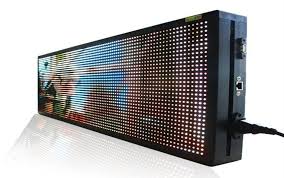
- Brightness: Measured in nits (cd/m²), typical outdoor LED displays operate between 5000 to 7000 nits to counteract sunlight, whereas indoor screens generally require 800 to 1500 nits for comfortable visibility without glare or eye fatigue. Advanced sensors can dynamically adjust brightness levels to ambient light conditions, improving energy efficiency and prolonging LED lifespan.
- Refresh Rate: A higher refresh rate (at least 1920 Hz for professional applications) is essential to avoid flickering during video capture, ensuring compatibility with broadcast standards and delivering smooth motion reproduction. This parameter is especially critical in media and studio environments.
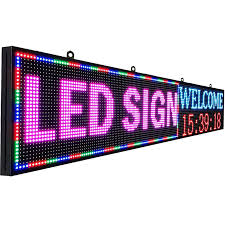
- Color Accuracy and Calibration: Achieving industry standards such as Rec. 709 (HDTV), DCI-P3 (digital cinema), and even Rec. 2020 (UHDTV) requires precise calibration at the factory and periodically on-site. Sophisticated calibration systems measure color temperature, gray scale, and gamma curves to maintain uniformity and vibrancy over time.
- Viewing Angle: A wide viewing angle of at least 140 degrees horizontal and vertical ensures consistent image quality from diverse audience positions, imperative for public displays and event venues.
- Lifespan and Reliability: High-quality LED displays are rated to operate consistently for 100,000 hours or more, often ensured by robust heat dissipation systems such as aluminum backplanes and airflow designs, which prevent thermal degradation.
Material and Manufacturing Insights
Modern LED modules incorporate SMD (Surface-Mounted Device) LEDs, notably SMD 2121, 1515, or 1010 packages, chosen for optimal balance between pixel density and brightness. The manufacturing process leverages precision pick-and-place machines, reflow soldering, and automated optical inspection (AOI) to guarantee quality and consistency.
Integration of Control Systems
Control technologies have evolved from analog drivers to complex digital processing units capable of handling frame buffering, error correction, and signal synchronization. Industry leaders employ synchronization protocols such as HDMI 2.0, DisplayPort, and proprietary fiber-optic controls for large-scale video walls, ensuring latency-free, seamless displays.
Industry Standards and Certifications
Compliance with IEC 62087 (Measurement methods for power consumption of audio, video, and related equipment), IEC 60598 (luminaires safety), and EMC standards ensure safety and electromagnetic compatibility. Furthermore, certifications like CE, FCC, UL, and RoHS underline product safety, energy efficiency, and environmental responsibility, increasingly important in international markets.
Case Studies and Applications
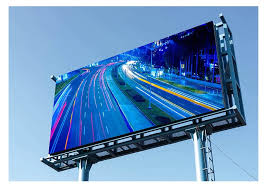
One notable application is a stadium video display system implemented using 4mm pixel pitch LED panels, achieving a brightness of 6000 nits and refresh rates exceeding 3840 Hz to maintain broadcast-grade image quality. Incorporating an advanced cooling structure and redundancy modules, the system has operated uninterrupted through multiple seasons, exemplifying engineering robustness.
Future Trends
Emerging trends include the integration of MicroLED technology, which promises higher brightness and energy efficiency, alongside mini-LED backlighting improving LCD displays. Additionally, AI-driven calibration and diagnostics streamline maintenance workflows. Flexible and transparent LED displays are opening new possibilities in architecture and retail.
Conclusion
The professional LED display manufacturing sector demands an intricate balance of precision engineering, compliance with stringent standards, and adaptability to application-specific requirements. Continuous innovation in LED chip technology, control systems, and materials science, combined with rigorous quality assurance, drives the creation of displays that deliver exceptional, reliable visual experiences worldwide. Manufacturers, engineers, and stakeholders must prioritize these technical parameters and industry best practices to maintain competitiveness and fulfill evolving market demands.













