

Advanced Insights into LED LCD Screen Manufacturing: Technical Parameters and Industry Best Practices
In the rapidly evolving display technology landscape, LED LCD screens have established themselves as the dominant technology for a broad spectrum of applications, from consumer electronics to large-format commercial displays. Understanding the manufacturing intricacies, technical parameters, and quality standards of LED LCD screens is fundamental for engineers and manufacturers aiming to deliver superior image quality, long-term reliability, and cost efficiency.
Fundamentals of LED LCD Screen Technology
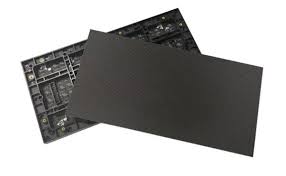
An LED LCD screen combines the principles of Liquid Crystal Display (LCD) technology with Light Emitting Diode (LED) backlighting. Unlike traditional Cold Cathode Fluorescent Lamp (CCFL) backlighting, LED backlighting delivers higher brightness, improved energy efficiency, and superior color gamut. Key components include:
- Liquid Crystal Panel: The heart of the display, controlling light modulation via liquid crystals aligned between polarizing filters.
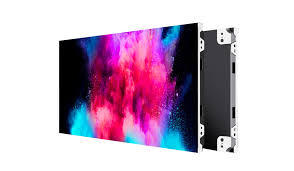
- LED Backlight Unit (BLU): Typically arranged as edge-lit or direct-lit arrays, responsible for illuminating the LCD panel.
- Driver ICs: Controlling pixel addressing and backlight intensity to optimize display performance.
Technical Parameters and Industry Standards
Several critical technical parameters define LED LCD display quality:
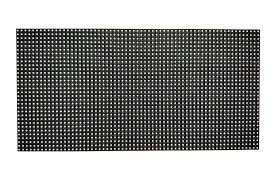
- Resolution & Pixel Density: Standard Full HD (1920x1080) remains prevalent, but 4K UHD (3840x2160) and even 8K resolutions are becoming more common in premium devices. Pixel density (PPI) typically ranges from 100 to 300+ depending on application, impacting sharpness.
- Brightness: LED-backlit LCD panels commonly achieve brightness from 250 cd/m² (standard monitors) to over 1000 cd/m² in high-end commercial displays. This complies with ISO 9241-307 for luminance measurement, ensuring visibility in various ambient lighting.
- Contrast Ratio: Real contrast ratios of 1000:1 are standard, with dynamic contrast techniques pushing this higher. OLEDs outperform here, but LED LCDs maintain advantages in cost and lifespan.
- Color Gamut & Accuracy: LED backlighting enables wide color gamuts such as NTSC 72% or DCI-P3 90%, crucial for media production and medical visualization, adhering to standards like sRGB IEC 61966-2-1.
- Response Time and Refresh Rate: Typical response times range from 5ms to 12ms; refresh rates span from 60Hz in consumer devices to 120Hz+ for gaming and professional use, ensuring motion clarity.
- Viewing Angles: IPS (In-Plane Switching) LCD panels offer wide viewing angles of ±85° horizontally and vertically, improving image consistency.
Manufacturing Techniques and Quality Control
High yield and reliable LED LCD panel production hinges on sophisticated manufacturing processes:
- Cleanroom Assembly: Class 1000 or better cleanroom environments reduce particulate contamination that can cause defects such as mura (uneven brightness).
- Thin-Film Transistor (TFT) Fabrication: Using amorphous or low-temperature polysilicon TFTs, depending on performance needs, controlling pixel switching speed and leakage current.
- LED Backlight Arrangement: Edge-lit designs are thinner and more cost-effective; direct-lit and full-array implementations enable local dimming for enhanced contrast.
- Integration of Optical Films: Layers such as brightness enhancement films (BEF), diffuser sheets, and polarizers optimize light uniformity and viewing comfort.
- Automated Optical Inspection (AOI): Industry leading manufacturers employ AOI systems combined with machine learning for early defect detection and classification, improving yield and reducing warranty costs.
Energy Efficiency and Sustainability Considerations
Energy consumption is a critical consideration. Modern LED LCD screens incorporate:
- Low-Power LED Chips: Utilizing GaN-based LEDs with high luminous efficacy (~150 lm/W as per data from the International Electrotechnical Commission IEC 62717).
- Dynamic Backlight Control: Adjusting backlight intensity dynamically based on image content to reduce power draw.
- Eco-Friendly Material Selection: Following RoHS (Restriction of Hazardous Substances Directive) mandates and exploring recyclable components.
Case Studies Highlighting Industry Best Practices
A notable example includes Samsung Display’s QLED line, which integrates quantum dot-enhanced LED backlighting to approach OLED-level color accuracy while leveraging LCD durability and longer lifespan. They employ stringent quality assurance protocols aligned with ISO 9001 standards, emphasizing pixel uniformity and backlight longevity, enabling minimum lifespan expectations around 100,000 hours.
Similarly, LG’s IPS LCD manufacturing employs advanced oxide TFT technology, enabling ultra-high resolution 8K panels with enhanced energy efficiency and consistent viewing angles, targeting professional monitors and premium TVs.
Future Trends and Challenges
Despite their maturity, LED LCD screens continuously evolve:
- Mini-LED and Micro-LED Backlighting: Enabling thousands of local dimming zones, drastically improving contrast and HDR performance.
- Flexible and Transparent LCDs: Pushing boundaries in design applications.
- Integration with AI: For real-time calibration optimizing color accuracy and screen uniformity.
Challenges such as mura effect, pixel failure rates, and thermal management remain focal points, driving ongoing innovation in materials science and fabrication techniques.
Conclusion
Through rigorous control of manufacturing processes, adherence to international standards, and incorporation of cutting-edge materials and technologies, LED LCD screens continue to dominate the market with significant advantages in cost, brightness, lifespan, and manufacturability. Industry professionals and stakeholders benefit greatly by understanding these technical parameters deeply and continuously improving their manufacturing approaches to meet increasing demands for image quality and sustainability.
By adhering to established industry standards like ISO 9241-307, IEC 62717, RoHS, and ISO 9001, manufacturers ensure products' reliability and environmental compliance while pushing technological frontiers with evolving LED LCD applications.













