

Advancements and Best Practices in LED Display Manufacturing: Technical Insights and Industry Standards
In the rapidly evolving field of display technology, LED (Light Emitting Diode) displays have become the cornerstone for a broad spectrum of applications—from commercial advertising and stadium screens to indoor digital signage and high-definition television panels. As a professional with extensive experience in LED LCD manufacturing, this article dives deep into the critical technical parameters, contemporary manufacturing methodologies, and international standards that define quality and performance excellence.
LED displays are favored for their superior brightness, wide viewing angles, color accuracy, and energy efficiency. To engineer an LED screen meeting stringent performance benchmarks, manufacturers must consider pixel pitch, refresh rate, brightness levels, color gamut, and durability factors. Pixel pitch, defined as the distance between adjacent LED pixels, directly influences resolution and viewing distance. For indoor LED displays, a pixel pitch between 1.2 mm and 2.5 mm is typical, resulting in high-resolution images suitable for close proximity viewing. Conversely, outdoor displays often utilize a pitch range of 4 mm to 10 mm to accommodate longer viewing distances while maintaining cost-effectiveness.
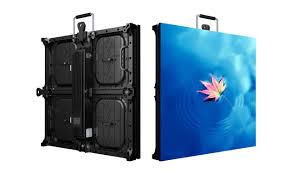
Brightness is another paramount parameter. Outdoor LED displays require luminance levels of at least 5,000 nits to maintain visibility under direct sunlight, whereas indoor displays generally operate efficiently around 800 to 1,200 nits. The International Electrotechnical Commission (IEC) standards, particularly IEC 62717, outline testing procedures for LED module performance, including brightness decay and color stability, encouraging manufacturers to ensure the long-term reliability of their products.
Color reproduction hinges on the LED’s color gamut and calibration. High-quality displays leverage SMD (Surface-Mounted Device) LEDs capable of achieving NTSC color spaces above 70%, which ensures vivid and accurate color representation. Additionally, calibration using colorimeters and integration with video processors aids in maintaining uniformity across large display arrays.
Manufacturing techniques have witnessed significant improvements through automation and precision assembly processes. SMT placement machines with accuracy within ±0.02 mm allow for densely packed LED chips, vital for fine-pitch displays. Thermal management is equally critical; effective heat dissipation strategies such as incorporating aluminum substrates, heat sinks, and active cooling mechanisms prevent performance degradation and extend module lifespan.
Addressing reliability, components must meet the IP65 rating or higher for outdoor usage, ensuring resistance to dust and water ingress. Rigorous environmental testing, including UV resistance, humidity, and temperature cycling, is conducted in compliance with standards like ISO 9001 and IPC-A-610 to certify that products withstand real-world conditions without compromise.
On the control system front, advanced driving ICs (Integrated Circuits) such as the MBI series and NovaStar controllers enable higher refresh rates (above 3,840 Hz), critical for flicker-free video playback and compatibility with high-speed cameras used in broadcast environments.
Sustainability considerations are taking center stage, with manufacturers adopting lead-free soldering, recyclable materials, and energy-efficient designs aligned with RoHS and WEEE directives, reflecting the industry’s commitment to environmental stewardship.
In summary, excellence in LED display manufacturing emerges from a meticulous balance of precise engineering specifications, adherence to international standards, and continuous innovation in materials and processes. This blend ensures that LED displays deliver exceptional visual experiences, durability, and operational efficiency across diverse applications.













