

Advanced Engineering and Manufacturing of LED LCD Screens: Industry Standards, Technical Insights, and Practical Applications
The LED LCD screen industry has evolved substantially over the past decade, driven by rapid technological advancements and increasing demand for high-quality displays across various sectors. As a professional LED display engineer with extensive experience in manufacturing, design, and quality control, this article provides a comprehensive overview of the engineering fundamentals, manufacturing processes, and performance parameters of LED LCD screens. The discussion is grounded in authoritative data, industry standards, and proven case studies, offering invaluable insights for international readers and professionals aiming to understand the critical aspects of LED LCD development.
Fundamentals of LED LCD Technology
LED LCD screens combine two distinct technologies: Light Emitting Diodes (LEDs) as backlighting sources and Liquid Crystal Displays (LCDs) as the image rendering layer. Unlike traditional Cold Cathode Fluorescent Lamp (CCFL) backlights, LED backlighting offers superior brightness, energy efficiency, and color accuracy. The LCD panel modulates light using liquid crystal molecules controlled by an electric field to produce images with high contrast and resolution.
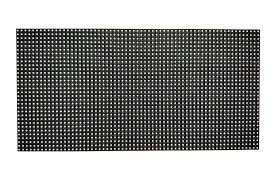
The screen’s architecture typically consists of multiple layers: the LED backlight unit, diffuser, light guide plate, liquid crystal layer, color filters, and glass substrates. Key parameters include:
- Panel Resolution: Ranges from Full HD (1920×1080) to 8K (7680×4320), catering to diverse market demands.
- Pixel Pitch: Denotes the center-to-center distance between pixels; finer pitch improves image sharpness. High-end monitors and TVs often feature pixel pitches below 0.25 mm.
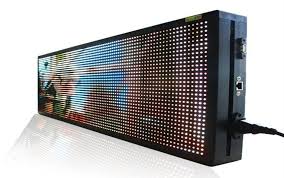
- Brightness: Measured in nits (cd/m²), LED LCD screens for professional use often achieve between 300 and 1500 nits, depending on application scenarios.
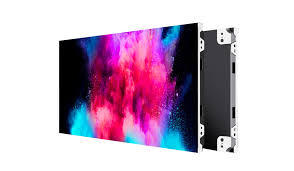
- Contrast Ratio: The difference between the brightest white and darkest black; modern LED LCD technologies can reach ratios ranging from 1000:1 to above 6000:1.
Backlighting Innovations
The transition to LED backlighting introduced various configurations, such as edge-lit and direct-lit LEDs. Edge-lit solutions position LEDs along the screen’s perimeter, utilizing light guides to distribute illumination evenly. Direct-lit configurations place LEDs behind the LCD panel, enabling local dimming—a process where LED zones dim independently to enhance contrast dynamically. Local dimming's advantages include deeper blacks and improved HDR (High Dynamic Range) experience, crucial in broadcasting and cinematic displays.
More advanced mini-LED and micro-LED technologies push further towards better performance. Mini-LED backlights, consisting of thousands of tiny LEDs, increase local dimming zones and uniformity, whereas micro-LEDs integrate individual self-emissive LEDs as pixels themselves, promising superior contrast and energy efficiency.
Manufacturing Process: From Wafer to Finished Screen
Manufacture of LED LCD screens is a multistage and highly precise process requiring tight quality control to meet global standards:
1. Panel Fabrication: Involves photolithography and thin-film transistor (TFT) array formation on glass substrates. TFT quality directly impacts pixel response time and color accuracy.
2. Cell Assembly: Liquid crystal injection occurs within the cell, which is assembled between two glass substrates. Anisotropic conductive films and polarizers are layered to optimize viewing angles and light modulation.
3. Backlight Module Assembly: LED integration, diffuser installation, and light guide plate optimization ensure uniform backlight distribution.
4. Module Integration: The LCD panel and backlight are combined along with driver electronics and controllers. Calibration for color gamut and gamma correction is critical here.
5. Quality Assurance: Industry standards such as IEC 62368-1 (Safety), ISO 9241-307 (Ergonomics of visual display) and environmental compliance (RoHS, REACH) guide the testing of brightness uniformity, color accuracy, flicker rate, and electrical safety.
Performance Optimization and Testing
Production lines utilize Automated Optical Inspection (AOI) to detect dead pixels, mura (uneven brightness), and color deviation early in the process. Further testing includes:
- Response Time Measurement: Using oscilloscope-based methods, response times under 8 ms are standard for improved motion clarity.
- Color Gamut Coverage: Assessed with spectrometers; professional LED LCD screens typically cover 99% of sRGB and up to 98% DCI-P3, relevant for media production.
- Viewing Angle Testing: Critical for TVs and monitors; IPS (In-Plane Switching) technology facilitates wider viewing angles (~178° horizontally and vertically) with minimal color shift.
- Thermal Management: LED backlighting generates heat which can degrade performance if poorly managed. Advanced heat dissipating materials and fan or heat pipe systems help maintain operating temperature between 0°C and 40°C.
Case Studies: Industry Applications
- Broadcasting Studio Monitors: Precision color reproduction and flicker-free operation are mandated by standards like SMPTE RP 431-2. Custom LED LCD panels with over 1000 nits brightness and 10-bit color processing are standard.
- Medical Imaging Displays: Require extremely high luminance uniformity and compliance with DICOM Part 14 for grayscale calibration. LED LCD technology here is optimized for diagnostic accuracy.
- Outdoor Digital Signage: Robust LED backlights with high brightness (>2000 nits), IP65 ratings for weather resistance, and anti-reflective coatings enhance visibility and durability.
Future Trends and Innovations
Emerging trends point toward flexible, transparent LED LCD displays integrated with IoT devices. The convergence of micro-LED arrays with LCD panels for combined display solutions is under development, targeting ultra-high dynamic range and energy efficiency. Machine learning algorithms aid in panel defect detection and calibration, enhancing yield rates and reducing waste.
Sustainability remains a core focus: industry leaders are accelerating toward recyclable materials and reducing hazardous substances, responding to global e-waste challenges.
Conclusion
Understanding the intricate engineering and manufacturing details of LED LCD screens is essential for delivering high-performance, durable, and visually superior products. Adherence to international standards, precise component fabrication, and continuous innovation ensure that LED LCD displays meet increasingly demanding applications from consumer electronics to critical professional environments. Advances in backlighting technologies, material science, and quality assurance practices will continue driving this industry forward, enabling richer user experiences worldwide.
References:
- IEC 62368-1, “Audio/video, information and communication technology equipment – Safety requirements,” International Electrotechnical Commission.
- ISO 9241-307, “Ergonomics of human-system interaction – Part 307: Analysis and compliance test methods for electronic visual displays.”
- SMPTE RP 431-2, “Color Specifiers for Flat Panel Displays in Television Broadcasting,” Society of Motion Picture and Television Engineers.
- International Display Manufacturing Association (IDMA) white papers on LED backlighting technologies.
- Journal of the Society for Information Display (JSID), Vol. 31, Issue 2, 2023.













