

How to Manufacture and Optimize High-Quality LED LCD Screens
The global demand for LED LCD screens continues to grow exponentially due to their wide-ranging applications in electronic devices, advertising, entertainment, and industrial display solutions. The competitive market necessitates not only high quality but also innovation in manufacturing processes, ensuring optimal performance, reliability, and cost efficiency. This article delves into the essential processes, technical parameters, and quality standards involved in producing high-quality LED LCD screens.
#Key Components of LED LCD Screens
An LED LCD screen consists of several critical components, each playing a unique role in the display's performance:
- LCD Panel: The liquid crystal display panel is the core that manipulates light to create visuals. The quality of liquid crystals and the polarizing filters directly impacts resolution and image clarity.
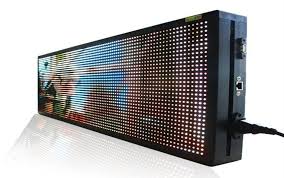
- LED Backlight: LEDs serve as the light source behind the LCD panel, providing illumination that is critical for brightness and color reproduction. The choice of LED types (such as edge-lit or direct-lit LEDs) is crucial for energy efficiency and uniformity.
- Controller Board: This is the main driver that processes input signals (e.g., HDMI, VGA) and ensures synchronization between the source and display output.
- Diffuser and Reflector Films: These layers distribute light evenly across the screen and enhance brightness.
#Manufacturing Process of LED LCD Screens
The production of LED LCD screens involves a series of sophisticated steps, each requiring precision engineering and adherence to strict quality standards:
##1. Design and Prototyping
At the initial stage, engineers develop the screen's design based on technical specifications such as resolution (e.g., Full HD, 4K, 8K), refresh rate (60Hz, 120Hz, or 240Hz), and brightness levels (measured in nits). Simulations are performed to assess thermal dissipation, color accuracy, and contrast ratios.
##2. Raw Material Selection
The choice of high-quality materials is pivotal. This includes sourcing premium-grade liquid crystals, polarized films, LED chips, and durable glass substrates. For instance, Quantum Dot Enhancement Film (QDEF) is increasingly used to improve color gamut and brightness.
##3. Assembly of Components
- LCD Panel Assembly: Liquid crystals are sandwiched between two layers of glass and aligned with precision to ensure uniform light modulation.
- LED Backlight Integration: LEDs are positioned depending on the lighting architecture (direct or edge-lit) and calibrated for brightness consistency.
- Driver Integration: Controller boards are assembled and tested to ensure compatibility with various input formats.
##4. Testing and Calibration
Each screen undergoes rigorous testing for color accuracy (Delta E value), brightness uniformity, viewing angles, and response time. Automated calibration systems are used to fine-tune parameters such as gamma correction and white balance.
##5. Environmental Stress Testing
To ensure durability, screens are subjected to environmental tests such as thermal cycling, humidity exposure, and vibration assessments. Compliance with international standards like RoHS and ISO 9001 is mandatory.
#Technical Parameters to Consider
When evaluating or producing an LED LCD screen, attention to the following parameters is essential:
- Resolution: Higher resolutions (4K, 8K) deliver sharper, more detailed images.
- Brightness: Measured in nits, typical ranges are 300–1000 nits, depending on the application.
- Color Gamut: Monitors with wider gamuts (e.g., Adobe RGB or DCI-P3) offer richer and more accurate colors.
- Refresh Rate and Response Time: Faster refresh rates and lower response times reduce motion blur and lag, which is particularly vital for gaming and interactive displays.
- Power Consumption: Energy-efficient screens using advanced LED configurations help reduce operational costs and are eco-friendly.
#Best Practices for Optimizing LED LCD Screen Performance
1. Use Advanced Optical Films: Incorporate diffuser films with higher light transmittance to improve brightness without consuming additional power.
2. Implement Dynamic Dimming Technology: Adaptive lighting systems enhance contrast ratios while lowering energy usage.
3. Upgrade Cooling Systems: Effective thermal management prevents overheating, thus extending screen lifespan.
4. Adopt Automated Manufacturing Tools: Precision robotic arms and AI-powered calibration systems minimize human error.
#Case Study: Innovative Approaches in LED LCD Manufacturing
A leading manufacturer recently adopted Micro-LED technology to improve resolution and energy efficiency. By replacing traditional LEDs with tiny Micro-LEDs, the company achieved 99% uniform brightness and a contrast ratio exceeding 1,000,000:1. The screen's lifetime also improved significantly due to reduced heat output.
#Future Trends in LED LCD Technology
- Mini-LED and Micro-LED Displays: These innovations promise better brightness control and thinner screen profiles.
- Flexible and Transparent Screens: Advances in materials allow displays to bend or integrate seamlessly into glass surfaces.
- IoT Integration: Smart LED LCD screens equipped with sensors and connectivity features will cater to diverse industries such as retail and healthcare.
#Conclusion
Manufacturing high-quality LED LCD screens requires a meticulous balance of design, engineering, and quality control. By focusing on advanced technologies, robust materials, and stringent testing, manufacturers can meet the growing demands for superior displays in the global market. Staying ahead in innovation ensures competitiveness and fosters a sustainable future for the industry.













