

Advancements and Technical Insights in LED Display Manufacturing for Enhanced Visual Performance
The LED display industry has witnessed significant evolution over the past decade, driven by advancements in technology, increased demand for high-resolution visuals, and the need for energy-efficient solutions. As a professional LED display engineer with extensive experience in LED LCD manufacturing, this article aims to provide a comprehensive overview of key technological innovations, manufacturing processes, and critical parameters necessary for producing high-quality LED displays that meet international standards.
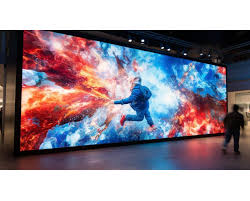
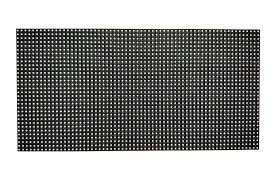
One of the foremost trends in LED display manufacturing is the transition towards finer pixel pitches, enhancing the resolution and image clarity for close viewing distance applications. Typical pixel pitches have reduced from 10mm a few years ago to below 1mm in ultra-fine pitch displays. According to the Society for Information Display (SID), pixel pitch smaller than 1mm is classified as fine-pitch LED, enabling resolutions surpassing 4K on relatively small panel sizes, which benefits control rooms, broadcasting environments, and retail displays.
From a technical perspective, the selection of LED dies with consistent brightness and chromaticity is crucial for uniform display performance. SMD (Surface Mounted Device) LEDs remain the industry standard for indoor LED screens due to their reliability and ease of assembly on PCBs. Advancements in mini-LED technology, which integrates thousands of tiny LEDs for backlighting, contribute further to higher contrast ratios and improved HDR (High Dynamic Range) performance in LCD panels.
Manufacturing LED displays involves precise processes including PCB design, LED binning, pick-and-place machine programming, and rigorous quality control testing. Binning is particularly important: LEDs are sorted by luminous intensity and color temperature to ensure homogeneity across the panel. Luminance consistency within ±5% and chromaticity variation under Δu'v' = 0.01 are typical standards adhered to during production, conforming with International Commission on Illumination (CIE) guidelines.
Thermal management is another vital facet, as LED lifetime and color stability degrade with elevated temperatures. Manufacturers employ aluminum PCBs and often integrate active cooling solutions to maintain optimal junction temperatures, typically below 85°C. A well-designed heat dissipation system ensures both longevity—often exceeding 100,000 hours of operation—and stable visual performance.
In terms of image processing, the use of advanced IC drivers and processing chips enhances refresh rates and grayscale capability. High refresh rates, above 3840Hz, eliminate flicker in video applications and enable smooth motion visualization. Grayscale levels reaching 14 bits per color channel support rich color gradation, meeting the demands of broadcasting and cinema environments.
Environmental regulations and sustainability considerations are increasingly impacting LED display production. Manufacturers follow RoHS (Restriction of Hazardous Substances) directives to limit the presence of lead and mercury in components. Additionally, energy efficiency standards such as ENERGY STAR encourage the development of displays with reduced power consumption. Typical power usage for an indoor LED display panel ranges between 350 to 500 watts per square meter, with newer models achieving greater efficiency through improved LED efficacy.
Case studies demonstrate that integration of these technologies significantly benefits various sectors. For instance, a leading global sports venue installed a fine-pitch LED display with a 0.9mm pixel pitch, achieving exceptional image clarity even from close spectator distances. Additionally, automotive head-up displays (HUDs) leverage micro-LED modules for high brightness and long-term durability under variable temperature conditions.
In summation, LED display manufacturing today embodies a fusion of precision engineering, material science, and advanced electronics to deliver superior visual experiences. Adherence to international standards, stringent quality control measures, and continuous technological innovation are essential to producing LED displays capable of fulfilling the growing expectations of global end-users.
Key Technical Parameters Summary:
- Pixel pitch: 0.5mm to 10mm depending on application
- LED binning consistency: ±5% luminance, Δu'v'< 0.01 chromaticity
- Refresh rate: ≥3840Hz optimal for flicker-free displays
- Grayscale depth: 14 bits per channel
- Operating temperature: LED junction< 85°C
- Lifetime: >100,000 hours
- Power consumption: 350-500W/m²
- Compliance: RoHS, ENERGY STAR
By staying abreast of emerging technologies such as micro-LED, mini-LED, and integrating sophisticated manufacturing protocols, the industry continues to push the boundaries of visual display performance, ensuring clarity, reliability, and sustainability.













