

LED Display Technology: Advancements, Technical Specifications, and Industry Applications
The LED display industry has witnessed remarkable advancements over the past decade, transforming the way information is presented in commercial, industrial, and entertainment sectors. As an experienced LED display engineer, I will delve into the technical nuances, performance parameters, and application contexts that define modern LED displays. This article aims to provide a comprehensive yet practical overview tailored for international professionals and enthusiasts, aligned with global standards and best practices.
Introduction
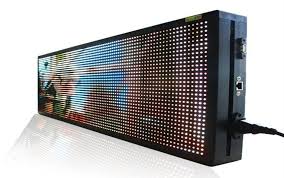
Light Emitting Diode (LED) display technology represents one of the most efficient and versatile mediums for visual communication. Unlike traditional LCDs or plasma displays, LED displays utilize discrete light-emitting diodes as pixels, offering superior brightness, contrast, and durability. Their scalability—ranging from small indoor panels to massive outdoor billboards—makes them indispensable in advertising, sports venues, public transportation, and control centers.
Technical Specifications and Performance Parameters
Understanding the core technical parameters is essential for selecting, designing, or maintaining LED displays:
- Pixel Pitch: The distance between adjacent LED pixels, typically measured in millimeters. Lower pitch (e.g., 1.2mm to 2.5mm) indicates higher resolution suitable for indoor applications, while higher pitch (≥10mm) is typical for outdoor displays where viewing distances are greater. According to IEC 63176 standards, pixel pitch influences viewing distance, resolution, and overall visual acuity.
- Brightness: Measured in nits (candela per square meter), LED displays boast exceptionally high brightness, ranging from 800 nits (indoor) to over 5,000 nits (outdoor). This wide luminance range ensures visibility in varied ambient lighting, from dim conference rooms to direct sunlight exposure (IEC 62601 outlines brightness measurement protocols).
- Refresh Rate: Critical for smooth motion reproduction, modern LED displays feature refresh rates of 1920Hz or higher, minimizing flicker especially during video capture or broadcast. High refresh rates ensure professional-grade performance for live events and sports broadcasting.
- Color Accuracy: Defined by color gamut (percentage of sRGB or Rec. 709) and color uniformity, advanced panels achieve over 90% sRGB coverage and precise color balance through 16-bit grayscale per color channel, yielding rich and vibrant imagery. Compliance with standards such as Rec. 2020 enables exceptional color fidelity.
- Viewing Angle: Typically, LED modules offer horizontal and vertical viewing angles up to 140° or more, minimizing image distortion and color shift from off-axis perspectives.
- Power Consumption and Thermal Management: By leveraging high-efficiency diodes and intelligent drivers, modern LED displays optimize power draw, averaging between 200 to 450 W/m² depending on brightness settings. Effective thermal design, including heat sinks and airflow channels, is critical to maintain optimal performance and prolong LED lifespan (>100,000 hours under typical conditions).
Industry Applications and Case Studies
The versatility of LED displays is reflected in their ubiquitous deployment:
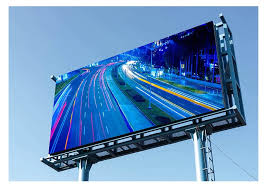
- Outdoor Advertising: Large-format outdoor LED billboards, such as those in Times Square or London’s Piccadilly Circus, demand excellent weather resistance (IP65 or higher), brightness exceeding 5,000 nits, and robust structural frameworks. For example, Daktronics, a leader in this segment, ensures compliance with local regulations and optimizes visual impact through adaptive brightness controls.
- Indoor Corporate and Retail Displays: Fine-pitch indoor LED walls facilitate high-resolution presentations, product promotions, and dynamic branding. The use of pixel pitches from 1.2mm-2.5mm ensures sharp images at short viewing distances, as demonstrated in installations by Samsung and Leyard.
- Sports Arenas and Broadcast Studios: LED displays incorporated in scoreboards, perimeter advertising, and studio backdrops benefit from high refresh rates and brilliant color reproduction. The adoption of HDR-compatible LED panels enhances visual realism, improving viewer engagement.
- Control Rooms and Command Centers: Multi-panel LED video walls with ultra-fine pixel pitch enable operators to track complex datasets, enhancing situational awareness. Reliability and redundancy are paramount here, with IEC 62368 certification often required to meet safety and electromagnetic compatibility standards.
Conclusion
LED display technology embodies a convergence of cutting-edge semiconductor design, materials science, and real-time control electronics. Its continuous advancement toward higher resolution, improved durability, and enhanced energy efficiency is redefining visual communication across industries worldwide. Practitioners must stay abreast of evolving standards such as IEC 63176 and IEC 62601 to ensure optimal system performance and compliance. When properly specified and implemented, LED displays deliver impactful, reliable, and immersive visual experiences that meet the diverse demands of modern applications.
References
- IEC 63176: Digital Signage – LED Display Pixel Pitch and Performance Standards
- IEC 62601: Luminance and Colorimetry of LED Displays
- IEC 62368: Audio/video, information and communication technology equipment – Safety requirements
- “Advances in LED Display Technology,” Journal of Display Technology, IEEE, 2022
- Daktronics Technical White Papers and Case Studies
- Leyard and Samsung Product Specifications and User Manuals













