

Understanding the Manufacturing Process and Technical Parameters of LED LCD Screens
LED LCD screens have become a cornerstone of modern display technology, driving advancements in industries ranging from consumer electronics to digital billboards. As a professional LED display engineer with extensive experience in all aspects of LED LCD screen manufacturing, I aim to provide an authoritative guide to the technical intricacies, processes, and innovations behind these displays.
#The Fundamentals of LED LCD Screens
LED LCD screens combine two core technologies—Liquid Crystal Displays (LCD) and Light Emitting Diodes (LED). The LCD panel forms the core of the screen, displaying content by controlling backlight illumination. The LED backlighting enhances brightness, energy efficiency, and image quality compared to older CCFL (cold cathode fluorescent lamp) backlit screens.
##Key Components of LED LCD Screens
1. LCD Panel: Contains liquid crystals and thin-film transistors (TFTs) to create pixels.
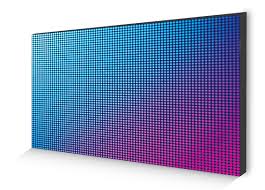
2. LED Backlight: Modern screens use edge-lit or direct-lit LEDs to provide illumination.
3. Driver ICs: Integrated circuits control pixel voltage and ensure proper functionality.
4. Polarizers: Ensure effective light diffusion and color fidelity.
5. Glass Substrate: Provides structural integrity and optical clarity.
#The Manufacturing Process
##Step 1: Glass Substrate Preparation
High-purity glass sheets are cut and polished to act as the base for the LCD panel. The glass must meet stringent specifications for smoothness, optical clarity, and thermal stability.
##Step 2: TFT Layer Deposition
Thin-film transistors are deposited on the glass substrate using photolithography and chemical vapor deposition (CVD). These TFTs act as pixel drivers by controlling the electric field applied to liquid crystals.
##Step 3: Liquid Crystal Injection
The liquid crystal material is carefully injected between two glass layers. Optical alignment layers ensure that the crystals orient themselves uniformly to achieve desired light modulation.
##Step 4: Assembly of LED Backlighting System
LED arrays are installed based on the design—edge-lit LEDs are placed along the borders, while direct-lit LEDs are arranged uniformly under the LCD panel. Precision control of LED brightness and color temperature is critical for achieving optimal image quality.
##Step 5: Polarizer and Diffuser Installation
Polarizers are bonded to the layers to control light polarization, while diffusers are added to spread light evenly across the screen. Advanced diffuser films with microprism structures are used for enhanced brightness uniformity.
##Step 6: Quality Assurance and Calibration
After assembly, the screen undergoes rigorous testing. Chromaticity, brightness uniformity, and pixel response times are measured, adhering to industry standards such as ISO 9241-307 (Ergonomics of visual displays). Calibration tools such as spectroradiometers are used to perfect color reproduction.
#Technical Parameters of LED LCD Screens
##Resolution
Defined as the number of horizontal and vertical pixels, resolution determines image sharpness. Common resolutions include Full HD (1920x1080), 4K UHD (3840x2160), and 8K UHD (7680x4320).
##Brightness and Contrast Ratio
Brightness is measured in nits, with typical values ranging from 250 to 1,000 nits for commercial displays. Contrast ratio, such as 1000:1, represents the luminance difference between the brightest and darkest areas.
##Color Gamut
High-end LED LCD screens often support wide color gamuts like DCI-P3 or Rec. 2020 to deliver vivid, accurate colors, commonly used in professional content creation and cinema applications.
##Refresh Rate
The refresh rate, measured in Hz, defines the number of times the screen updates per second. Gaming and high-motion displays benefit from rates of 120Hz or higher.
##Viewing Angle
Modern screens use IPS (In-Plane Switching) technology to improve viewing angles, typically around 178° horizontally and vertically.
#Innovations and Future Trends
The LED LCD industry is shifting toward technologies like Mini LED and Micro LED, which offer finer pixel control and higher brightness. Mini LEDs enable more dimming zones, enhancing HDR performance, while Micro LEDs eliminate the need for liquid crystals entirely, representing a future leap in display design.
Energy efficiency continues to be a focus, with manufacturers adopting low-power driver ICs and advanced thermal management systems. Additionally, sustainable practices, including recyclable materials and environmentally friendly production methods, are gaining traction.
#Practical Applications
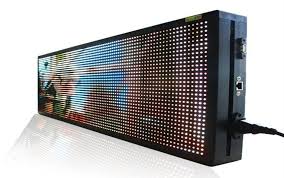
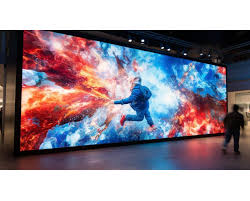
- Commercial Displays: From digital signage to video walls, LED LCD screens dominate in retail, corporate, and entertainment sectors.
- Consumer Electronics: Televisions, monitors, and smartphones rely heavily on LED LCD technology for their displays.
- Automotive Industry: Infotainment systems and dashboard displays increasingly use LED screens due to their reliability and high luminance.
#Conclusion
The manufacturing of LED LCD screens is a complex process requiring precision engineering, cutting-edge technology, and adherence to industry standards. By understanding the fundamentals, technical parameters, and trends shaping this technology, companies can make informed decisions to maximize performance and efficiency. The future holds immense potential for LED LCD screens, driven by innovations in Mini LED, Micro LED, and sustainability.













