

The Complete Guide to LED LCD Screen Manufacturing: Technology, Parameters, and Industry Insights
Introduction
LED LCD screens have become an essential part of modern life, playing a key role in entertainment, advertising, and consumer electronics. These screens, combining Light Emitting Diodes (LEDs) with Liquid Crystal Displays (LCDs), offer brilliant visuals, superior energy efficiency, and long service life. With increasing demand in industries like retail, transportation, and entertainment, understanding the technology, manufacturing process, and parameters of LED LCD screens is crucial for engineers and manufacturers engaged in this field.
This article provides an authoritative overview of LED LCD screen manufacturing processes, technical specifications, and industry developments. Whether you’re a professional seeking technical guidance or a business exploring industry applications, this guide offers actionable insights.
Main Body
1. Core Technology Behind LED LCD Displays
LED LCD screens combine two primary technologies: LED backlighting and LCD panels.
- LED Backlighting: LEDs are used as the light source to illuminate the liquid crystal layer. Unlike traditional CCFL (cold cathode fluorescent lamp) backlighting, LEDs are more energy-efficient and allow for slimmer panel designs.
- LCD Panels: The LCD consists of layers including polarizers, liquid crystal cells, and thin-film transistors (TFTs) that modulate the light passing through to display visuals.
Modern displays leverage edge-lit or direct-lit LED backlighting, with advanced configurations like full-array local dimming, providing enhanced contrast and brightness control.
2. Key Technical Parameters to Evaluate LED LCD Screens
When manufacturing or selecting an LED LCD screen, the following technical parameters should be considered:
- Resolution: Determines the screen’s pixel density (e.g., Full HD, 4K, or 8K). Higher resolution leads to crisper visuals.
- Brightness: Measured in nits (cd/m²). Commercial displays typically offer 500–2000 nits, while outdoor displays may exceed 5000 nits for visibility in sunlight.
- Contrast Ratio: Indicates the difference between the brightest and darkest parts of the screen. Local dimming enhances this.
- Refresh Rate: Measured in Hz, it impacts motion clarity (commonly 60Hz, 120Hz, or higher for gaming screens).
- Color Gamut: Defines the range of colors the screen can reproduce (e.g., NTSC, sRGB, DCI-P3 standards).
3. Manufacturing Process for LED LCD Screens
Manufacturing LED LCD screens involves precision engineering and advanced technology. The steps typically include:
- Material Selection: High-purity LED chips, quality liquid crystal materials, and reliable circuit boards are essential.
- Backlight Assembly: LEDs are mounted on a reflector sheet and paired with diffusers to ensure uniform light distribution.
- Panel Integration: Liquid crystal cells are sandwiched between glass substrates, integrated with TFTs, and bonded using UV-curing adhesives.
- Color Calibration: Screens undergo rigorous testing to meet color accuracy standards like DCI-P3 or sRGB.
- Quality Testing: Displays are tested for brightness uniformity, pixel defects, and thermal stability. Robust manufacturing processes ensure fewer defects and longer operational life.
4. Application Areas and Industry Trends
The versatility of LED LCD screens has enabled their use across multiple industries:
- Retail Advertising: Bright, energy-efficient displays are ideal for attracting consumers.
- Transportation: Information screens in airports and train stations rely on high-visibility LED LCDs.
- Gaming and Entertainment: High-refresh-rate displays deliver immersive experiences.
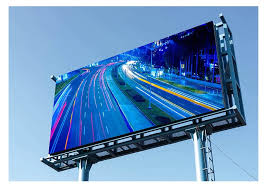
- Outdoor Signage: Waterproof and sunlight-visible screens are tailored for outdoor use.
Industry Trends:
The emergence of technologies such as Mini-LED and Micro-LED is revolutionizing LED LCD displays. Mini-LED technology offers finer backlight control, leading to better HDR performance, while Micro-LED enhances long-term durability and scalability for large-format displays.
Conclusion
LED LCD screen manufacturing is a sophisticated process that combines advanced materials, precise engineering, and stringent testing to deliver unmatched visual performance. With ongoing developments such as Mini-LED and Micro-LED technologies, the industry is poised for even more breakthroughs in terms of brightness, efficiency, and durability.
For engineers, manufacturers, and businesses, understanding these technical parameters and industry trends is key to staying ahead in the competitive market. Whether the application is indoor advertising or outdoor signage, LED LCD screens continue to be a cornerstone of modern display technologies.













