

Key Insights into LED LCD Screen Manufacturing: Technology, Standards, and Future Trends
Advances in LED LCD screen manufacturing have transformed our digital experience, paving the way for high-quality displays in consumer electronics, outdoor advertising, and professional applications. As an LED display engineer, this article will dive into the core technical aspects, manufacturing processes, and industry standards that shape the LED LCD display sector.
#Understanding LED LCD Technology
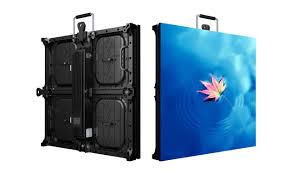
LED LCD screens employ a combination of liquid crystal displays (LCDs) with light-emitting diode (LED) backlights. This hybrid design delivers vibrant, high-resolution images with lower power consumption compared to traditional LCDs that relied on cold cathode fluorescent lamps (CCFLs).
Some notable features of LED LCD screens include:
- High Brightness and Contrast: LED backlights provide uniform brightness and impressive contrast ratios, typically reaching up to 3000:1 or higher.
- Energy Efficiency: LEDs are far more efficient than CCFLs, reducing power consumption by up to 40%.
- Longevity: LEDs have an operational lifespan of 50,000 to 100,000 hours, making them a durable investment.
- Slimmer Design: LEDs' compact form factor enables ultra-thin screen designs, highly sought after in the consumer electronics market.
#Key Manufacturing Steps in LED LCD Displays
##1. Panel Production and Assembly
The liquid crystal panel serves as the core of an LED LCD screen. It is manufactured using advanced deposition techniques such as photolithography and thin-film transistor (TFT) integration. The panel consists of multiple layers, including polarizers, alignment layers, and the liquid crystal layer sandwiched between two glass substrates.
##2. LED Backlight Integration
The LED backlight unit (BLU) is integrated behind the LCD panel. Using technologies like edge-lit or direct-lit LED arrays, this layer ensures uniform illumination across the screen. Direct-lit LEDs are generally preferred for applications requiring higher brightness, such as outdoor displays.
##3. Color Filtering and Calibration
Color filters are applied to the LCD, allowing only red, green, and blue (RGB) light to pass through. Careful calibration ensures accurate color reproduction, with top-tier displays achieving nearly 100% coverage of color gamuts like sRGB or DCI-P3. High-end screens also adopt quantum dots to enhance color vibrancy.
##4. Driver ICs and PCB Design
Driver integrated circuits (ICs) and custom-designed printed circuit boards (PCBs) are essential for managing electrical signals and controlling display performance. High refresh rates, such as 120Hz or 240Hz, are enabled through optimized driver ICs, ensuring smooth motion on the display.
##5. Assembly and Quality Control
The final assembly involves placing the LCD panel, backlight, and protective glass or plastic into a housing. A rigorous series of quality control tests, such as luminance uniformity measurements, color accuracy checks, and response time evaluations, is carried out to meet industry benchmarks.
#Industry Standards and Compliance
Compliance with international standards is critical in LED LCD screen manufacturing. Key standards include:
- RoHS Compliance: Restriction of Hazardous Substances ensures that materials used are environmentally friendly and free from harmful chemicals like lead and mercury.
- ISO 9001 Certification: A symbol of quality management systems, ensuring consistency in production and customer satisfaction.
- EMC Standards: Compliance with electromagnetic compatibility (EMC) regulations ensures that the device doesn't interfere with other electronic equipment.
- Energy Star Certification: Displays meeting this standard are recognized for their energy efficiency.
#Current Trends and Future Outlook
##1. Mini-LED and Micro-LED Integration
Both Mini-LED and Micro-LED technologies are touted as game-changers in the display industry. Mini-LEDs offer superior local dimming capabilities, while Micro-LEDs enable self-emissive pixels for infinite contrast ratios and unprecedented brightness.
##2. Flexible and Transparent Displays
Flexible LED LCD screens are increasingly popular for foldable smartphones and wearable devices. Likewise, transparent screens are finding use in applications like smart retail and automotive displays.
##3. Advanced HDR and 8K Resolutions
High Dynamic Range (HDR) and 8K resolutions are becoming industry standards, driving demand for displays with higher brightness, better color accuracy, and greater pixel density. HDR10+ and Dolby Vision support are key requirements for high-end screens.
##4. Sustainability Initiatives
Manufacturers are focusing on sustainable practices by integrating recyclable materials, reducing energy consumption, and developing longer-lasting products to minimize environmental impact.
LED LCD manufacturing stands at the crossroads of innovation, balancing technical precision with market demands. By adhering to international standards, focusing on emerging trends, and optimizing production processes, the industry continues to deliver cutting-edge visuals for a wide array of applications.













