

Advanced LED Display Manufacturing: Technical Insights and Industry Best Practices
The LED display industry continues to evolve rapidly, driven by technological innovations and increasing global demand for high-performance visual solutions. As an experienced LED display engineer, this article delves into the advanced manufacturing processes, critical technical parameters, and quality standards that govern modern LED display production, ensuring optimal performance, reliability, and visual excellence.
Understanding LED Display Technology
LED (Light Emitting Diode) displays are composed of millions of tiny diodes that emit light when an electric current passes through them. The displays can be broadly categorized into two types: direct-view LED displays and LED-backlit LCDs. Direct-view LED displays are often used for large-scale outdoor and indoor digital signage, video walls, and stadium screens, while LED-backlit LCDs are common in consumer electronics and smaller digital displays.
The fundamental advantages of LED technology include high brightness, wide viewing angles, superior color gamut, and robust durability under challenging environmental conditions. However, achieving the desired display quality requires precise control over the manufacturing process and component selection.
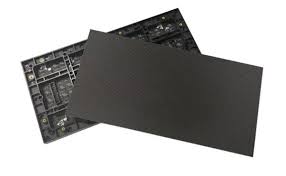
Key Technical Parameters in LED Display Manufacturing
1. Pixel Pitch
Pixel pitch, defined as the distance between the centers of two adjacent pixels (measured in millimeters), is a crucial parameter that directly affects image resolution and viewing distance. A smaller pixel pitch results in higher resolution and finer image detail, making it suitable for close viewing scenarios. For instance, ultra-fine-pitch LED displays with pixel pitches below 1.5mm are ideal for indoor applications like control rooms and conference venues, whereas larger pixel pitches (10mm or more) are suited for large outdoor displays viewed from greater distances.
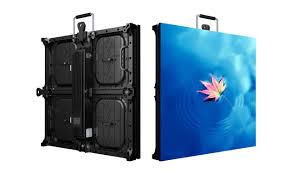
2. Brightness and Contrast Ratio
Brightness, typically measured in candelas per square meter (cd/m² or nits), is key for visibility under various ambient light conditions. Outdoor LED displays often require brightness levels exceeding 5,000 nits to remain visible in direct sunlight, while indoor displays usually range between 800 to 1,500 nits. Contrast ratio, the difference between the brightest white and the darkest black a display can produce, enhances image depth and color richness. High-quality LED modules incorporate advanced driving ICs and calibration techniques to optimize this metric.
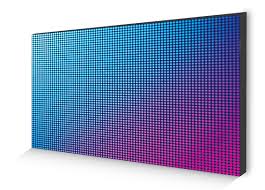
3. Refresh Rate and Gray Scale
High refresh rates (measured in Hertz, Hz) eliminate flicker and enable smooth video playback. Modern LED displays typically operate at 1,920Hz or higher, complying with international broadcasting standards such as the European Broadcasting Union (EBU). Gray scale levels determine the number of shades between black and white that a display can render, impacting color gradient fidelity. Contemporary LED displays can support gray scale levels of 14-bit or more, ensuring vivid and accurate color reproduction.
Manufacturing Process Overview
The manufacturing of LED displays involves a series of intricate steps:
- Chip Fabrication: LED chips are produced using semiconductor fabrication techniques, including epitaxy and photolithography, to define the diode structures.
- Mounting and Packaging: Chips are mounted on substrates and encapsulated with phosphor materials or RGB dies to achieve the desired color emission. Ensuring thermal management and mechanical stability at this stage is paramount.
- Module Assembly: LEDs are arranged into pixel units and integrated onto printed circuit boards (PCBs). High-precision automated machines place LED dies to ensure uniformity and alignment, critical for seamless display panels.
- Quality Control and Calibration: Post-assembly, each module undergoes intensive testing for luminance uniformity, color accuracy, and reliability under electrical stress. On-site calibration is also conducted to compensate for variances and maintain consistency across large video walls.
Industry Standards and Reliability Testing
Adherence to international standards such as IEC 62368 (safety requirements for audio/video equipment), RoHS (Restriction of Hazardous Substances), and IP ratings (Ingress Protection) guarantees longevity and compliance in various applications. Reliability tests including thermal cycling, humidity exposure, and vibration assessments simulate real-world conditions to ensure durability.
Case Study: Implementing Fine-Pitch LED Displays in a Global Control Center
A recent project involved deploying a 0.9mm pixel pitch LED video wall for a multinational monitoring control center. The selection of fine-pitch modules with high refresh rates (≥3,840Hz) and 16-bit gray scale allowed for precise data visualization with minimal latency and no flicker. Rigorous factory calibration and onsite tuning ensured uniform brightness and color across the entire 4K-resolution display spanning 15 square meters. This installation significantly improved situational awareness and operational efficiency.
Emerging Trends and Innovations
MicroLED technology is gaining traction, promising even greater pixel density, energy efficiency, and lifespan though currently limited by high production costs. Additionally, integration of AI-driven calibration and real-time diagnostics is enhancing predictive maintenance and display quality assurance.
Conclusion
The manufacturing of LED displays is a complex interplay of materials science, semiconductor fabrication, mechanical engineering, and precision electronics. Understanding and controlling key parameters such as pixel pitch, brightness, refresh rate, and gray scale is essential to delivering displays that meet rigorous performance requirements. Through adherence to global standards and continuous innovation, LED display manufacturers can provide reliable, visually stunning solutions tailored for diverse commercial and industrial applications.













