

MIP LED Technology: Revolutionizing High-Resolution LED Displays
Micro In-Pixel (MIP) LED technology represents a significant advancement in the LED display industry, enabling ultra-high-resolution, high-contrast screens with superior brightness and energy efficiency. As a professional LED display engineer with extensive experience in the manufacturing and development of LED screens, this article delves deeply into the technical foundation, manufacturing processes, and practical applications of MIP LED technology, emphasizing its impact on the future of display solutions.
Understanding MIP LED Technology
MIP LED refers to the integration of micro-LED chips directly into each pixel site on a display panel, significantly improving pixel density and image quality. Unlike traditional LED displays relying on larger, discrete LED packages, MIP uses sub-millimeter LEDs often below 100 microns in size. According to industry benchmarks set by the Society for Information Display (SID), micro-LED pixel sizes typically range from 5 to 100 microns, allowing for pixel pitches as small as 30 microns, achieving resolutions that rival OLED and LCD technologies.
The technology roots trace back to advancements in semiconductor fabrication, leveraging photolithography to achieve wafer-level processing, precise LED die placement, and chip-scale packaging. The integration of MIP LEDs addresses long-standing challenges such as power consumption, pixel uniformity, and module thickness that have traditionally affected large-format LED displays.
Key Technical Parameters
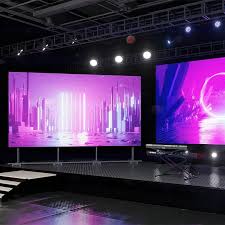
- Pixel Pitch: MIP LED displays commonly operate at pixel pitches between 0.5 mm to 1.2 mm, enabling high pixel densities above 10,000 pixels per square inch.
- Brightness: Typical peak brightness exceeds 800 nits for indoor panels and can reach up to 2,000 nits or more for outdoor applications, surpassing most LCD screens.
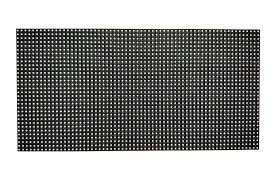
- Contrast Ratio: Due to individual LED control and lack of backlight leakage, MIP LEDs can achieve contrast ratios exceeding 100,000:1, critical for HDR content.
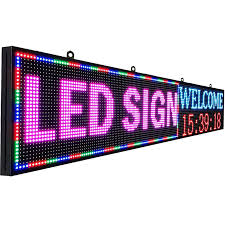
- Lifetime: Semiconductor-grade micro-LED devices exhibit lifetimes upwards of 100,000 hours under standard operating conditions, far outperforming OLED displays susceptible to degradation.
- Response Time: Response times are in the microsecond range, ideal for high-speed video and gaming applications without motion blur or ghosting.
Manufacturing Process
MIP LED display manufacturing is a multi-step process encompassing wafer fabrication, dicing, precise placement, testing, and module assembly. Key steps include:
1. Wafer Fabrication: Gallium nitride (GaN) based micro-LED chips are grown on sapphire or silicon substrates using metal-organic chemical vapor deposition (MOCVD) techniques.
2. Dicing and Transfer: Ultra-fine die separation followed by automated pick-and-place is conducted, often leveraging transfer printing to accurately place LEDs onto silicon backplanes.
3. Integration: Each LED is encapsulated into pixel sites with integrated driver circuits for precise brightness and color control.
4. Testing and Calibration: Extensive electrical and optical testing ensures color uniformity, pixel yield optimization, and calibration for gamma correction according to international standards such as Rec. 2020 HDR.
5. Module Assembly: Final modules are assembled into scalable display panels, with seamless tiling capabilities for large formats.
Given the complexity, industry leaders such as Samsung Display and Sony have pioneered commercial MIP LED products, demonstrated in high-end TVs, augmented reality (AR) devices, and cutting-edge signage solutions.
Applications and Industry Impact
MIP LED technology is revolutionizing various sectors:
- Consumer Electronics: Offering next-generation TVs with unparalleled color gamut, brightness, and durability combined with ultra-slim designs.
- Commercial Displays: Highly visible, energy-efficient digital signage for airports, shopping centers, and stadiums.
- Virtual and Augmented Reality: Compact, high-resolution displays critical for immersive AR/VR headsets.
- Medical Imaging: Precise color accuracy and high contrast benefit diagnostic monitors.
- Automotive Heads-Up Displays (HUDs): MIP LEDs enable lightweight, high-brightness HUDs capable of withstanding harsh environmental conditions.
The technology also aligns with green manufacturing practices as it reduces power consumption and material waste compared to traditional LED and LCD display production processes.
Challenges and Future Directions
Despite the promising prospects, several challenges remain in scaling MIP LED production:
- Mass Transfer Efficiency: Improving pick-and-place accuracy and speed to lower production costs.
- Yield Optimization: Achieving near-100% functional pixel yield demands stringent quality controls.
- Cost Reduction: Present high costs limit widespread adoption; economies of scale are essential.
- Integration with Backplane Electronics: Developing robust driver ICs and flexible substrates for future applications.
Research continues to address these issues, leveraging advancements in nanofabrication, AI-based quality inspection, and novel materials. Industry forecasts from IDTechEx predict the micro-LED market, particularly MIP LED driven panels, will grow exponentially, from niche products to mainstream consumer electronics by 2030.
Conclusion
MIP LED technology embodies a transformative step in LED display engineering, merging micro-LED semiconductor advancements with innovative assembly techniques to deliver unprecedented resolution, brightness, and efficiency. From detailed technical parameters to practical applications, MIP LEDs are setting new standards aligned with international display protocols and environmental sustainability. As manufacturing challenges are overcome, MIP LED displays will increasingly dominate markets requiring premium image quality and energy efficiency, corroborating their position as the future cornerstone of high-performance display technologies.
References:
1. Society for Information Display (SID), "Micro-LED Display Technology," Journal of the SID, 2022.
2. Samsung Display White Paper, “MIP LED Module Development and Application,” 2023.
3. IDTechEx Report: “Micro LED Displays Market Outlook 2023-2030.”
4. International Electrotechnical Commission (IEC) Standard IEC 61966-2-1 for Colorimetry.
5. Chen et al., "Advances in Micro-LED Fabrication Techniques," IEEE Transactions on Electron Devices, Volume 68, 2021.













