

Advanced LED Display Manufacturing: Techniques, Standards, and Industry Insights
In the rapidly evolving landscape of digital visualization, LED display technology has emerged as a cornerstone for delivering vibrant, high-definition content across diverse applications—from advertising billboards and indoor video walls to large-scale sports arenas and transportation hubs. As a seasoned LED display engineer, I bring forth detailed insights into the manufacturing processes, technical protocols, and quality standards pivotal for producing state-of-the-art LED LCD screens that meet stringent industry demands.
The Fundamentals of LED Display Technology
Light Emitting Diode (LED) displays operate based on arrays of microscopic LEDs which serve as individual pixels, capable of emitting red, green, and blue light, thereby creating a full spectrum of colors. Unlike traditional LCD screens that rely on backlit panels and liquid crystals, LED displays offer superior contrast ratios, brightness, and energy efficiency. Their modular design allows scalability and ease of maintenance, traits that have contributed significantly to their widespread adoption.
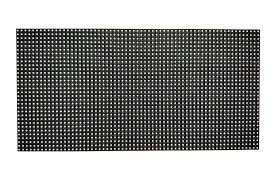
Understanding the Technical Parameters defining display quality is essential:
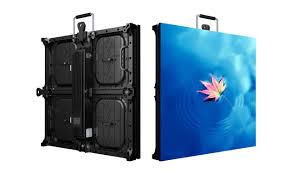
- Pixel Pitch: Typically ranging from 0.5mm (fine pitch) for close viewing distances to over 10mm for outdoor signage. The smaller the pitch, the higher the resolution, suited for interior applications such as control rooms.
- Brightness: Indoor displays often require luminance levels between 800 to 1500 nits, whereas outdoor displays must exceed 5000 nits to maintain visibility under direct sunlight, complying with standards like ANSI/IES RP-27.
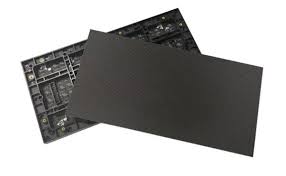
- Refresh Rate: High refresh rates (≥1920 Hz) are critical to prevent flickering and ensure smooth video playback.
- Viewing Angle: A wide viewing angle (≥140° horizontal and vertical) ensures uniform visibility in public spaces.
- Color Gamut & Calibration: Following the Rec. 709 or Rec. 2020 standards helps provide rich, accurate colors. Factory and on-site calibration ensure uniformity across panels.
Manufacturing Process: From Silicon to Spectacle
Manufacturing LED displays involves several intricate steps that demand precision engineering and rigorous quality control:
1. LED Chip Fabrication: The foundation begins at the semiconductor level, where LEDs are grown epitaxially on substrates like sapphire or silicon carbide using Metal-Organic Chemical Vapor Deposition (MOCVD). High radiometric efficiency LEDs ensure long lifespans and energy efficiency.
2. Die Bonding and Packaging: Individual LED dies are mounted onto carrier substrates, often with automated pick-and-place machinery. Packaging encases the LED with phosphor coatings and diffusion lenses tailored to optimize angular light distribution. Advanced packaging uses quantum dot materials for enhanced color rendition.
3. Module Assembly: Modules are arrays of LEDs mounted on Printed Circuit Boards (PCBs), with precise soldering and inspection to detect defective LEDs. During this phase, data buses for serial data transmission and power supply circuits are integrated, following IPC-7351 standards for PCB footprints.
4. Panel Fabrication: Multiple modules integrate into panels that incorporate structural frames, heat dissipation systems (e.g., aluminum cooling fins), and protective front covers capable of IP65 or higher ingress protection ratings when intended for outdoor use.
5. Testing and Calibration: Post-assembly, panels undergo rigorous testing using Automated Optical Inspection (AOI) and photometric measurement tools. Calibration entails adjusting drive currents and color output to match demanding industry standards such as ISO 13406-2 for pixel defects and IEC 62087 for energy performance.
Industry Standards and Quality Assurance
Ensuring product longevity and visual fidelity requires adherence to international technical standards:
- ANSI (American National Standards Institute) and IEEE (Institute of Electrical and Electronics Engineers) stipulate electrical safety and electromagnetic compatibility requirements crucial for installation in public environments.
- RoHS (Restriction of Hazardous Substances) compliance prevents environmental and health issues by restricting harmful materials in device construction.
- IP Ratings (Ingress Protection) standardize weatherproofing: IP65 for outdoor dust-tight and water-resistant displays is common.
- UL (Underwriters Laboratories) certifications validate fire safety for electronic modules.
- Energy Star guidelines regulate power efficiency, an increasingly critical factor for large-scale LED installations.
Deployment Case Studies and Real-World Applications
One illustrative case is the deployment of an ultra-fine pitch LED video wall (0.9mm pixel pitch) in a stock trading floor in New York. The installation required near-seamless imagery and minimal latency, achieved through synchronized modules and a robust controller infrastructure compliant with HDMI 2.1 and DisplayPort 1.4 standards. The display achieved a 3840x2160 resolution across 16 panels, enhancing real-time data visualization.
In contrast, an outdoor sports stadium solution leverages LED modules with a 10mm pixel pitch and 6000-nit brightness to maintain visibility under diverse weather and lighting conditions, including direct sunlight, supported by remote monitoring systems to ensure continuous uptime.
Emerging Trends and Technological Innovations
Advancements in MicroLED technology promise even finer pixel pitches below 0.5mm, driving ultra-high-resolution displays with lower power consumption and increased durability. Integration with AI-driven content management platforms enables smart content adaptation based on environmental sensing (brightness, ambient noise), enhancing audience engagement.
Furthermore, flexible and transparent LED panels are expanding creative possibilities—transforming architectural facades into interactive digital canvases without compromising transparency or building aesthetics.
Conclusion
Mastering LED display manufacturing requires an intersection of semiconductor technology, precision engineering, materials science, and stringent adherence to industry standards. As global demand surges for high-performing, reliable, and visually striking LED screens, continual innovation and rigorous quality control remain vital. The insights shared underscore the complex but rewarding nature of designing and producing LED displays that meet and exceed global expectations.
For those seeking to venture into the dynamic world of LED display technology, partnering with certified manufacturers adhering to standards like UL, IEC, and ANSI is imperative. This ensures not only optimal performance but also safety, environmental compliance, and longevity—a testament to professional expertise and industry accountability.
References
- "ANSI/IES RP-27-20: Recommended Practice for Solid-State Lighting."
- IPC-7351B: Generic Requirements for Surface Mount Design and Land Pattern Standard.
- IEC 62087: Methods of measurement for the power consumption of audio, video and related equipment.
- UL 1973: Standard for Batteries for Use in Stationary, Vehicle Auxiliary Power and Light Electric Rail (LER) Applications.
- RoHS Directive (2011/65/EU).
- "Philips Lumileds: Advances in LED Packaging Technology," Journal of Display Technology, 2023.













