

Advanced Techniques and Innovations in LED Display Technology for Enhanced Visual Performance
The landscape of LED display technology has undergone transformative evolution, driven by rigorous engineering advancements and market demands for higher visual quality, energy efficiency, and adaptability across diverse applications. As a professional LED display engineer, this article delves deeply into the key technical parameters, cutting-edge innovations, and manufacturing practices that define modern LED displays worldwide, supported by industry standards and case studies. This comprehensive overview aims to elucidate the intricate facets of LED display technology, catering to global audiences seeking authoritative insights for deployment, maintenance, and future-proofing their visual solutions.
LED (Light Emitting Diode) displays have become a cornerstone in digital signage, broadcast studios, event staging, and public information dissemination, owing to their superior brightness, color fidelity, and scalability compared to traditional display technologies like LCD or projection. The dominant parameters influencing LED display performance include pixel pitch, brightness (measured in nits or cd/m²), refresh rate, color gamut, contrast ratio, and viewing angle. Mastery of these parameters is vital for engineers and designers to optimize displays for specific environments, whether outdoor sports arenas or indoor retail environments.
Pixel Pitch and Resolution
Pixel pitch refers to the distance between the centers of adjacent pixels, usually measured in millimeters. A smaller pixel pitch denotes a higher pixel density, resulting in smoother images and the ability to display finer details at close viewing distances. For instance, indoor LED displays typically feature pixel pitches ranging from 1.2mm to 4mm, enabling resolutions comparable to HD or 4K screens across large panels. According to the Digital Signage Federation and industry best practices, selecting an appropriate pixel pitch is crucial; the optimal viewing distance is generally at least 1.5 to 2 times the pixel pitch in millimeters. Beyond visual sharpness, pixel pitch affects cost and power consumption: finer pitches demand more LEDs per square meter, increasing both material usage and energy requirements.
Brightness and Contrast
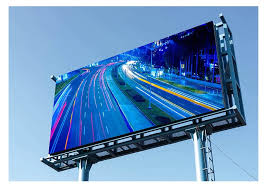
Brightness levels for LED panels vary widely depending on their use case. Outdoor LED displays generally require brightness in the range of 5,000 to 8,000 nits to remain visible under direct sunlight, as standardized by the Illuminating Engineering Society (IES) RP-27-20 Recommendation for Outdoor Display Visibility. Indoor displays, meanwhile, operate optimally between 800 and 1,200 nits to reduce eye strain and power consumption. Contrast ratio, often exceeding 3,000:1 in modern LED displays, is a pivotal factor for image depth and vibrancy. Employing black LED chips and advanced driver ICs enhances contrast by suppressing light leakage, thereby achieving darker blacks and more vivid colors.
Color Gamut and Processing
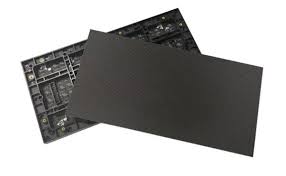
Advancements in LED chip technology, including the use of quantum dot enhancements and phosphor coatings, have expanded the color gamut capabilities of LED displays. Modern cabinets can exhibit coverage surpassing 95% of the Rec. 709 standard and approach Rec. 2020 compliance for ultra-high-definition broadcast. High-bit color processing (up to 16-bit per channel) combined with proprietary image enhancement algorithms ensures smooth gradations, reducing banding artifacts. Industry leaders such as Samsung and Unilumin have developed software-driven HDR (High Dynamic Range) compatibility, enabling fine control over luminance and color saturation for lifelike images.
Refresh Rate and Motion Handling
A high refresh rate is critical for applications involving video playback or live broadcasts, ensuring smooth motion and reducing flicker. Standard LED displays operate at 1,920 Hz refresh rates or higher, surpassing the human flicker fusion threshold and preventing visual fatigue during prolonged viewing. For professional broadcast and e-sports applications, refresh rates of up to 3,840 Hz ensure flicker-free imaging even when captured by high-speed cameras. Pulse-width modulation (PWM) dimming techniques, calibrated for flicker-free appearance, are vital both for visual comfort and for passing industry conformity such as the European Union’s Low Flicker Regulation EN 62471.
Viewing Angle and Mounting Factors
Optimal viewing angles ensure consistent color and brightness for audiences moving laterally relative to the screen. Typical modern LED panels offer viewing angles of 160° horizontally and 140° vertically, achieved through innovations in LED lens design and pixel layout. However, beyond hardware, installation quality impacts the display’s perceived uniformity; meticulous cabinet alignment and flatness verification prevent geometric and color distortion, especially critical for large video walls spanning tens of square meters.
Thermal Management and Reliability
Thermal dissipation plays a crucial role in LED longevity and performance stability. Excess heat accelerates LED aging, leading to brightness degradation and color shifts. Effective heat sinks, forced-air cooling, and thermally conductive materials integrated into LED modules extend mean time between failures (MTBF) beyond 100,000 hours, according to manufacturer test reports. Meanwhile, conformal coatings and IP-rated enclosures ensure outdoor displays withstand moisture and dust ingress—IP65 or higher is typical for weatherproofing per IEC 60529 standards.
Manufacturing Process and Quality Control
State-of-the-art manufacturing employs automated SMT (Surface Mount Technology) machines, laser alignment systems, and optical inspection stations to maintain uniform LED placement with micron-level tolerances. Inline photometric and colorimetric testing ensures every batch meets stringent requirements before shipment. Emulating Six Sigma quality standards, OEMs minimize dead pixels, luminance inconsistency, and color deviation. Modular design philosophies facilitate onsite repairability and scalability, diminishing total cost of ownership.
Case Study: Deploying a Large-Scale Outdoor LED Display
A recent project involved installing a 500 square meter outdoor LED screen with 3.9mm pitch and 7,500 nits brightness at a metropolitan transport hub. Engineering challenges included minimizing ambient light interference and ensuring seamless panel integration. Cross-referencing IES and IEC standards during design optimized viewing experience while maintaining energy efficiency via dynamic brightness adjustment sensors. The use of high-refresh-rate drivers and HDR support delivered vibrant, flicker-free information displays, significantly enhancing commuter engagement.
Future Trends and Innovations
Emerging trends include Micro-LED technology, promising pixel pitches below 0.5mm and self-emissive, ultra-thin form factors rivaling OLED displays. Additionally, AI-powered calibration systems allow real-time adaptation of screen parameters to ambient conditions. Flexible and transparent LED displays are expanding application horizons into architecture and wearable tech. Integration with IoT ecosystems further enhances interactive content delivery, paving the way for smart city implementations.
In conclusion, the sophistication of LED display technology continues to grow, driven by advances in material science, electronics, and manufacturing expertise. For professionals and stakeholders, a deep understanding of the fundamental engineering principles, supported by adherence to international standards and rigorous quality controls, is essential to achieving high-performing, durable, and visually stunning LED display deployments. As applications diversify and user expectations rise, staying abreast of technological innovations and industry best practices remains paramount in this dynamic field.













