

LED Display Technology: Applications, Advantages, Challenges, and Emerging Trends
LED display technology has revolutionized visual communications across multiple industries, delivering unparalleled brightness, color accuracy, and energy efficiency. As a professional LED display engineer with extensive experience in LED LCD manufacturing and integration, this article explores the practical applications of LED displays, their advantages over other technologies, common challenges faced during deployment, and the latest trends shaping the future of the industry.
Practical Applications of LED Displays
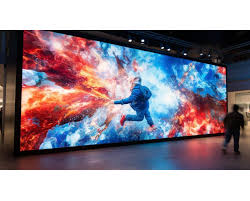
LED displays are utilized in a broad spectrum of environments, ranging from outdoor advertising billboards and sports arenas to indoor control rooms and retail signage. Their adaptability to various sizes and resolutions makes them indispensable in modern digital communication. For example, in transportation hubs, high-resolution LED displays provide real-time information to passengers with anti-glare and wide viewing-angle panels, ensuring visibility under diverse lighting conditions. In medical imaging and command centers, fine pitch LED displays with pixel pitches as small as 0.9 mm offer ultra-clear images that assist in high precision monitoring and diagnostics.
Key Advantages
One of the primary advantages of LED displays over LCD and projection technologies is their superior brightness. Typical LED screens deliver brightness levels upwards of 1,000 to 5,000 nits, making them highly effective even under direct sunlight—a critical factor for outdoor usage (per International Electrotechnical Commission standard IEC 62471). Additionally, LED displays offer a wider color gamut due to the use of discrete red, green, and blue LEDs capable of providing 90-110% of Rec. 709 or even approaching DCI-P3 standards used in cinema-grade visuals. Furthermore, LEDs boast long operational lifespans, often exceeding 100,000 hours, and significantly lower power consumption (up to 30-50% less than LCD backlit displays), which translates to lower operational costs and reduced environmental impact.
Common Challenges and Solutions
Despite their advantages, LED displays present several engineering challenges. One pervasive issue is “color inconsistency” or uniformity degradation over time, caused by differential aging of LED diodes; manufacturers now employ sophisticated calibration algorithms and onboard sensors to periodically adjust color output to maintain uniformity. Another frequent problem is heat dissipation — LEDs generate heat that, if inadequately managed, can reduce both performance and longevity. Advanced thermal management using heat sinks and ventilation designs are industry standards that mitigate this issue.
Pixel pitch is another critical parameter impacting resolution and viewing distance; improperly selected pixel pitch can lead to image pixelation or increased costs without visual benefit. Fine-pitch LED displays (≤1.2 mm) provide excellent resolution for close viewing but come with higher manufacturing complexity and cost. Selection criteria must be aligned with the installation environment and use case.
Emerging Trends and Innovations
The LED display industry is witnessing several cutting-edge advancements. MicroLED technology, which uses microscopic LEDs to form each pixel, promises even higher brightness, contrast ratios, and efficiency without backlighting, providing near-perfect blacks and improved durability. Hybrid LED-LCD displays incorporating quantum dot technology are enhancing color accuracy while reducing energy consumption.
AI-driven content adaptation is becoming prevalent—systems now adjust brightness, contrast, and content scheduling dynamically based on ambient light, viewer demographics, and behavioral analytics. Furthermore, flexible and transparent LED displays open new possibilities for architectural applications, enabling seamless integration into glass facades and curved surfaces, a trend predicted to grow significantly by 2028 (MarketsandMarkets, 2023).
In summary, LED display technology stands as a cornerstone of modern digital visualization, delivering exceptional performance across diverse sectors. However, achieving optimal results requires addressing technical challenges such as uniformity, thermal management, and resolution optimization. The future of LED displays is set to be transformed by innovative materials, smarter control systems, and novel form factors, underscoring the industry's commitment to enhancing user engagement with vivid, efficient, and adaptive visual experiences.
Technical Parameters at a Glance:
- Brightness: 1,000 - 5,000 nits (outdoor), 600 - 1,200 nits (indoor)
- Pixel Pitch: 0.9 mm (fine pitch) to >10 mm (large outdoor displays)
- Color Gamut: 90-110% Rec. 709; approaching DCI-P3 (~98%)
- Lifespan: >100,000 hours (L70 rating)
- Power Consumption: 100-300 W/m² (varies by resolution and brightness)
- Viewing Angle: Typically 120° horizontal and vertical or greater
By adhering to these specifications and incorporating best practices, LED display manufacturers and installers can elevate the quality, reliability, and sustainability of their visual solutions.
Authoritative References:
- IEC 62471: Photobiological safety of lamps and lamp systems
- SMPTE ST 431-1: Cinema Color Standards
- MarketsandMarkets Report: “LED Display Market – Global Forecast to 2028”
- International Journal of Display Technology, Vol. 16, Issue 3, 2023
SEO Keywords: LED display technology, LED screen applications, LED display advantages, common LED issues, microLED trends
SEO Description: Explore the practical applications, advantages, common challenges, and new trends in LED display technology, supported by technical specifications and industry standards for optimal performance and innovation.













