

The Complete Guide to LED Display Manufacturing: Technology, Standards, and Best Practices
In today’s rapidly evolving digital landscape, LED displays have become an integral part of advertising, information dissemination, and entertainment across the globe. As a professional LED display engineer, I will guide you through the fundamental technology behind LED display manufacturing, key technical parameters, industry standards, and best practices that ensure high-quality, reliable, and impactful LED display products.
Introduction
LED (Light Emitting Diode) display technology has experienced tremendous growth due to its superior brightness, energy efficiency, and versatile applications. From colossal outdoor billboards to indoor control rooms and even wearable devices, LED displays continue to transform how visual information is presented. Understanding the manufacturing process, key technical specifications, and adherence to global standards is essential for producing displays that meet rigorous performance, durability, and visual quality requirements.
Core LED Display Technology
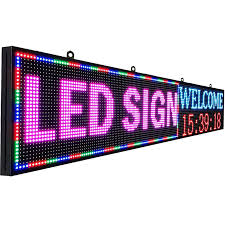
At its core, an LED display panel consists of numerous tiny light-emitting diodes arranged in a matrix. These diodes, typically ranging in size from 10mm (P10) to sub-millimeter pixel pitches (for example, P0.9 in high-resolution close-view displays), emit red, green, and blue light to create a full color image via additive color mixing.
Key technical parameters essential to LED display design include:
- Pixel Pitch: This refers to the distance between the center of two adjacent pixels, usually measured in millimeters. Smaller pixel pitch offers higher resolution and is critical for indoor or close-view applications. For example, a 1.25mm pixel pitch LED screen can deliver near-retina-quality images up to a few meters away.
- Brightness: Measured in nits (candelas per square meter), outdoor displays typically require 5,000 to 8,000 nits to remain visible under direct sunlight, whereas indoor displays suffice with 300-700 nits.
- Refresh Rate: A refresh rate exceeding 1920Hz ensures flicker-free video playback, particularly important for broadcast or mobile device recording.
- Viewing Angle: A wide viewing angle (commonly more than 140° both horizontally and vertically) ensures uniform image quality across the audience’s perspective.
Manufacturing Process and Quality Control
The LED display manufacturing process involves several critical phases:
1. LED Chip Selection and Testing
Selecting LED chips from reputable suppliers such as Nichia, Lumileds, or Epistar guarantees reliability. Each chip must undergo binning — sorting by luminous intensity, color temperature, and forward voltage — to ensure uniformity across the display.
2. PCB and Module Fabrication
High-quality printed circuit boards (PCBs) serve as the substrate for LED diodes. Precision surface-mount technology (SMT) placement machines position and solder LEDs ensuring consistency. The use of advanced PCBs with copper heat dissipation layers enhances thermal management.
3. Cabinet Assembly and Integration
Modules are installed into weatherproof, lightweight aluminum cabinets conforming to IP65 or higher ingress protection ratings for outdoor use. Structural robustness and ease of maintenance are paramount.
4. Calibration and Testing
Post-assembly involves extensive calibration. Color calibration ensures uniform white balance, while gamma correction and grayscale adjustment optimize color accuracy. Automated testing uses photometric devices and software to verify brightness, color gamut, refresh rate, and pixel defects.
Adhering to Industry Standards
To guarantee safety, quality, and interoperability, LED manufacturers must comply with recognized standards:
- IEC 62471 — Photobiological safety of lamps and lamp systems ensures LED emissions do not pose risks to human eyes or skin.
- RoHS Directive (2011/65/EU) — Restricts hazardous substances in electronic equipment.
- UL 8750 — Safety standard for light-emitting diode equipment.
- ISO 9001 — Quality management systems that many manufacturers follow to maintain consistent product quality.
- IP Ratings (IEC 60529) — Define protection levels against dust and moisture, vital for outdoor displays.
Best Practices for Sustainability and Longevity
Prolonged lifespan and energy efficiency are central concerns. Utilizing high-grade LED chips with efficient drivers can extend lifespan beyond 100,000 hours. Incorporating intelligent temperature control systems and effective heat sinks prevents thermal degradation. Moreover, designing modules for easy repairability reduces downtime and environmental impact.
Case Study: Successful Large-Scale Deployment
A recent project deploying a 500-square-meter LED billboard in a metropolitan area leveraged P10 outdoor modules with 7,500 nits brightness. Implementing redundant power supplies and advanced control systems allowed seamless 24/7 operation. The client reported a 40% increase in advertising engagement attributed directly to enhanced screen visibility and reliability.
Conclusion
Manufacturing an LED display involves a sophisticated interplay of advanced semiconductor technology, precision electronics, and rigorous quality control aligned with global standards. As LED display applications expand, engineers and manufacturers must invest in R&D, adhere to safety and environmental regulations, and implement best practices to deliver superior visual experiences. By mastering key parameters such as pixel pitch, brightness, refresh rate, and thermal management, manufacturers can produce durable, high-performance displays trusted worldwide.
The LED display industry represents a convergence of innovation and practicality, where every component—from the microscopic LED chip to the entire electronic control system—affects overall quality and user satisfaction. Staying informed about the latest technological advancements and standards will remain essential for professionals dedicated to shaping the future of digital visual communication.













