

Advanced Techniques and Standards in LED LCD Screen Manufacturing
The LED LCD screen manufacturing industry has witnessed significant advancements due to evolving technologies, stringent quality standards, and changing consumer demands. As a professional LED display engineer with extensive experience in LED LCD screen production, this article delves into advanced manufacturing techniques, essential technical parameters, industry standards, and real-world applications, offering comprehensive insights for professionals and manufacturers worldwide.
Introduction
LED LCD screens, combining the luminous efficiency of LEDs with the sophisticated imaging capabilities of liquid crystal displays, have become the cornerstone in diverse sectors including consumer electronics, commercial displays, medical imaging, and advertising. High reliability, energy efficiency, and superior image quality are prerequisites that drive innovation in this sector. Understanding the technical intricacies and process controls involved in LED LCD screen manufacturing is vital for delivering products that meet both market and regulatory expectations.
Main Body
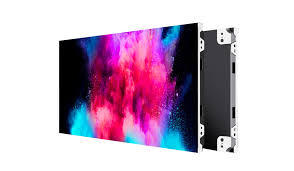
1. Key Manufacturing Processes and Technical Parameters
The production of LED LCD screens encompasses various stages, including substrate preparation, thin-film transistor (TFT) array fabrication, cell assembly, liquid crystal injection, and backlight integration. Key parameters influencing product performance involve:
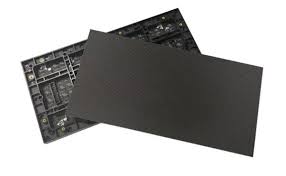
- Resolution and Pixel Density: Typical high-end LED LCD displays now achieve 4K resolution (3840 x 2160 pixels) and pixel densities over 150 PPI for enhanced clarity. Precise control during photolithography ensures uniformity in pixel size and placement.
- Backlight Technology: Since the brightness and color uniformity depend heavily on backlighting, manufacturers use edge-lit or direct-lit LED backlights with advanced diffuser sheets and optical films. The implementation of quantum dot enhancement layers (QDEL) improves color gamut coverage, reaching up to 100% of the DCI-P3 color space.
- Response Time and Refresh Rate: For applications such as gaming or medical imaging, response times below 5 milliseconds and refresh rates of 120Hz or more are standard requirements, necessitating refined TFT designs and optimized liquid crystal materials.
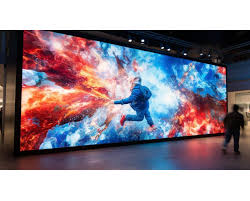
- Viewing Angle and Color Accuracy: IPS (In-Plane Switching) panels dominate to achieve wide viewing angles (>178° horizontal and vertical) and maintain color fidelity, achieving Delta E values less than 3.
- Power Efficiency: With global trends emphasizing sustainability, LED LCDs are engineered to minimize power consumption, targeting less than 10W power usage for standard 24-inch displays.
2. Industry Standards and Testing Protocols
To ensure durability and performance consistency, LED LCD screens are subjected to international standards such as:
- IEC 62108: Governing the environmental testing of LEDs, including thermal cycling and shock resistance.
- ISO 13406-2: Defining pixel defect classes and inspection criteria to uphold display quality.
- RoHS and REACH Compliance: Ensuring all materials meet hazardous substance restrictions and environmental safety requirements.
Comprehensive testing is conducted for luminance uniformity, color accuracy using spectroradiometers, and mechanical robustness via drop and vibration tests, following protocols established by authoritative bodies like the Society for Information Display (SID).
3. Manufacturing Challenges and Solutions
Manufacturing LED LCD panels introduces challenges such as semiconductor device yield, liquid crystal alignment uniformity, and integration of thinner, flexible substrates. Advances in robotics for precise TFT deposition, automated optical inspection (AOI), and cleanroom management contribute to yield improvements exceeding 90%.
Processors utilize algorithm-driven compensation for pixel defects, leveraging image processing chips that dynamically adjust subpixel luminance to mask imperfections without compromising visual quality.
Additionally, the integration of flexible substrates is an emerging frontier, enabling curved and foldable displays. This requires innovations in substrate materials like polyimide and overcoming challenges related to stress-induced birefringence affecting display clarity.
4. Case Study: High-End Medical Imaging Displays
In medical diagnostics, LED LCD screens must deliver impeccable color accuracy, high brightness (over 600 cd/m²), and exceptional grayscale rendering. Manufacturers implement stringent calibration using DICOM (Digital Imaging and Communications in Medicine) Part 14 standards to ensure consistency in grayscale display critical for radiology.
By integrating MIL-STD-810G compliant ruggedization, these displays operate reliably in diverse clinical environments, evidencing the convergence of manufacturing precision and application-specific requirements.
Conclusion
The LED LCD screen manufacturing landscape is defined by rapid innovation, meticulous adherence to standards, and the drive towards sustainable, high-performance products. Understanding the interplay of technical parameters from resolution to backlight efficiency, complying with global standards, and overcoming manufacturing challenges through state-of-the-art techniques are imperative in producing industry-leading displays. With ongoing advancements in materials and fabrication technology, next-generation LED LCDs promise even greater feats in image quality, flexibility, and energy efficiency, underpinning their indispensability across diverse applications.













