

Advances and Technical Insights in LED Display Manufacturing for Superior Visual Performance
The LED display industry has experienced rapid technological evolution over recent years, driven by demanding applications in advertising, public information, sports arenas, and digital signage worldwide. As a professional LED display engineer with extensive experience in design, manufacturing, and quality assurance, I will delve into the critical technical parameters, manufacturing processes, and standards that govern the production of top-tier LED displays. This article aims to provide authoritative insights for engineers, manufacturers, and industry stakeholders seeking to optimize display performance, durability, and visual quality.
LED displays primarily consist of arrays of light-emitting diodes configured to form pixels. Each pixel’s brightness, color accuracy, and uniformity are crucial factors that define the perceived visual quality. The fundamental technical parameters include pitch size (pixel pitch), brightness, color gamut, contrast ratio, refresh rate, viewing angle, and lifetime.
Pixel pitch defines the distance between the centers of two adjacent pixels, typically measured in millimeters. Smaller pixel pitches (e.g., 1.2mm to 2.5mm) yield higher resolution displays suitable for close viewing distances, essential in indoor environments such as control rooms and retail displays. Larger pitches (above 5mm) are common for outdoor applications where visibility at distance is prioritized. Industry standards like the International Electrotechnical Commission (IEC) 62368-1 outline the performance requirements for electronic displays to ensure safety and electromagnetic compatibility.
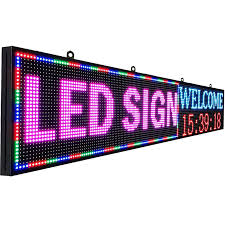
Brightness is another core parameter measured in nits (cd/m²). For indoor LED displays, brightness levels generally range between 600 to 1500 nits, providing vivid images under controlled lighting. In contrast, outdoor LED displays require brightness from 5000 to over 8000 nits to combat sunlight exposure. Technologies such as high-efficiency LED chips and brightness compensation circuits are integrated to maintain consistent output under diverse environmental conditions.
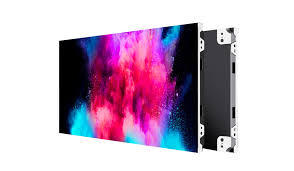
Color accuracy and gamut are achieved by using high-quality RGB LEDs coupled with advanced calibration techniques. Modern displays utilize dynamic color management algorithms ensuring compliance with color standards such as sRGB and Rec. 709, critical for applications demanding precise color reproduction, including broadcast studios and medical imaging.
Refresh rate affects image smoothness and eye comfort. Most LED displays target at least 1920Hz refresh rate or higher to reduce flicker and motion blur, crucial for live video streaming and fast-motion content. Additional parameters like gray scale levels (typically 14-bit) enhance image gradation for natural, sharp visuals.
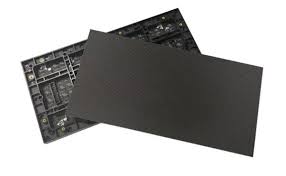
The manufacturing process incorporates several vital stages: substrate preparation, LED chip mounting, soldering, driver IC integration, and encapsulation. Quality control follows rigorous testing including optical uniformity, thermal stress, and long-term durability assessments. Thermal management, employing heat sinks and ventilation, ensures the LED modules operate within optimal temperature ranges to prevent premature degradation.
Encapsulation protects LED chips from moisture and mechanical damage. Common materials include silicones and epoxies with high transparency and UV stability. Advanced display assemblies embed waterproof and dustproof ratings (IP65 or higher) to withstand harsh outdoor environments.
Industry benchmarks, like those published by the Society for Information Display (SID) and the Video Electronics Standards Association (VESA), guide manufacturers to meet interoperability, safety, and performance expectations. An illustrative case study from a recent stadium installation involved deploying a 2mm pitch indoor-outdoor hybrid display, delivering ultra-high definition visuals visible clearly from over 100 meters, boasting over 6000 nits brightness and 120° viewing angle, ensuring immersive spectator experience.
In conclusion, mastering the interplay of pixel design, luminous efficiency, color science, and rugged assembly underpins leadership in LED display manufacturing. Continuous innovation in materials, electronics, and thermal solutions coupled with adherence to international standards ensures the delivery of robust, visually compelling displays that meet evolving global market demands.













