

Advanced LED Display Manufacturing: Technical Insights and Industry Best Practices
The LED display industry has witnessed significant technological advancements over the past decade, driving innovations that enhance display quality, durability, and energy efficiency. As a professional LED display engineer with extensive experience in screen manufacturing, this article aims to provide a comprehensive analysis of the technical parameters, production methodologies, and quality standards that govern modern LED display fabrication. This insight is crucial for manufacturers, designers, and system integrators seeking to optimize display performance in diverse applications ranging from indoor advertising to large-scale outdoor installations.
At the core of LED display technology lies the light-emitting diode (LED) itself, which serves as the fundamental light source. The manufacturing process begins with selecting high-quality LED chips, which directly influences brightness, color accuracy, and lifespan. Typically, LEDs conforming to the industry standards such as those outlined in the JEDEC JESD51 series for thermal and electrical characteristics are preferred. High-brightness surface-mounted device (SMD) LEDs, often in configurations like 3-in-1 (red, green, blue diodes integrated within a single package), enable pixel pitches as fine as 0.9 mm for indoor displays, ensuring razor-sharp image quality.
Pixel pitch—a key technical parameter defined as the center-to-center distance between adjacent pixels—dictates the resolution and viewing distance of the display. Indoor LED screens often feature pitches ranging from 0.9 mm to 3 mm, providing high resolution suitable for close viewing scenarios such as retail environments and control rooms. For outdoor signage, pixel pitches typically extend from 4 mm to 10 mm, balancing visibility and cost over longer viewing distances. Optimizing pixel pitch requirements in alignment with the intended application mitigates common issues such as pixelation and color blending.
Thermal management is an often underestimated yet critical factor that impacts LED performance and longevity. Excessive heat accelerates phosphor degradation and causes chromaticity shifts. Effective management is achieved through the integration of aluminum LED cabinets with good thermal conductivity, convection-enhancing vent designs, and active cooling mechanisms in high-power modules. Adhering to standards like the IPC-9592 governs the reliability of electronic assemblies by specifying maximum junction temperatures (typically below 85°C for LEDs). Manufacturers employ thermal imaging and real-time temperature monitoring during production to ensure compliance.
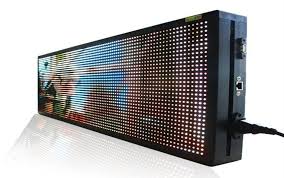
Power consumption and energy efficiency are increasingly important, both for cost management and environmental considerations. LED displays generally offer energy consumption figures ranging from 150 to 400 watts per square meter, a significant improvement over LCD and projection technologies. Innovators integrate driver ICs that support pulse-width modulation (PWM) dimming control, reducing power usage without compromising brightness or color fidelity. Adherence to energy efficiency standards such as ENERGY STAR or equivalent regional norms further validates product credibility and market acceptance.
Calibration and color uniformity constitute another pivotal production stage. Automated optical measurement systems using spectroradiometers and colorimeters assess chromaticity coordinates, gamma curves, and luminance uniformity. The aim is to maintain color deviation within Delta E< 2, ensuring visual consistency across the entire screen surface. Algorithms for automatic brightness and color correction compensate for operational aging, environmental conditions, and variations among LED batches. These calibration processes are indispensable for applications demanding precise color reproduction, such as broadcast studios, museums, and medical imaging.
Quality control and reliability testing are systematically embedded throughout manufacturing. Modules undergo environmental stress screening (ESS), including humidity, vibration, and shock tests, to simulate real-world operational conditions as per IEC 60068 standards. Lifespan evaluations often target a minimum continuous operation of 100,000 hours at rated brightness with less than 5% luminance degradation, underpinned by the application of high-quality materials and robust assembly procedures. Supply chain traceability and component certification also play significant roles in mitigating risks and ensuring consistent manufacturing outcomes.
Reflecting on industry case studies, globally leading manufacturers like Samsung, Leyard, and Unilumin highlight the trend towards modular design with seamless cabinet alignment and integrated control systems. State-of-the-art software platforms not only enable real-time diagnostics and content management but also facilitate remote firmware updates, thereby minimizing downtime and maintenance costs. These technological integrations demonstrate the crucial intersection of hardware innovation with digital network capabilities for next-generation LED display ecosystems.
In conclusion, mastering the multifaceted aspects of LED display manufacturing—from LED selection, pixel architecture, thermal management, and power efficiency to calibration and durability testing—is essential for delivering products that meet stringent commercial and technical demands. By rigorously implementing industry standards, leveraging advanced materials and processes, and committing to continuous quality improvement, manufacturers can produce LED displays that excel in performance, reliability, and visual impact, thus advancing the future of display technology on an international scale.













