

Advanced Technologies and Best Practices in LED Display Manufacturing for Superior Performance
In the rapidly evolving landscape of visual display technology, LED (Light Emitting Diode) displays stand at the forefront, offering unparalleled brightness, color fidelity, and energy efficiency. For industries ranging from advertising and entertainment to transportation and telecommunications, understanding the complexities of LED screen manufacturing is critical to producing high-quality, durable, and high-performance displays.
This article delves into the advanced technologies, manufacturing processes, and quality parameters that define superior LED displays. Further, it highlights industry standards, practical engineering insights, and best practices that manufacturers and engineers must adhere to for optimal results.
Fundamentals of LED Display Technology
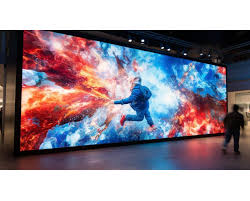
An LED display operates by arranging thousands to millions of tiny LEDs, each acting as a pixel or subpixel, controlled to emit precise colors and light intensities. The common subpixel configuration involves a triad of red, green, and blue LEDs (RGB), which combine to render the full color spectrum. The ability to modulate these diodes individually and simultaneously enables dynamic, high-resolution images and video playback.
Key Components and Materials
1. LED Chips: Utilizing high-brightness InGaN (Indium Gallium Nitride) technology for blue and green emitters, and AlGaInP (Aluminum Gallium Indium Phosphide) for red emitters, modern LEDs offer longevity and luminous efficacy exceeding 150 lm/W at 350 mA drive currents (Source: IEEE Transactions on Electron Devices, 2021).
2. Printed Circuit Boards (PCBs): Rigid or flexible PCBs made with high TG (glass transition temperature) materials ensure thermal stability. Standard boards feature FR4 substrates with thermal vias to dissipate heat, crucial for maintaining LED lifespan.
3. Driver ICs and Power Modules: Accurate current regulation and PWM (Pulse Width Modulation) control are critical to prevent color shift and maximize device life. Industry-leading driver ICs provide 14-bit grayscale performance and high refresh rates up to 3840 Hz to eliminate flicker in broadcast applications.
4. Encapsulation and Optics: Silicone encapsulants with high UV resistance protect LED chips. Optics such as lenses or diffusers enhance viewing angle and uniformity. Typical viewing angles range from 120° to 160°, adjustable according to application requirements.
Manufacturing Process
The manufacturing workflow encompasses multiple stages to ensure finesse and consistent quality:
- SMD Packaging: Surface-Mount Device (SMD) LEDs are assembled using high-precision pick-and-place machines. The accuracy level typically ranges within ±10 microns to avoid pixel misalignment.
- Module Assembly: LED modules composed of arrays of LED PCBs are constructed under ISO 9001 quality management systems to maintain process integrity and standardization.
- Calibration and Binning: LED chips undergo rigorous binning based on luminous intensity and color coordinates (CIE1931 standard) to ensure color uniformity with Delta E< 2 across the display, achieving professional-grade color consistency required for broadcast-level screens.
- Testing and Quality Control: Extensive functional testing includes burn-in processes (minimum 72 hours at elevated temperatures), thermal cycling, humidity resistance, and electroluminescence testing to detect early failures. Longevity testing targets an operational lifetime of 100,000 hours at normal operating conditions.
Technical Parameters Defining Performance
1. Pixel Pitch: The distance between the centers of adjacent pixels, typically ranging from 0.7 mm (fine pitch for indoor) to 10 mm (outdoor large displays). Smaller pitch sizes deliver higher resolution but increase production costs and complexity.
2. Brightness: Measured in nits (cd/m²), indoor LED displays usually operate between 800 - 1500 nits, whereas outdoor displays exceed 5000 nits to combat ambient light.
3. Refresh Rate: High refresh rates (>1920 Hz) are essential to prevent flicker, particularly in video capture and broadcast scenarios.
4. Contrast Ratio: Dynamic contrast ratio improvements stem from higher LED modulation precision and advanced driver algorithms, yielding ratios beyond 3000:1 for vivid image reproduction.
5. Color Gamut and Accuracy: Most LED displays target color gamuts covering 95% or more of Rec. 709 and DCI-P3 standards, critical for cinematic and high-fidelity applications.
Industry Standards and Certifications
- IEC 61347 for LED lighting safety.
- CE, FCC compliance ensuring electromagnetic compatibility.
- UL 8750 for LED equipment safety.
- RoHS directives enforce hazardous materials restrictions.
Adhering to these standards ensures legal marketability and user safety.
Emerging Trends and Innovation
Manufacturers continuously innovate to overcome challenges:
- Mini-LED and Micro-LED Technologies: By reducing LED dimensions, these display types offer extraordinary pixel density, lower power consumption, and superior contrast ratios.
- AI-Powered Calibration: Machine learning algorithms optimize color uniformity and compensate for LED aging in real-time.
- Flexible and Transparent LED Displays: New materials and bending technologies serve emerging applications in fashion, architecture, and automotive sectors.
Case Study: High-Resolution Indoor LED Display for Broadcast Studios
A leading LED manufacturer developed a 0.9 mm pixel pitch indoor LED display comprising 800mm x 600mm modules—total system size 5m x 3m. Using InGaN chips driven by advanced ICs with 3840 Hz refresh rates, the display delivered exceptional color uniformity (Delta E = 1.5) and ultra-low flicker. The product passed MIL-STD-810G thermal and vibration tests, verifying its robustness for studio environments. Employing a rigorous binning and calibration protocol pre-shipment reduced customer adjustment time by 50%, demonstrating operational efficiency gains.
Maintenance and Longevity
To maximize LED display lifespan:
- Regular cleaning using non-abrasive materials prevents optical degradation.
- Monitoring environmental parameters such as humidity (<60%) and ambient temperature (15–35 °C) prevents premature failure.
- Firmware updates ensure optimal driver performance and feature enhancements.
Conclusion
Advanced LED display manufacturing integrates precise materials science, cutting-edge electronics, and rigorous quality control, delivering displays that meet demanding applications worldwide. Understanding these facets aids manufacturers and engineers in producing reliable, vibrant, and long-lasting LED display solutions. Embracing emerging innovations alongside proven manufacturing practices positions the industry to meet future market demands and elevate user experiences.
References
- IEEE Transactions on Electron Devices, “High-Efficiency InGaN LEDs for Display Applications,” 2021.
- International Commission on Illumination (CIE) standards, 1931.
- IEC 61347-2-13: LED Drivers for Lighting.
- UL Standards for LED equipment, UL 8750.
- RoHS Directive 2011/65/EU.
- MIL-STD-810G Environmental Engineering Considerations and Laboratory Tests.













