

Color Calibrated LED Displays: Enhancing Visual Accuracy and Performance
In today's digital era, the demand for precise color reproduction and superior display quality has significantly increased across various industries, including advertising, broadcasting, medical imaging, and professional design. Color calibrated LED displays have emerged as a crucial technology to meet these requirements, offering enhanced visual accuracy and consistent performance. This article delves into the fundamental principles, technical specifications, and industry best practices surrounding color calibration in LED displays, providing valuable insights garnered from extensive field experience and authoritative standards.
Understanding Color Calibration in LED Displays
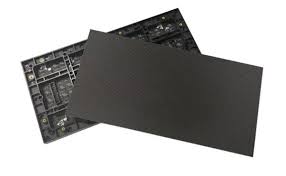
Color calibration is the process of adjusting the LED display's output to achieve a standardized and accurate color representation aligned with specific color spaces such as sRGB, Adobe RGB, or DCI-P3. Due to inherent differences in LED manufacturing and aging, each LED module presents unique color characteristics that can vary across the entire display panel. Without precise calibration, color inconsistencies lead to diminished image quality and unreliable content presentation.
To resolve these issues, color calibration ensures that each LED pixel conforms to target chromaticity coordinates by modifying parameters such as red, green, and blue (RGB) gain and gamma values. Advanced calibration methods often utilize colorimeters or spectroradiometers to measure color output at multiple points. Intelligent calibration software then applies correction matrices, achieving uniformity in luminance and color temperature.
Key Technical Parameters for Color Calibration
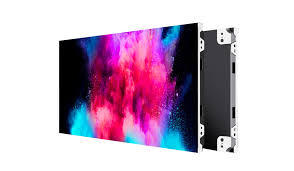
1. Color Gamut: The range of colors the LED display can reproduce. High-end displays target wide color gamuts such as DCI-P3 or Rec. 2020 for cinematic and broadcast applications.
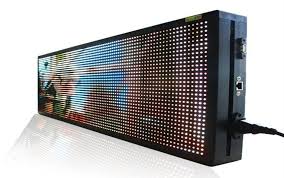
2. Color Accuracy (ΔE): The perceptible difference between the intended color and the displayed color, with ΔE values below 2 considered indistinguishable to the human eye according to CIEDE2000 standards.
3. White Point: The reference white color temperature, usually standardized at 6500K for sRGB compliance but adjustable depending on user requirements.
4. Luminance Uniformity: Ensures consistent brightness across the entire display, often above 85% uniformity to avoid hot spots or dim areas.
5. Gamma Correction: Adjusts the brightness response curve to reflect linearity in perceived luminance, generally calibrated to gamma 2.2 or 2.4 standards.
Calibration Methods and Technologies
- Factory Calibration: Industry leaders perform initial calibration during manufacturing using precision instruments, establishing baseline color profiles and LUTs (Look-Up Tables) embedded in the display hardware.
- In-field Calibration: Routine recalibration is necessary to compensate for LED aging and environmental impacts. Portable spectroradiometers coupled with software enable technicians to recalibrate on-site efficiently.
- Real-time Calibration: Some advanced LED video wall systems implement dynamic calibration technology that continuously monitors color output and adjusts parameters proactively to maintain visual consistency over time.
Industry Applications and Case Studies
In professional broadcasting, color calibrated LED displays ensure standardized imagery aligning with the International Telecommunication Union's ITU-R BT.709 and BT.2100 standards, critical for HDR (High Dynamic Range) content reproduction. For example, Sony’s high-end LED panels employ multi-point color calibration, achieving ΔE values below 1.5, thus providing broadcasters with unmatched visual fidelity.
Similarly, in medical imaging, precise color calibration guarantees that diagnostic images retain accurate hues, enhancing reliability in clinical assessments. Manufacturers comply with the DICOM (Digital Imaging and Communications in Medicine) standard, often adjusting LED displays to match grayscale and color specifications accordingly.
Challenges and Future Trends
Despite advanced calibration methods, challenges remain such as compensating for environmental variations (temperature, humidity) and the color degradation caused by LED aging. Integrating AI-driven calibration algorithms is an emerging trend that promises continuous self-optimization by learning from long-term panel behavior and ambient conditions.
Moreover, mini-LED and micro-LED technologies bring significantly improved uniformity and color gamut capabilities, albeit necessitating more complex calibration due to higher native resolutions and cluster variances. Industry collaboration on unified calibration protocols is vital to streamline production and operational maintenance.
Conclusion
Color calibrated LED displays represent a cornerstone in delivering high-quality, color-accurate visual content across multiple professional domains. Adhering to stringent calibration standards and leveraging precise instrument measurement are imperative for manufacturers and end-users alike to achieve optimal performance. As display technology advances and AI integration matures, the future will bring even greater color fidelity and consistency, further pushing the boundaries of visual experience.
References:
- Society for Information Display (SID) - Display Color Calibration Techniques
- International Commission on Illumination (CIE) - CIEDE2000 Color Difference Formula
- ITU-R BT.709 and BT.2100 Standards
- DICOM Standard for Medical Imaging
- Sony Professional Display Technical Whitepapers













