

LED Display Manufacturing: Technology, Applications, and Industry Challenges
The evolution of LED display technology has revolutionized visual communication across multiple industries, from advertising and events to transportation and control rooms. As a professional LED display engineer with years of practical experience, this article delves into the core aspects of LED display manufacturing, practical applications, advantages, common technical challenges, and emerging trends shaping the industry today.
Core Technology and Technical Parameters
Light Emitting Diode (LED) displays consist of arrays of individual LEDs serving as pixels. These pixels emit light directly, creating vivid images with high brightness and contrast. Typical pixel pitch—the center-to-center distance between adjacent LEDs—ranges from 0.9 mm (fine pitch, indoor) to 16 mm (coarse pitch, outdoor), impacting resolution and viewing distance. For example, indoor LED panels usually feature a pixel pitch between 0.9 mm and 4 mm for close-distance viewing clarity, whereas outdoor displays prioritize brightness levels exceeding 5,000 nits to overcome ambient light.
Common LED display parameters include:
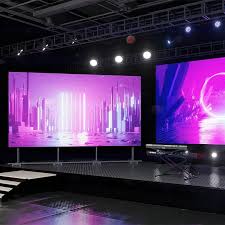
- Refresh Rate: ≥ 1920 Hz to ensure flicker-free videos and smooth motion
- Color Depth: 14-bit or 16-bit for rich color reproduction and subtle gradients
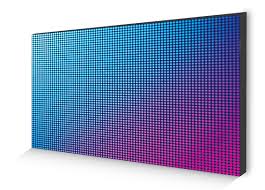
- Viewing Angle: ≥ 140° horizontally and vertically for wide visibility
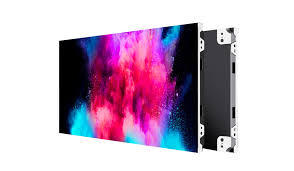
- Lifetime: 50,000+ hours of continuous operation, with LED chips designed for longevity
The manufacturing process involves precise component sourcing, PCB layout optimization for heat dissipation, uniform soldering of LED chips, and rigorous quality testing under international standards such as IEC 62368-1 for electronic safety and IEC 62087 for measurement of power consumption.
Practical Applications
LED displays cater to diverse sectors:
- Outdoor Digital Billboards: Leveraging high brightness and weatherproof casing for dynamic advertising in public spaces.
- Sports Arenas and Concerts: Large-scale modular screens provide immersive fan experiences with instant replays and live feeds.
- Transportation Hubs: Information panels at airports and train stations with high visibility and legibility in various light conditions.
- Control and Command Centers: Fine pitch LED walls offer extreme detail for monitoring critical systems and real-time data visualization.
- Retail and Retailtainment: Indoor LED video walls enhance branding and customer engagement with interactive content.
Advantages of LED Displays
Compared to traditional LCD and projection systems, LED displays offer:
- Superior Brightness and Contrast: Direct emission enables outdoor readability even under direct sunlight.
- Wide Viewing Angles: Ensures consistent image quality across large audiences.
- Energy Efficiency: Lower power consumption per lumen than many competing technologies.
- Scalability and Modularity: Easy installation of customized sizes and shapes supporting seamless expansion.
- Durability and Longevity: High resistance to shock, vibration, and moisture when properly sealed.
Common Problems and Solutions
Despite advances, LED displays face technical hurdles:
- Color Uniformity Issues: Non-uniform brightness or color tinting caused by mismatched LED batches or improper calibration. Regular maintenance and calibration software can mitigate this.
- Dead or Flickering Pixels: Result from soldering defects or component failure; addressing this requires quality manufacturing and effective diagnostics tools.
- Thermal Management: Overheating reduces LED lifespan; incorporation of effective heat sinks and ventilation is critical for performance stability.
- Moisture Intrusion: Particularly in outdoor applications, improper sealing may cause corrosion; conformal coatings and IP65+ rated enclosures are industry standards.
- Image Retention and Burn-in: Less common than OLED, but static image display for prolonged periods should be avoided through content management practices.
Latest Trends and Innovations
The LED display industry continues to innovate rapidly:
- MicroLED and MiniLED Advances: Smaller LED sizes enable ultra-fine pitch displays with resolutions approaching 8K, expanding use in home theaters and medical imaging.
- Transparent LED Displays: Allow for see-through effects widely used in retail windows and architectural elements, blending aesthetics with functionality.
- High Dynamic Range (HDR) Capabilities: Enhances contrast and color volume, making content more lifelike.
- AI-Driven Calibration and Defect Detection: Automated quality control using machine learning enhances manufacturing yields and reduces downtime.
- Flexible and Curved Displays: Enable creative installations on non-flat surfaces, increasing versatility in design.
Industry Standards and Certifications
For safety, performance, and interoperability, LED display manufacturers comply with:
- IEC 62368-1: Safety standard for audio/video and IT equipment.
- ITU-R BT.709: Colorimetry standard for HD content display.
- RoHS and REACH: Environmental compliance restricting hazardous substances.
- IP Ratings (Ingress Protection): Defines dust and water resistance for outdoor applications, typically IP65 and above.
In conclusion, the LED display manufacturing sector blends advanced materials science, electronics engineering, and precision manufacturing to deliver high-performance visual solutions. By understanding the technical parameters, common challenges, and current innovations, industry professionals can drive improved product reliability and customer satisfaction. The ongoing developments promise even greater clarity, energy efficiency, and creative potential for LED displays in the near future.













