

Advanced Insights into LED Display Manufacturing: Techniques, Parameters, and Industry Standards
The LED display industry has dramatically evolved over recent decades, transforming not only the way we communicate but also the standards by which visual technology is measured. As a seasoned LED display engineer with extensive experience across manufacturing, quality control, and system integration, I present a comprehensive overview of the critical aspects behind high-quality LED display production. This article delves into the technical parameters, manufacturing methodologies, and globally recognized industry standards that dictate the performance and reliability of modern LED displays.
Introduction
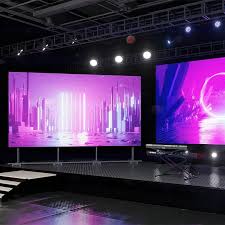
LED (Light Emitting Diode) displays have become the cornerstone of modern visual communication, utilized in a wide range of applications from outdoor advertising to complex control rooms and immersive entertainment environments. The meticulous manufacture of these displays requires a blend of advanced technology, precision engineering, and stringent quality assurance practices. The goal is to ensure outstanding brightness, uniformity, color accuracy, durability, and energy efficiency. This article unpacks the crucial components and processes in LED display manufacturing while underscoring the importance of adhering to international standards such as IEC 62717 and IEC 62031.
Main Body
1. Core Components and Technical Specifications
At the heart of LED display manufacturing lies the selection of high-performance LED chips. Typically, SMD (Surface-Mount Device) LEDs dominate the industry due to their compact size and high luminous efficiency. Critical technical parameters include:
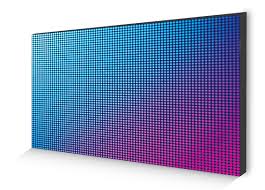
- Pixel Pitch: Defined as the distance between the centers of two adjacent LED pixels, pixel pitch directly influences resolution and viewing distance. Common pixel pitches range from 0.9 mm for fine pitch indoor displays to 16 mm or more for large outdoor screens. According to SID (Society for Information Display), indoor displays typically require pixel pitches under 2.5 mm to maintain high resolution at close distances.
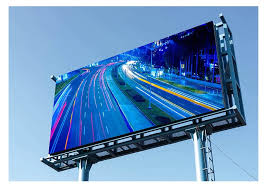
- Brightness: Outdoor displays demand luminance levels exceeding 5,000 nits to ensure readability under direct sunlight, whereas indoor displays commonly range between 800 to 1,200 nits. The LED chip’s quality and driving current profoundly impact brightness and energy consumption.
- Color Rendering and Calibration: Achieving superior color accuracy mandates precise binning of LED dies for uniform chromaticity coordinates (CCT - Correlated Color Temperature). Post-manufacturing calibration using gamma correction and grayscale adjustment according to standards like Rec. 709 ensures faithful color reproduction.
- Refresh Rate and Gray Scale: High refresh rates (≥ 3,000 Hz) prevent flickering, crucial for broadcast and video applications. A gray scale of at least 14-bit supports smooth gradations critical in camera-captured environments.
2. Manufacturing Processes and Quality Assurance
The manufacturing pipeline incorporates several key stages:
- PCB Fabrication and LED Mounting: High-density PCBs (Printed Circuit Boards) customized for thermal dissipation and signal integrity are manufactured using FR-4 or specialized materials. Automated pick-and-place machines mount LEDs with micron-level precision, ensuring uniformity and reducing defects.
- Module Assembly: LED modules are typically formed in sizes like 320x160 mm or 500x500 mm, incorporating power supplies and driver ICs. Encapsulation materials protect LEDs from moisture and dust, prolonging lifespan to over 100,000 hours under normal operating conditions.
- Testing and Calibration: Industry-standard testing procedures involve photometric measurements using integrating spheres and spectroradiometers, in line with IEC 62717’s performance testing framework. Module calibration is often done using software algorithms that compensate for temperature drift and LED aging, ensuring consistent brightness and color over time.
3. Industry Standards and Compliance
Adhering to international standards is critical for ensuring product safety, interoperability, and longevity:
- IEC 62717 specifies performance requirements for LED modules for general lighting, including photometric and electrical characteristics that also apply to LED display arrays.
- IEC 62031 covers safety requirements and test methods for LED modules.
- RoHS (Restriction of Hazardous Substances Directive) compliance ensures sustainability by limiting hazardous substances like lead and mercury.
4. Real-World Applications and Case Studies
One prominent application is the stadium LED displays, such as those used in the Tokyo 2020 Olympics, where over 10,000 square meters of LEDs with pixel pitches as small as 2.5 mm were installed. This project required tight collaboration between design engineers and manufacturers to balance high resolution with ambient brightness and viewing angles exceeding 140 degrees horizontally.
Similarly, control rooms for critical infrastructure employ LED video walls with rigorous redundancy and calibration standards to guarantee uptime and visual consistency. This involves seamless module integration with high refresh rates and low latency to avoid visual artifacts.
Conclusion
Manufacturing high-quality LED displays is a complex synthesis of advanced materials, precise engineering, rigorous testing, and compliance with international standards. Understanding the intricate balance between pixel pitch, brightness, refresh rate, and durability helps manufacturers deliver products that meet the demanding requirements of modern visual communication. As industry trends push towards finer pitches, higher brightness, and smarter calibration methods, ongoing research and innovation remain pivotal. Professionals tasked with LED display engineering must continuously update their knowledge and practices, ensuring that their products not only meet but exceed global expectations for performance, safety, and sustainability.
By integrating proven manufacturing techniques with rigorous quality control and adherence to authoritative standards, the LED display industry continues to illuminate our world, delivering vivid, reliable, and energy-efficient solutions across diverse sectors.













