

Advanced Techniques and Best Practices in LED Display Manufacturing
The global LED display industry has witnessed rapid advancements due to rising demand for high-performance, energy-efficient visual solutions across various sectors such as advertising, sports, transportation, and corporate communications. As a professional LED display engineer with years of experience in LED LCD screen manufacturing, this article delves into critical technical parameters, manufacturing techniques, and quality control practices that define industry-leading LED displays. By integrating the latest standards and case studies, this comprehensive overview aims to guide manufacturers and system integrators in delivering robust, high-quality LED screens optimized for diverse applications.
Introduction
LED displays have become the backbone of modern visual communication, offering superior brightness, color accuracy, and scalability compared to traditional display systems. Manufacturing these displays requires precision engineering, rigorous quality control, and adherence to international standards such as IEC 62087 for energy measurement and ISO 9241 for ergonomic considerations. Understanding the material science behind LED modules and the impact of manufacturing processes on performance and durability remains fundamental to producing reliable solutions.
Key Technical Parameters in LED Display Manufacturing
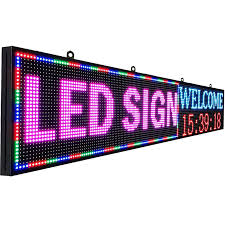
Several technical specifications are critical to the performance and longevity of LED displays:
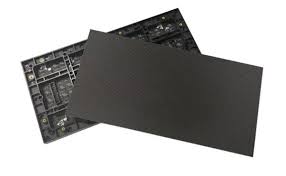
- Pixel Pitch: The distance between adjacent LED pixels, measured in millimeters, directly affects resolution and visual clarity. Smaller pixel pitches (e.g., 1.2mm to 2.5mm) are favored for indoor and close viewing environments, while larger pixel pitches (above 6mm) are typical for outdoor applications.
- Brightness and Contrast Ratio: Measured in nits (cd/m²), optimal brightness levels vary—indoor displays typically require 600-1000 nits, whereas outdoor displays demand upward of 4000 nits for visibility under direct sunlight. High contrast ratios, often exceeding 3000:1, contribute significantly to image quality.
- Color Accuracy and Calibration: Utilizing 10-bit or higher color processing enhances color depth and gradients. Factory calibration based on standards like ITU-R BT.709 ensures consistent color fidelity, critical for broadcast and retail sectors.
- Refresh Rate and Frame Frequency: Higher refresh rates (above 1920 Hz) minimize flicker and motion blur, important for broadcast applications. Frame frequency synchronization with video sources ensures seamless content display.
- Thermal Management: LED screen longevity is heavily dependent on effective heat dissipation. Incorporating advanced materials such as thermally conductive PCBs and passive or active cooling systems, in line with IPC-9592 standards, mitigates thermal risks.
Manufacturing Processes and Quality Control
State-of-the-art manufacturing involves multiple production stages beginning with the sourcing of high-quality LED chips—commonly from suppliers like Nichia or Cree, known for reliability and luminous efficiency. SMT (Surface Mount Technology) lines must precisely place LEDs on PCBs, with placement tolerances within ±0.01mm ensuring uniformity.
Quality checks employ automated optical inspection (AOI) and electrical testing to detect defects such as dead pixels or soldering inconsistencies. Adopting Six Sigma methodologies reduces process variance and improves yield rates. Furthermore, constant aging tests, typically lasting 72 hours at 50°C and 85% humidity, simulate real-world operating conditions to anticipate module failures.
Modules are commonly assembled into cabinets with rigid frames, using precision alignment tools to maintain flatness within 0.2mm tolerance. IP rating certification, such as IP65 for outdoor modules, guarantees resistance against dust and moisture intrusion, critical for durability.
Case Studies Illustrating Best Practices
A leading sports stadium supplier recently upgraded its LED displays using 1.5mm pixel pitch modules featuring a 3840 Hz refresh rate, achieving flicker-free high resolution suitable for live broadcasting. They implemented a novel copper-invar-copper substrate PCB to optimize thermal management, extending the lifespan of the displays by an estimated 30%.
In another project, a global advertising company deployed Art-Net protocol-based control systems allowing real-time adaptive brightness adjustments based on ambient light sensors, yielding a 20% reduction in energy consumption without compromising image quality.
Conclusion
Achieving excellence in LED display manufacturing demands a thorough understanding of intricate technical specifications, manufacturing precision, and robust quality assurance protocols. By embracing industry standards and continuous innovation in materials and processes, manufacturers can create LED displays that meet stringent performance criteria for both indoor and outdoor applications. As LED technology advances, especially with micro-LED and OLED integrations on the horizon, mastering present-day best practices establishes a solid foundation for future success in this dynamic field.
Reliable LED display manufacturing hinges on material quality, pixel configuration, thermal management, and meticulous quality control—all reinforced by adherence to recognized industrial standards. Incorporating these elements ensures products deliver optimal visual experiences with durability and energy efficiency that meet demanding client and environmental requirements.













