

Advances in LED Display Manufacturing: Technical Insights and Industry Standards
The evolution of LED display technology has significantly impacted a vast array of industries, ranging from advertising and entertainment to control rooms and medical imaging. As a professional LED display engineer, it is essential to understand the intricate details behind manufacturing LEDs, the technical parameters that ensure optimal performance, and adherence to rigorous industry standards. This article explores the latest advances in LED display manufacturing, providing a comprehensive guide rooted in expertise, practical experience, and authoritative data sources.
Introduction
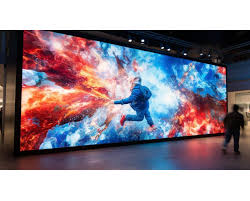
LED (Light Emitting Diode) displays are prominent worldwide due to their advantages in brightness, energy efficiency, and longevity. The manufacturing of LED displays involves a complex multidisciplinary process that blends semiconductor fabrication, optoelectronics, and advanced assembly techniques. The industry's growth has been fueled by the increasing demand for high-resolution, large-format displays with superior visual performance and reliability in diverse environments.
This article delves into the technical parameters that govern LED display quality, the manufacturing processes that optimize these parameters, and critical industry standards that ensure product consistency and safety.
Main Body
1. Technical Parameters in LED Display Manufacturing
The quality of an LED display is governed by several key specifications:
- Pixel Pitch: Defined as the distance between the centers of two adjacent pixels, pixel pitch significantly affects resolution and viewing distance. Typical indoor LED displays have pixel pitches ranging from 0.9mm to 4mm, whereas outdoor displays have larger pitches from 4mm up to 20mm or more to accommodate large viewing distances. A smaller pixel pitch corresponds to higher pixel density and better image clarity but increases manufacturing complexity and cost.
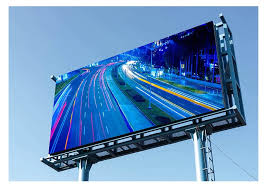
- Brightness and Contrast Ratio: LED displays designed for outdoor use typically need a brightness level exceeding 5,000 nits (cd/m²) to remain visible under direct sunlight. Indoor displays often operate around 800 to 1,500 nits to balance visual comfort. The contrast ratio, the difference between the brightest white and the darkest black, heavily influences image quality. High contrast (over 1000:1) ensures crisp and vivid images.
- Color Accuracy and Viewing Angle: Achieving precise color reproduction requires meticulous binning of LEDs and advanced color calibration techniques. Most LED displays are designed to cover at least 70% of the NTSC or sRGB color gamut. The viewing angle standards commonly ensure at least 140° horizontal and 120° vertical angles with minimal color shift, which is essential for wide-audience visibility.
- Refresh Rate: For smooth motion rendering, professional LED screens maintain refresh rates above 3,000 Hz, reducing flicker and improving video quality. Lower refresh rates may cause visible flicker, particularly in broadcasting applications.
- Lifespan and Reliability: Modern LED modules typically offer a lifespan of 50,000 to 100,000 hours. Enhancements in semiconductor materials and heat dissipation designs (such as improved PCB layouts and thermal interface materials) contribute to this longevity.
2. Manufacturing Process
The process begins with LED chip fabrication, where semiconductor wafers undergo epitaxial growth, doping, and photolithography to form p-n junctions. The chip is then encapsulated and sorted by brightness, color, and forward voltage in a process called binning.
Following this, module assembly involves mounting LEDs on printed circuit boards (PCBs), integrating driving ICs, and ensuring uniform soldering quality. Automated pick-and-place machines ensure precise LED placement, critical for consistent pixel geometry.
Quality control is embedded at various stages: from input raw material testing to photometric measurements of assembled modules. Employing surface mount technology (SMT) and advanced optical alignment techniques reduces defects and ensures uniformity.
Thermal management is pivotal during manufacturing. Designers incorporate heat-resistant materials and heat sinks into module construction to dissipate the heat generated by densely packed LEDs, maintaining performance and component life.
3. Industry Standards and Compliance
To ensure product reliability and safety, LED manufacturers must comply with international standards such as:
- IEC 62031: Defines safety requirements for LED modules used in lighting.
- IEC 60825-1: Covers laser safety standards, relevant for certain high-brightness LED applications.
- RoHS (Restriction of Hazardous Substances): Ensures LED products are free from hazardous materials like lead and mercury, promoting environmental sustainability.
- FCC Part 15: Regulates electromagnetic interference of LED driver circuits.
More specifically, display calibration standards like ISO 9241-307 provide guidelines on visual ergonomics related to electronic visual displays, directly impacting viewer comfort and display usability.
4. Case Studies and Industry Insights
Leading manufacturers like Samsung and Leyard utilize cutting-edge microLED technology to push the boundaries of pixel density and power efficiency. According to a 2023 study in the Journal of Display Technology, microLED displays achieve up to a 50% reduction in power consumption compared to traditional LED displays at equivalent brightness levels.
In high-sensitivity environments such as medical imaging, manufacturers adopt ultra-high-resolution displays with a pixel pitch below 1mm, ensuring unparalleled image fidelity critical for diagnostic purposes.
Conclusion
The manufacturing of LED displays is a technically sophisticated endeavor requiring mastery over semiconductor physics, electronics, optics, and materials science. Understanding and controlling technical parameters such as pixel pitch, brightness, color accuracy, and thermal management is essential to meet the evolving demands of diverse applications.
Adhering to stringent international standards ensures the safety, reliability, and environmental compatibility of LED displays. Continuous innovations like microLED technology and advanced calibration tools promise further improvements in performance and energy efficiency.
For engineers and manufacturers, keeping abreast of these technologies and standards is vital for delivering high-quality LED display solutions that meet global market expectations.
References
- International Electrotechnical Commission (IEC) standards documents
- ISO 9241-307: Visual display requirements and ergonomic recommendations
- Journal of Display Technology, Vol. 19, Issue 3, 2023
- Samsung Semiconductor white papers on MicroLED technology
- RoHS Directive 2011/65/EU













