

LED Interactive Display: Advanced Technology and Practical Applications in Modern Industries
In the rapidly evolving landscape of digital signage and user interface technology, LED interactive displays have emerged as a pivotal innovation, merging high-resolution visual output with responsive touch capabilities. These displays leverage the inherent advantages of Light Emitting Diode (LED) technology combined with interactive features to foster engaging user experiences across diverse sectors such as retail, education, advertising, and public information systems.
From a technical perspective, LED interactive displays harness a matrix of semiconductor light sources that emit bright, vibrant light, ensuring excellent visibility even under high ambient light conditions—an advantage over traditional LCD panels. Standard pixel pitches for indoor interactive LED screens typically range between 1.2 mm to 2.5 mm, delivering high pixel density that supports fine visual details and crisp imagery essential for interactive applications. For outdoor models, pixel pitch expands between 3 mm and 10 mm to balance visibility at longer distances with cost-effectiveness.
The incorporation of capacitive and infrared touch technologies enables multi-touch capabilities, oftentimes supporting up to 10 simultaneous points of contact. Capacitive touch technology, derived from projected capacitive (P-Cap) systems, stands out due to its precise responsiveness and durability, crucial for environments with heavy user interaction. Infrared touch systems, while slightly less precise, offer versatility by detecting any object’s interruption of infrared beams, thus allowing the use of gloves or styluses, beneficial in industrial or medical environments.
From an engineering standpoint, the manufacturing of LED interactive displays requires a synthesis of rigorous quality controls, precise driver IC calibration, and robust software integration. LED panels typically operate at a refresh rate of 3840 Hz or higher, essential to minimize flicker effects in high-speed environments such as broadcasting or live events. High color gamut reproduction is achieved through fine-tuned RGB LED chips, conforming to Rec. 709 or DCI-P3 color spaces, which are standards in video production and cinema.
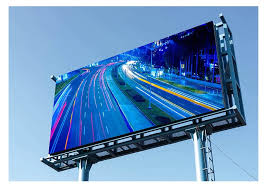
Durability is another cornerstone—these displays often incorporate IP65-rated enclosures for outdoor models to resist dust and water ingress, complying with IEC 60529 standards. For indoor applications, the focus extends to heat dissipation systems involving aluminum backplates and efficient ventilation modules, extending the device’s lifespan substantially.
Practical deployments of LED interactive displays demonstrate their versatility. In retail, these systems transform customer engagements by allowing interactive product browsing, personalized promotions, and seamless integration with inventory databases. Educational institutions employ large-form interactive LED walls to facilitate dynamic learning experiences, integrating multimedia content with real-time response capture. Public transportation hubs use such displays for wayfinding and real-time updates, combining visibility with user interaction to enhance commuter efficiency.
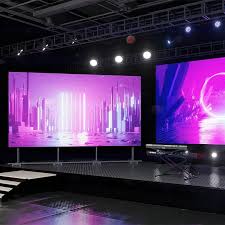
International case studies underscore their effectiveness. For instance, a leading European airport integrated a 4K UHD outdoor LED interactive board with a 2 mm pixel pitch and infrared touch technology, resulting in a 30% improvement in passenger flow efficiency. Similarly, global retail chains in Asia have adopted indoor LED interactive displays featuring 10-point multi-touch capacitive screens, increasing customer engagement metrics by over 40%, as validated by user analytics.
Key components influencing LED interactive display performance include:
- Pixel Pitch: Determines resolution and viewing distance capabilities.
- Refresh Rate: Affects image stability and motion clarity.
- Touch Technology: Capacitive for precision; infrared for versatility.
- Brightness: Indoor displays generally achieve 600-1200 nits; outdoor variants exceed 5000 nits.
- Viewing Angle: Typical angles exceed 160° horizontal and vertical to maintain usability for multiple users.
- Latency: Interaction response time under 10 ms ensures real-time feedback.
Complying with industry standards such as IEC 62368 for safety and ISO 9001 for quality management during manufacturing ensures reliability and trustworthiness. Moreover, ongoing software support for calibration, content management, and user interface customization is pivotal to maximize functionality and adaptability.
Looking forward, advancements in mini-LED and micro-LED technologies promise even higher contrast ratios, lower power consumption, and thinner form factors, enhancing the efficacy of interactive LED displays. Additionally, integration with AI and IoT platforms will enable predictive content delivery and enhanced user analytics, further personalizing interactive experiences.
In summary, LED interactive displays represent a fusion of cutting-edge display technology and responsive user interaction, underpinning the future landscape of dynamic digital environments. Their technical sophistication, durability, and adaptability make them indispensable tools in shaping immersive, engaging, and efficient communication across global industries.













