

Advancements and Best Practices in LED Display Manufacturing: A Comprehensive Industry Guide
In the ever-evolving landscape of digital display technology, LED (Light Emitting Diode) displays have emerged as the cornerstone for vibrant, energy-efficient, and versatile visual solutions. As a seasoned LED display engineer with over 15 years of industry experience, this article delves into the intricate facets of LED display manufacturing—from fundamental principles, key technical parameters, production methodologies, to quality control and emerging trends.
Fundamental Principles of LED Display Technology
LED displays are designed around arrays of tiny semiconductor light sources capable of emitting bright, color-rich light upon electrical stimulation. The advanced capability to control each LED pixel individually allows for unparalleled image clarity and seamless scalability across sizes ranging from small indoor panels to massive outdoor billboards.
Key elements defining LED display performance include:
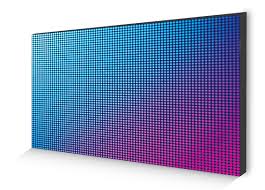
- Pixel Pitch: The distance between the centers of two adjacent pixels, typically measured in millimeters. A smaller pixel pitch results in higher resolution and image clarity, essential for close viewing distances.
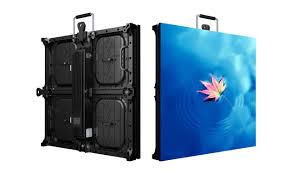
- Brightness: Measured in nits (cd/m²). Outdoor LED displays often require brightness levels exceeding 5,000 nits for visibility under direct sunlight, whereas indoor models range from 800 to 1,500 nits.
- Refresh Rate: Indicates how many times per second the image is updated, typically 1,920 Hz or higher to prevent flicker and ensure smooth video playback.
- Viewing Angle: Defined by horizontal and vertical angles, usually between 120° to 160°, this impacts the display’s visibility from different perspectives.
Robust Manufacturing Processes for LED Displays
Manufacturing high-quality LED displays entails precise selection and integration of components, advanced PCB assembly, encapsulation technology, and rigorous testing.
1. Component Selection and Testing
Industry leaders source LEDs from reputable manufacturers (Nichia, Cree, Epistar) with verified binning processes ensuring consistent brightness, wavelength, and forward voltage. Use of high-grade driver ICs (such as MBI, Chipone) and reliable power supplies are critical to stable operations.
2. PCB Manufacturing and Surface Mount Technology (SMT)
Modern LED display PCBs employ multilayer designs, often with aluminum substrates to enhance heat dissipation. SMT lines use automated pick-and-place machines with micron-level accuracy to position LEDs and ICs. Key parameters such as solder paste volume and reflow oven temperature profiles are meticulously controlled to guarantee solder joint integrity.
3. Encapsulation and Protection
To prevent LED failure caused by moisture and mechanical stress, high-performance encapsulation materials like silicone gels or UV-resistant resins are applied. Conformal coating layers add further environmental protection, especially for outdoor displays subjected to rain, dust, and temperature variability.
4. Testing and Calibration
Comprehensive testing protocols involve:
- Optical Testing for brightness uniformity and color reproduction.
- Electrical Testing for current consumption and voltage stability.
- Environmental Stress Testing including thermal cycling, humidity exposure, and vibration.
- Calibration uses colorimeters and spectrometers to fine-tune color matching across LED modules, achieving uniformity critical for high-quality visual displays.
Quality Standards and Industry Certifications
Adherence to international standards is crucial for credibility and market acceptance. Key specifications and certifications include:
- IEC 62717: LED modules for general lighting — performance requirements.
- ISO 9001: Quality management systems ensuring consistent manufacturing quality.
- RoHS Compliance: Restriction of hazardous substances, critical for environmental safety.
- UL and CE Certifications: Safety compliance for various geographic markets.
Emerging Trends Driving LED Display Innovation
As display technology evolves, certain trends are reshaping how LED displays are designed and manufactured:
- MicroLED Technology: Next-gen displays with ultra-small LEDs (~1-10 µm) embedded directly on substrates, offering unmatched brightness and contrast with low power consumption.
- Flexible and Transparent LED Displays: Enabled by novel materials and flexible PCBs, these displays open doors for innovative advertising and architectural integrations.
- AI-Driven Manufacturing: Integrating AI for defect detection, predictive maintenance, and process optimization is increasing yield and reducing production costs.
- High Dynamic Range (HDR) and Expanded Color Gamut: Implementing enhanced LED chips and advanced processing to achieve more vivid and life-like images.
Case Study: High-Resolution Indoor LED Display Installation
In a recent project involving a 2mm pixel pitch LED display for a corporate boardroom, several industry best practices ensured success:
- Selection of SMD LEDs from Nichia with tight binning for color uniformity.
- Use of a 4-layer aluminum-backed PCB to optimize heat dissipation.
- Calibration conducted with a Konica Minolta CA-410 colorimeter to achieve Delta E below 2, ensuring imperceptible color variations.
- Implementation of a robust modular design allowing quick field replacement and maintenance.
This installation achieved ultra-high-definition image quality while maintaining energy efficiency with average power consumption below 120 W/m².
Practical Recommendations for Manufacturers and Installers
- Ensure comprehensive component traceability to maintain long-term quality and warranty support.
- Invest in automation and inline inspection to minimize human errors and improve production throughput.
- Maintain strict environmental controls (clean rooms with controlled humidity) to avoid defective LEDs and solder joints.
- Adopt standard communication protocols (like HUB75 or serial interfaces) for compatibility and ease of integration.
Conclusion
LED display manufacturing is a sophisticated interplay of advanced materials science, precision electronics, and stringent quality control. The combination of evolving LED chip technology, better manufacturing automation, and rigorous testing ensures that modern LED displays deliver outstanding performance across numerous applications—from stadium scoreboards to retail showcases.
As the field progresses toward microLED and flexible displays, staying abreast of industry standards, leveraging advanced manufacturing techniques, and continual product innovation remain paramount for engineering success in this competitive arena.
References
- International Electrotechnical Commission, IEC 62717 Standard (2017), https://www.iec.ch
- “LED Display Fundamentals” by AVIXA (2022)
- Nichia Corporation Technical White Papers, https://www.nichia.co.jp
- “Advances in MicroLED Displays,” Journal of Display Technology, IEEE (2023)
- ISO 9001 Quality Management Standards, https://www.iso.org/iso-9001-quality-management.html













