

Advancements in LED Display Technology: Enhancing Visual Experience with Cutting-Edge Engineering
The evolution of LED display technology over the past decades has revolutionized the way visual content is presented across multiple industries, ranging from advertising and entertainment to control rooms and automotive dashboards. As a professional LED display engineer with extensive experience in LED LCD screen manufacturing, this article offers an in-depth exploration of contemporary advancements, key technical parameters, manufacturing best practices, and future trends shaping the LED display industry worldwide.
Introduction to LED Display Technology
LED (Light Emitting Diode) displays, distinguished by their self-emissive diode pixels, provide superior brightness, contrast, and energy efficiency compared to traditional LCDs that rely on backlight systems. Modern LED displays consist of tiny diode clusters that emit red, green, and blue wavelengths, combining to produce vibrant full-color images.
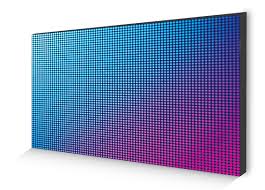
Industry standards for LED displays are well-structured around parameters including pixel pitch (the distance between two adjacent LED pixels), brightness levels (measured in nits or candela per square meter), refresh rate, power consumption, viewing angle, color gamut, and lifespan. The International Electrotechnical Commission (IEC) and Society for Information Display (SID) provide guidelines on these characteristics to ensure consistency and quality.
Key Technical Parameters in LED Display Manufacturing
1. Pixel Pitch and Resolution
Pixel pitch typically ranges from 0.7mm (fine pitch LED for indoor use) to over 16mm (large format outdoor displays). Smaller pixel pitches yield higher resolution and finer image quality but increase manufacturing complexity and cost. For commercial indoor LED displays, pixel pitches between 1.2mm and 2.5mm strike an optimal balance. For example, the industry benchmark for professional-grade LED panels like those used in broadcast studios is around 0.9mm, ensuring ultra-high-definition clarity.
2. Brightness and Contrast Ratio
Brightness is critical for both indoor and outdoor applications. Indoor LED displays usually operate between 800 to 1200 nits, while outdoor models provide upwards of 5000 to 7000 nits to overcome sunlight glare. Contrast ratio, defined as the luminance ratio of brightest white to darkest black, significantly affects image depth, commonly reaching above 3000:1 for LED panels.
3. Viewing Angle
Modern LED displays deliver wide viewing angles, typically greater than 140° horizontally and vertically, which maintains color integrity even at off-axis views. This is essential for applications like stadiums and public information boards, where viewers are dispersed.
4. Refresh Rate and Response Time
The refresh rate, usually about 1920 Hz or above, ensures smooth motion rendering and minimal flicker, complying with broadcast standards. Response time per pixel is measured in microseconds, affecting fast-moving image clarity. High-end LED screens achieve response times below 1ms.
5. Durability and Lifespan
LEDs have a rated lifespan of approximately 100,000 hours (over 11 years of continuous operation). Robustness is enhanced via IP-rated enclosures—IP65 or higher for outdoor durability against water and dust, conforming to IEC 60529 standards.
Manufacturing Best Practices and Quality Assurance
Manufacturing high-quality LED displays involves precision component selection, rigorous calibration, and advanced process controls. Key steps include:
- Chip and Module Production: Selection of high-brightness SMD (Surface Mounted Device) LEDs from trusted suppliers such as Cree, Nichia, or OSRAM assures chromatic consistency and lifecycle durability. Modules are assembled with uniform soldering using robotics to minimize defects.
- IC Integration: Driver ICs such as MBI5153 or ICN2153 underpin refresh rates and grayscale rendering. Newer ICs support 16-bit grayscale for deeper color depth.
- Calibration and Color Mapping: Post-assembly calibration with colorimeters aligns luminance and chromaticity across the panel, ensuring uniformity. Software algorithms compensate for ambient light conditions in real time.
- Thermal Management: Heat dissipation is critical to maintain LED longevity. Incorporation of aluminum heat sinks, thermal interface materials (TIMs), and active cooling in large panels is standard.
- Reliability Testing: Accelerated aging tests, including environmental stress screening (ESS) at elevated temperatures and humidity per JEDEC standards, detect early failures.
Case Study: High-Resolution LED Walls in International Broadcast Studios
A major European broadcaster recently upgraded its control room with 4K LED walls employing 0.9mm pixel pitch panels. The displays deliver 1200 nits of brightness and a 3840 x 2160 resolution with over 10,000:1 contrast ratio. Engineers meticulously conducted color calibration across panels, achieving uniformity within ΔE of less than 2, which is imperceptible to human eyes. The LED walls support 3840 Hz refresh rates ensuring uninterrupted broadcast quality during live events.
This deployment showcases the importance of integrating mechanical precision, electrical engineering, and advanced processing to achieve cutting-edge visual fidelity.
Future Trends in LED Display Technology
Emerging innovations promise further enhancements:
- MicroLED Technology: MicroLEDs, leveraging micron-scale LEDs, offer even finer pitch (<0.5mm) with lower power consumption and better contrast. Although currently costly, MicroLED development is advancing rapidly, with larger prototypes and commercial products anticipated within the next 3-5 years.
- Flexible and Transparent LED Displays: These allow new form factors, including curved, bendable panels for automotive heads-up displays and retail windows. Transparent LEDs maintain up to 70% transparency, enabling double-function surfaces (display + see-through).
- AI-driven Calibration and Content Adaptation: Artificial intelligence algorithms optimize brightness, contrast, and color temperature dynamically based on content type and ambient conditions, maximizing viewer comfort and display longevity.
- Improved Energy Efficiency: Utilizing enhanced phosphors and optimized driver circuits helps reduce power consumption by up to 20% compared to traditional LEDs.
Conclusion
The LED display industry continues to evolve through advancements in materials science, electronics, and manufacturing processes. As a seasoned engineer, understanding the nuanced interplay of pixel architecture, optical performance, electronics integration, and environmental resilience is critical in designing displays that meet stringent international standards and diverse application needs.
By leveraging cutting-edge components, rigorous quality controls, and emerging technologies such as MicroLED and AI-enabled calibration, manufacturers can deliver LED displays that not only meet but surpass modern expectations for brightness, color fidelity, and durability. The future of LED displays promises greater immersion, energy efficiency, and versatility – defining the next era of visual communication globally.
References
- International Electrotechnical Commission (IEC) 60529: Degrees of Protection Provided by Enclosures (IP Code)
- Society for Information Display (SID) Best Practices in Flat Panel Displays
- JEDEC Standard JESD22-A104D: Temperature Cycling
- Cree, OSRAM, Nichia LED Technical Datasheets
- MBI Semiconductor Driver IC Datasheets
- "MicroLED Technology and Applications," Journal of Display Technology, 2023
- Case studies by Barco, Leyard, and Unilumin LED display solutions providers













