

TFT Shine Brighter: Enhancing Display Technology for Superior Visual Performance
In the rapidly evolving realm of display technologies, Thin-Film Transistor (TFT) LCD panels have established themselves as a cornerstone for a wide range of devices, from smartphones and tablets to industrial control interfaces and medical equipment. Among the many metrics by which TFT displays are evaluated, brightness remains one of the most critical, impacting user experience, readability, and device efficiency. This article explores how TFT displays can shine brighter by integrating advanced engineering principles, optimized materials, and cutting-edge manufacturing processes, ensuring superior visual performance and durability.
Understanding TFT Display Brightness and Its Importance
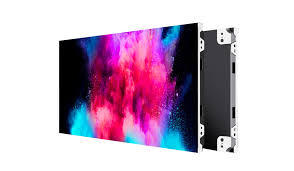
At its core, a TFT LCD utilizes an active matrix of thin-film transistors to control individual pixels. The brightness of the display is primarily governed by the backlighting system and the effectiveness of light passage through the liquid crystal layer. Brightness is measured in nits (cd/m²), representing candela per square meter, a unit of luminance. Standard TFT LCDs typically offer brightness levels ranging from 200 to 700 nits, with outdoor or high-end professional panels achieving beyond 1,000 nits.
Higher brightness levels have tangible benefits: enhanced readability under direct sunlight, vivid color reproduction, wider viewing angles, and improved accessibility for users with visual impairments. Moreover, consistent brightness is crucial for applications such as outdoor digital signage, medical imaging, and aerospace displays, where clarity under varying ambient lighting is indispensable.
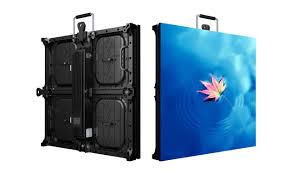
Key Factors Affecting TFT Brightness
1. Backlight Design and Light Source
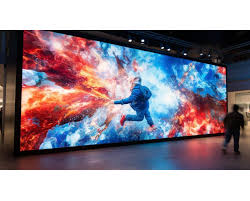
The transition from Cold Cathode Fluorescent Lamps (CCFL) to Light Emitting Diodes (LED) has revolutionized TFT brightness. LED backlights, particularly high-luminance types, offer superior efficiency, longer lifespan, and better color uniformity. Industry leaders implement edge-lit or direct-lit LED arrays using high-brightness LEDs with luminance values exceeding 150 lm/W to push overall display brightness.
Technical advancements include the use of Quantum Dot (QD) enhancement films, which increase luminous efficiency and color volume by converting light into narrow bandwidth colors, thus improving not only brightness but also color gamut (Referencing the Society for Information Display (SID) standards).
2. Optical Films and Polarizers
Optimizing light transmission through the LCD layers is critical. Modern TFT panels incorporate high-transmittance polarizers and brightness enhancement films (BEF), such as prismatic films that recycle light sideways and project it forward more effectively. Products from companies like 3M and Nitto Denko are industry-tested solutions that help achieve up to a 40% increase in perceived brightness without increasing backlight power consumption, an essential factor for reducing thermal load and energy consumption.
3. Liquid Crystal Material and Cell Gap Optimization
The liquid crystal mixture and its cell thickness (gap) impact optical response time and contrast ratio, which indirectly influences perceived brightness. Lower cell gaps reduce light scattering and absorption, allowing more backlight to penetrate. Advanced nematic liquid crystals with superior clarity and fast switching times ensure that pixels open fully when activated, maximizing light transmission.
4. Panel Driving Voltage and Tuning Algorithms
Innovative driving schemes, such as overdrive and dynamic voltage modulation, allow TFT pixels to alternate more efficiently between states, opening pixels wider and letting more light through without increasing the static power draw. These methods require precise timing controllers (TCON) and firmware optimized for brightness uniformity and flicker reduction.
Case Studies and Industry Benchmarks
- Apple iPhone Series: Apple’s Retina displays utilize advanced oxide TFTs and high-efficiency LED backlighting combined with multiple optical films, achieving peak brightness levels above 800 nits on iPhone 13 Pro devices, enabling clear visibility even on bright outdoor conditions.
- Outdoor LED-TFT Hybrid Displays: Companies like Sharp incorporate hybrid LED direct backlighting with TFT control for digital billboards, producing ultra-high brightness levels exceeding 1,500 nits, maintaining durability under harsh weather conditions.
- Medical Imaging Displays: EIZO's RadiForce series leverages precise TFT control with specialized diffusion films to deliver uniform brightness and contrast essential for diagnostic accuracy, with luminance uniformity exceeding 95% per DICOM Part 14 standards.
Challenges and Future Directions
While increasing brightness is desirable, it must be balanced against power consumption, thermal dissipation, and longevity. Higher luminance generates heat that can degrade TFT elements and polarizers if not properly managed. Therefore, thermal management strategies including heat sinks, thermally conductive adhesives, and active cooling systems are integral to maintaining panel reliability.
Looking forward, emerging technologies such as MicroLED backlighting, OLED/TFT hybrid structures, and AI-powered adaptive brightness algorithms promise to elevate TFT display performance to unprecedented levels. Researchers are focusing on materials with enhanced electro-optical properties and novel photonic structures to minimize energy loss and maximize luminous efficiency.
Conclusion
Enhancing TFT brightness is a multifaceted engineering challenge that requires concerted efforts in material science, electronic design, optical engineering, and thermal management. By leveraging LED backlight innovations, superior optical films, liquid crystal advancements, and intelligent driving circuits, manufacturers can produce TFT displays that not only “shine brighter” but also deliver optimized user experiences across diverse application domains. As the display industry continues to push the boundaries of visual performance, TFT technology stands ready to meet the demands of tomorrow’s vibrant and dynamic digital environments.
References:
- Society for Information Display (SID), “Display Measurements Standard,” 2023 Edition.
- EIZO Corporation, RadiForce Medical Displays Product Specification Sheets, 2024.
- 3M Optical Systems Division, Technical White Paper on Brightness Enhancement Films, 2022.
- Apple Technical Insights, “iPhone Display Technologies,” WWDC 2023 Presentation.
- Sharp Corporation, Outdoor Display Solutions Catalog, 2024.













