

Advancements and Best Practices in LED Display Manufacturing for High-Quality Screen Production
The LED display industry has experienced tremendous growth over the past decade, driven by technological innovation and expanding applications across advertising, entertainment, and professional visualization. As a professional LED display engineer with extensive experience in LED and LCD manufacturing, this article delves into the key advancements, technical parameters, and best practices that define high-quality LED screen production today. By integrating industry standards and case studies, we provide an authoritative overview tailored for engineers, manufacturers, and system integrators worldwide.
Fundamentals of LED Display Manufacturing
LED displays rely on light-emitting diodes arranged in a matrix to produce vibrant, dynamic images. The core components include the LED chips, driver ICs, power supply modules, and control systems. Pixel pitch, defined as the center-to-center distance between adjacent pixels (commonly ranging from 0.9 mm for fine-pitch indoor solutions to 10 mm for large outdoor displays), is a critical parameter influencing resolution and viewing distance.
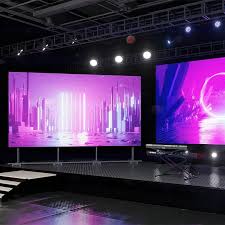
According to the International Electrotechnical Commission (IEC) standards, ensuring consistent color temperature (typically 6500K for standard white balance) and uniform brightness levels (e.g., 600-1500 nits for indoor and up to 5000+ nits for outdoor) is essential for visual quality and viewer comfort. Manufacturers must maintain tight binning processes to align LED wavelength and luminosity characteristics.
Design Considerations and Material Selection
Material quality plays a pivotal role in durability and performance. High-grade aluminum alloy chassis offer excellent heat dissipation and structural stability, reducing the risk of overheating, which can degrade LED lifespan. The use of high-transparent optical resin encapsulation enhances light output efficiency and protects diodes from moisture and UV exposure.
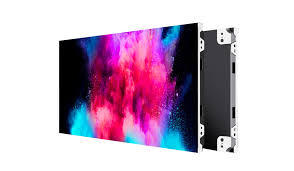
The adoption of surface-mounted device (SMD) technology, particularly SMD 1010 and 1212 packages for indoor panels, has become the industry norm for achieving excellent viewing angles (typically horizontal and vertical viewing angles ≥160°) and vibrant color rendering. Meanwhile, traditional DIP LEDs with robust encapsulation remain preferable for rugged outdoor installations due to their higher brightness tolerance.
Manufacturing Process Control and Quality Assurance
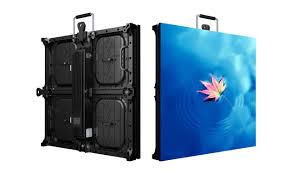
Advanced manufacturing lines incorporate automated pick-and-place machines, AI-driven optical inspection (AOI), and thermal aging tests to ensure product reliability. These processes verify component placement accuracy and detect defects such as dead pixels, color inconsistencies, or solder joint failures. Thermal cycling tests complying with JEDEC JESD22-A104 standards simulate real-world operating environments, confirming that LED modules maintain stable luminance and chromaticity over prolonged use.
In one notable industrial project involving a 500-square-meter outdoor display for a major sports stadium, a comprehensive quality control protocol was implemented, including multiple rounds of pre-shipment testing and calibration. This case study illustrated how stringent adherence to processes reduces warranty claims and improves long-term client satisfaction.
Integration of Control Systems and Software Optimization
Control systems for LED displays have evolved with embedded high-speed processors capable of supporting 16-bit grayscale levels and refresh rates exceeding 3840 Hz. These rates are critical to minimize flicker when filming displays with high-speed cameras, a common requirement for broadcast environments.
Modern software platforms enable remote monitoring of temperature, humidity, power consumption, and pixel status via IoT integration. Such real-time diagnostics complement modular design approaches, whereby individual LED modules can be replaced without disturbing the entire panel, significantly reducing maintenance downtime.
Energy Efficiency and Environmental Compliance
Energy consumption remains a central concern in LED display design. The implementation of power-saving algorithms such as dynamic brightness adjustment and local dimming optimizes energy use based on ambient light conditions. Moreover, adherence to RoHS (Restriction of Hazardous Substances) and WEEE (Waste Electrical and Electronic Equipment) directives ensures that production processes and materials comply with environmental regulations.
Recent innovations in phosphor-based LED technology have also improved luminous efficacy, with some LEDs achieving up to 200 lumens per watt, thereby enhancing brightness while reducing overall power draw.
Future Trends and Innovations
Looking ahead, microLED technology is poised to revolutionize LED displays by offering significantly higher pixel densities, enhanced color accuracy, and longer lifespan without the burn-in issues associated with OLEDs. The integration of AI for predictive maintenance and adaptive content delivery according to ambient conditions also represents a promising frontier.
The trend toward flexible, transparent, and curved LED panels expands application possibilities in architecture and wearable tech. Furthermore, the convergence of LED displays with augmented reality (AR) and virtual reality (VR) platforms is opening new avenues for immersive experiences.
Conclusion
Producing high-quality LED displays demands a multidisciplinary approach combining advanced materials, precise manufacturing processes, validated quality control, and smart system integration. Engineers and manufacturers must continuously adapt to evolving standards and emerging technologies to meet increasingly stringent performance and sustainability requirements.
By observing industry benchmarks—such as IEC 62368-1 for safety, Joint Electron Device Engineering Council (JEDEC) specifications for reliability, and international colorimetry standards (CIE 1931)—stakeholders ensure robust, efficient displays that satisfy diverse commercial and professional demands.
Those engaged in LED display manufacturing are encouraged to adopt a holistic perspective encompassing technical excellence, environmental responsibility, and innovative foresight to maintain competitive advantage and deliver superior visual solutions worldwide.













