

Advances and Best Practices in LED LCD Screen Manufacturing: A Comprehensive Industry Overview
The global LED LCD screen market has witnessed remarkable advances over recent years, driven by continuous innovations in display technology, manufacturing processes, and material science. As demand for higher resolution, better brightness, energy efficiency, and durability grows, manufacturers are compelled to integrate new engineering solutions and meet rigorous quality standards. This article offers an authoritative and detailed overview of LED LCD screen manufacturing, emphasizing technical parameters, industry standards, and practical insights for professionals engaged in this dynamic field.
Introduction
LED LCD screens combine the benefits of liquid crystal display (LCD) technology with light-emitting diode (LED) backlighting to deliver superior image quality, enhanced energy efficiency, and thinner panel designs. Unlike traditional cold cathode fluorescent lamp (CCFL) backlights, LEDs provide better luminance and color uniformity while reducing power consumption significantly. The manufacturing of these displays requires precision engineering, stringent quality control, and adherence to industry standards such as ISO 9241 for ergonomics and IEC 62368 for safety.
Core Components and Technical Parameters
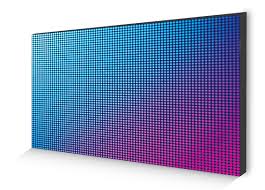
An LED LCD module primarily consists of several key components: the liquid crystal panel, LED backlight unit (BLU), driving electronics including the TCON (timing controller), and the display interface.
1. Liquid Crystal Panel: Utilizes twisted nematic (TN), in-plane switching (IPS), or vertical alignment (VA) technologies. IPS panels have the highest color accuracy and viewing angles, making them popular in high-end applications. Typical pixel density ranges from 100 to over 400 pixels per inch (PPI) for smartphones and monitors, with 4K and 8K resolutions becoming increasingly common in large-screen TVs.
2. LED Backlight: Consists of arrays of LEDs positioned either edge-lit or direct-lit. Edge-lit LEDs enable thinner screens, while direct-lit or full-array LED backlighting offers superior uniformity and contrast ratios. High dynamic contrast ratios (up to 1,000,000:1 with local dimming), brightness levels ranging from 250 to over 1,000 nits, and color gamut coverage (up to 100% sRGB or NTSC) are critical performance parameters.
3. Driving Electronics: The TCON board synchronizes the image data and the display refresh rate, typically 60Hz but now extending to 120Hz, 144Hz, and beyond for gaming monitors. Advanced timing controllers support 10-bit color depth and HDR (High Dynamic Range) formats such as HDR10 and Dolby Vision for improved color fidelity and luminance.
4. Display Interface: Common interfaces include HDMI 2.1, DisplayPort 1.4, and USB-C with DisplayPort Alt Mode. These interfaces support high bandwidth data transfer necessary for ultra-high-definition content at high refresh rates.
Manufacturing Processes and Quality Control
The fabrication of LED LCD screens undergoes a multi-step process involving:
- Substrate Preparation: Cleaning and conditioning glass substrates to minimize contamination and defects.
- Thin-Film Transistor (TFT) Deposition: Using photolithography in cleanroom environments, TFT arrays are patterned to create pixel control circuits on the panel backplane.
- Cell Assembly: Liquid crystal material is sandwiched between two substrates with alignment layers, polarizers, and color filters.
- Backlight Assembly: LED modules are integrated, ensuring uniform light diffusion via optical films such as light guide plates (LGP) and diffuser sheets.
- Module Testing: Inline inspection systems perform optical defect detection, luminance uniformity measurement, color calibration, and burn-in tests to ensure performance compliance.
- Packaging and Shipping: With rigorous anti-static and anti-reflective coatings to protect the screens during transit.
Statistical process control (SPC) techniques and Six Sigma methodologies help maintain yield rates above 90%, minimizing defective units. Industry-leading manufacturers also employ automated optical inspection (AOI) and real-time monitoring to address microscopic defects early.
Industry Standards and Certifications
LED LCD displays must comply with diverse regulatory requirements to ensure safety, environmental sustainability, and interoperability. Notable standards include:
- ISO 9241: Ergonomic requirements for visual display terminals covering aspects such as glare, flicker, and color rendering.
- IEC 62368: Specifies safety requirements for audio, video, and information technology equipment.
- RoHS Directive: Ensures the restriction of hazardous substances used in manufacturing.
- Energy Star Certification: Encourages energy efficiency in electronic display products.
Compliance with these ensures consumer safety, reduces environmental impact, and enhances product marketability globally.
Case Study: Advancements in Large-Format Displays
In recent years, manufacturers have focused on scaling LED LCD technology for ultra-large format commercial displays exceeding 100 inches. By adopting Mini-LED technology—employing thousands of miniature LEDs as backlight sources—these displays achieve high local dimming zones, resulting in enhanced contrast and HDR performance. According to a 2023 report by the Society for Information Display (SID), Mini-LED based LED LCD panels deliver over 1,500 nits peak brightness and contrast ratios exceeding 1,000,000:1, rivaling OLED performance while maintaining longer panel lifespans.
Conclusion
The evolution of LED LCD screen manufacturing continues to push boundaries in resolution, energy efficiency, and display quality. Mastery over complex fabrication processes, coupled with adherence to international standards and advanced quality control, is imperative for manufacturers to produce reliable and high-performance displays. By leveraging innovations like IPS panel technology, Mini-LED backlighting, and refined driving electronics, the industry can meet the escalating expectations of consumers and professional markets worldwide. Ongoing research and development efforts promise further improvements in durability, color fidelity, and power consumption, securing LED LCD’s pivotal role in the future of display technology.













