

Advancements and Best Practices in LED LCD Screen Manufacturing: Technical Insights and Industry Standards
The LED LCD display industry has seen remarkable evolution over the past decade, with continuous technological advancements enhancing screen performance, reliability, and application versatility. As an experienced LED display engineer, this article delves into the key innovations, manufacturing practices, and technical parameters vital to producing high-quality LED LCD screens for diverse international markets.
Understanding LED LCD Technology
LED LCD screens utilize Light Emitting Diodes (LEDs) to backlight Liquid Crystal Display (LCD) panels. Unlike traditional CCFL (Cold Cathode Fluorescent Lamp) backlighting, LEDs offer superior brightness, energy efficiency, lifespan, and color accuracy. The integration of LED backlighting in LCD displays is fundamental to meeting contemporary demands in televisions, digital signage, monitors, and specialized industrial solutions.
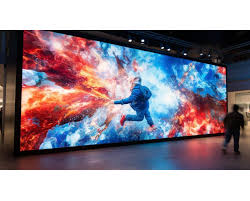
Critical Technical Parameters
1. Brightness and Contrast Ratio: Modern LED LCDs typically range from 300 to 1500 nits brightness, depending on application (e.g., professional displays require higher luminance). Contrast ratios have improved to over 3000:1 with local dimming techniques, enhancing image depth and clarity.
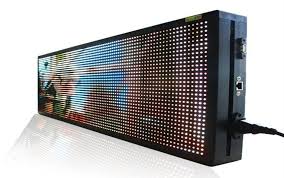
2. Color Gamut: Adherence to standards such as sRGB, Adobe RGB, or DCI-P3 ensures fidelity in color reproduction. High-end screens now achieve up to 99% DCI-P3 coverage which is crucial for broadcast and cinematic displays.
3. Response Time and Refresh Rate: Response times under 5 milliseconds mitigate motion blur, essential in gaming or video production applications. Refresh rates of up to 240Hz are now standard in gaming-grade monitors, reflecting the high-speed performance of LED LCD technology.
4. Viewing Angles: IPS (In-Plane Switching) technology is often employed to deliver wide viewing angles exceeding 178°, maintaining color accuracy and contrast uniformity off-axis.
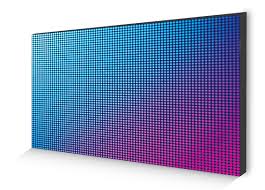
5. Power Consumption and Thermal Management: LED backlighting improves efficiency by 20-30% compared to CCFL. Effective thermal management systems, including heat sinks and ventilation design, are critical to maintaining longevity and performance stability.
Manufacturing Process Highlights
The production of LED LCD screens involves several precision steps to ensure quality and longevity:
- Panel Fabrication: The TFT (Thin Film Transistor) substrate fabrication requires cleanroom conditions with ISO Class 5 or better to prevent contamination, improving yield rates.
- LED Backlight Assembly: Selection of LED chips with tight binning tolerances ensures consistent color temperature (typically 6500K for neutral white) across the display. Uniform light guides and diffuser sheets are engineered to minimize hotspots and light leakage.
- Alignment and Bonding: Advanced robotic alignment systems place LCD glass, polarizers, and LED modules with micron-level accuracy, following IEC 62670-1 standards relating to display characterization.
- Quality Control and Testing: Each unit undergoes rigorous testing, including uniformity scans, pixel defect inspections (ISO 13406-2 standards), and burn-in tests at 60°C for at least 48 hours to ensure reliability.
Industry Standards and Compliance
Global adoption of standards such as IEC 62368 for product safety and RoHS directives for environmental compliance is mandatory. Moreover, adherence to calibration protocols like DisplayHDR by VESA guarantees the HDR performance credibility of LED LCD products.
Case Study: High-Brightness Outdoor LED LCD Signage
A large-scale project involved manufacturing LED LCD panels with peak brightness of 1500 nits and rugged IP65-rated enclosures for outdoor digital signage. Utilizing ALIS (Advanced Local Intelligent System) backlight control allowed dynamic dimming tailored to ambient light, reducing power consumption by 40%. Consistent color calibration across large video walls was achieved through factory-level spectral analysis, adhering to SMPTE RP 166-2016 guidelines.
Conclusion
LED LCD screen manufacturing is a complex discipline combining advanced materials science, precision engineering, and stringent quality control. Manufacturers who integrate cutting-edge LED technology, employ standardized production methods, and conform to international standards consistently deliver displays that meet the high demands of global customers. Future developments like Mini-LED and Micro-LED technologies promise to elevate LED LCD performance further, underscoring the importance of ongoing expertise and innovation in this field.













