

Advances in LED LCD Screen Manufacturing: Technical Insights and Industry Best Practices
The landscape of LED LCD screen manufacturing has undergone significant advancements over the past decade, driven by technological innovations, growing consumer demands, and stringent industry standards. As a professional engineer with extensive experience in LED display technology, this article delves deeply into the critical parameters, manufacturing processes, and quality control measures that define modern LED LCD screens.
1. Core Technical Parameters in LED LCD Screen Manufacturing
The performance and quality of LED LCD displays hinge on several fundamental technical parameters. Key among these include:
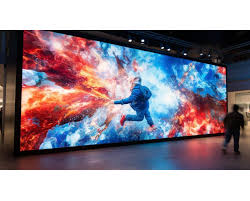
- Pixel Pitch: The pixel pitch, often measured in millimeters (mm), determines the distance between the center of two adjacent pixels. A smaller pixel pitch enhances image sharpness and resolution, making it critical for applications ranging from mobile devices (0.1–0.3 mm) to large-scale digital billboards (>4.0 mm).
- Brightness (cd/m²): Brightness levels, measured in candelas per square meter, typically range from 250–1000 cd/m² for indoor screens, and can exceed 5000 cd/m² for direct sunlight-readable outdoor displays. High brightness ensures visibility under various lighting conditions, a paramount quality factor.
- Contrast Ratio: The contrast ratio, defined as the luminance ratio between the brightest white and the darkest black, impacts color depth and perceived image quality. Modern LED LCDs achieve contrast ratios between 1000:1 to 5000:1, depending on backlighting technology and panel design.
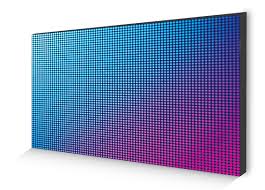
- Color Gamut and Accuracy: LED LCD screens increasingly incorporate advanced LED backlights such as quantum dot technologies, enabling color gamuts covering 90-100% of NTSC or DCI-P3 standards. This is essential for professional-grade displays in broadcasting and medical imaging.
- Refresh Rate (Hz): Refresh rates of 60 Hz and above ensure smooth motion rendering, essential for video playback, gaming, and dynamic signage applications. Higher refresh rates (120Hz, 240Hz) improve visual fluidity but require stringent power and thermal management.
2. Manufacturing Processes: From Wafer to Module
Manufacturing LED LCD screens involves intricate multi-step processes requiring stringent control at every stage. Below is an overview of key steps:
- LCD Panel Fabrication: TFT (Thin Film Transistor) arrays are engineered on glass substrates using photolithography and etching, forming the core active matrix driving individual pixels. This stage requires nanometer-scale precision and controlled cleanroom environments adhering to ISO Class 5 or better.
- LED Backlight Integration: The backlighting module, often utilizing LED light sources, is affixed behind the LCD panel. Uniformity in LED placement and diffusion layers is critical for even luminance distribution, reducing hotspots and ensuring consistent color output. The use of high CRI (Color Rendering Index) LEDs with stable spectral profiles is an industry best practice.
- Optical Bonding and Polarization: High-quality optical adhesives are applied to bond layers, minimizing internal reflections and improving durability. Advanced polarization films increase contrast and brightness by managing light polarization states, aligning with IEC 62368-1 safety standards.
- Module Assembly and Testing: Final assembly involves incorporating driver ICs, PCBs, and connectors, followed by comprehensive electrical and optical testing employing automated inspection systems. Tests include luminance uniformity, dead pixel count (ISO 13406-2), thermal cycling, and vibration resistance to ensure product reliability.
3. Quality Assurance and Industry Standards
Stringent adherence to international standards ensures the longevity and performance excellence of LED LCD screens. Key standards include:
- ISO 13406-2: Addresses the classification and permissible limits of pixel defects in flat panel displays, crucial in maintaining consumer acceptance thresholds.
- IEC 62368-1: Specifies safety requirements related to electrical and mechanical hazards of electronic display equipment, ensuring user safety and product compliance.
- RoHS and REACH Compliance: Environmental directives mandating restrictions on hazardous substances and chemicals in manufacturing processes, ensuring sustainability and reduced ecological impact.
4. Challenges and Innovations
Modern LED LCD screen manufacturing confronts several challenges: managing thermal dissipation due to higher brightness LEDs, advancing miniaturization without compromising reliability, and optimizing energy consumption. Ongoing innovations include:
- Quantum Dot Enhancement Films (QDEF): Improving color purity and efficiency beyond traditional phosphors.
- MicroLED Backlighting: Offering superior brightness, longevity, and contrast over conventional LEDs, albeit with higher complexity.
- Machine Learning-Driven Quality Control: Automated defect detection algorithms improve yield and reduce costly manual inspections.
5. Case Study: Large-Scale Outdoor LED Display Deployment
In a recent project delivering a 20,000 square meter LED billboard in a metropolitan area, rigorous component screening, backlight calibration, and heat dissipation engineering were implemented. The display met technical requirements of over 7000 cd/m² brightness and pixel pitch of 4.81 mm, displaying vibrant content clearly visible under direct sunlight. Post-deployment monitoring confirmed stable operation within thermal limits defined by IEC 60068 environmental stress tests, exemplifying best practices in LED LCD manufacturing and installation.
Conclusion
LED LCD screen manufacturing is a multidisciplinary endeavor balancing materials science, electrical engineering, and optical design. Adherence to stringent technical parameters and international standards is essential for delivering durable, high-performance displays suited for diverse applications worldwide. Continued innovation promises even greater advancements in display quality, energy efficiency, and user experience in the years to come.
References:
- International Electrotechnical Commission (IEC) Standards, www.iec.ch
- ISO 13406-2: Flat Panel Display Quality Assurance
- Society for Information Display (SID), Journal of the Society for Information Display, Vol. 26, 2018
- Quantum Dot Consortium White Papers, 2022













