

Comprehensive Guide to LED LCD Screen Manufacturing: Technologies, Standards, and Industry Best Practices
LED LCD screen manufacturing represents a critical segment in the display technology industry, fueling advancements across consumer electronics, digital signage, automotive displays, and large-scale visualization systems. As a professional LED display engineer, this article provides an in-depth exploration of LED LCD screens, covering fundamental principles, modern manufacturing techniques, key technical parameters, industry standards, and practical case studies. This guide aims to empower engineers, manufacturers, and decision-makers with rigorous expertise aligned with the evolving demands of international markets.
The Core of LED LCD Technology
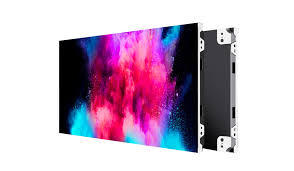
At the intersection of Light Emitting Diode (LED) and Liquid Crystal Display (LCD) technologies lies the LED LCD screen. These displays utilize an LCD panel as the pixel-modulating component combined with an LED backlight system for illumination. The synergy delivers high brightness, enhanced color accuracy, and improved energy efficiency compared to traditional cold cathode fluorescent lamp (CCFL) backlit LCDs.
LCD Panel and LED Backlighting
The LCD panel itself comprises a matrix of liquid crystal elements arranged between polarized glass substrates. When voltage is applied, the liquid crystals adjust their orientation, controlling light modulation at the pixel level. However, LCDs do not generate light intrinsically. This is where the LED backlight is essential.
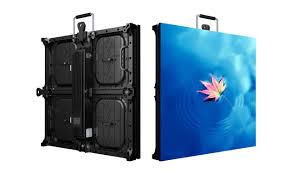
LED backlight configurations are mainly categorized into edge-lit and direct-lit (full-array) types:
1. Edge-Lit LED Backlighting: In this method, LEDs are positioned along the edges of the screen, and a light guide plate distributes illumination evenly across the panel. This approach favors slimmer profile designs and lower manufacturing costs but can sacrifice uniformity in brightness.
2. Direct-Lit (Full-Array) LED Backlighting: LEDs are distributed behind the entire LCD panel, enabling localized dimming zones and higher brightness uniformity. Full-array setups support advanced High Dynamic Range (HDR) implementations by allowing selective backlight dimming which improves contrast ratios significantly.
Technical Parameters That Define LED LCD Performance
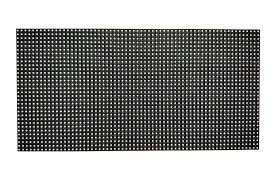
Several critical parameters establish the functional quality and applicability of LED LCD screens:
- Brightness (cd/m² or nits): Modern LED LCDs achieve brightness levels ranging from 300 nits in consumer-grade panels to over 1500 nits in professional-grade outdoor displays. Enhanced brightness enhances readability under high ambient lighting conditions.
- Contrast Ratio: The ratio between the luminance of the brightest white and the darkest black. Full-array LED backlights with local dimming can deliver contrast ratios exceeding 100,000:1, surpassing traditional CCFL-backlit LCDs.
- Color Gamut (NTSC, DCI-P3, AdobeRGB percentages): Industry-standard color spaces define the range of reproducible colors. Premium displays target wide color gamuts such as 100% sRGB, 90% DCI-P3 or higher for cinematic quality visuals.
- Refresh Rate and Response Time: Key in gaming and dynamic video applications, with typical response times around 5 ms for general displays and under 1 ms for specialized gaming screens.
- Viewing Angles: IPS (In-Plane Switching) LCD technology is often combined with LED backlighting to deliver wide viewing angles of up to 178 degrees horizontally and vertically, maintaining consistent color and brightness.
Manufacturing Processes and Quality Control
Producing LED LCD screens involves a combination of precise assembly, stringent testing, and cleanroom manufacturing environments. Key stages include:
- Glass Substrate Preparation: Cutting and cleaning of high-quality glass substrates that house the LCD matrix.
- Liquid Crystal Application: Applying the liquid crystal material uniformly within precise cell gaps (around 3 to 5 microns thick), critical for pixel response consistency.
- Backlight Assembly: Incorporation of LED arrays, diffusion films, prism sheets, and reflector layers to ensure uniform luminance and color temperature (usually 6500K for natural white).
- Driver Integration: Embedding Thin-Film Transistor (TFT) arrays and integrating control ICs that modulate pixel operation.
- Optical Bonding: Lamination of protective glass and touch sensors with the LCD panel to reduce light reflection and enhance durability.
Industry Standards and Certification
Compliance with international standards safeguards product safety, interoperability, and performance consistency. Some pivotal standards include:
- IEC 60825 and IEC 62471: Safety standards addressing photobiological risks related to LED light emissions.
- ISO 9241-307: Defining ergonomic requirements for electronic visual displays.
- Energy Star and EPEAT: Certifications reflecting energy efficiency and environmental impact.
- UL and CE Markings: Mandatory compliance for electronic product safety in various regions.
Case Study: Implementation of Full-Array Local Dimming in Large LED LCD Displays
A recent project involved the development of 65-inch LED LCD panels for outdoor digital signage, employing full-array local dimming with 96 dimming zones. This configuration achieved:
- Brightness levels up to 2000 nits, suitable for direct sunlight readability
- Contrast ratios exceeding 50,000:1 with superior black level control
- Energy consumption reduction by 25% compared to previous CCFL models
- Reliability in wide temperature ranges (-30°C to 60°C)
Manufacturer feedback confirmed substantial improvements in viewer engagement due to improved visual clarity, validating the approach outlined here.
Future Trends and Innovations
Continual innovation is reshaping the LED LCD landscape. Noteworthy trends include:
- Mini-LED and Micro-LED Backlighting: Significantly increased LED density allows for thousands of dimming zones and near OLED-level contrast performance.
- Quantum Dot Enhancement Layers (QDEL): To expand color gamut and luminous efficiency.
- Flexible and Transparent Displays: Integrating LEDs with LCDs for novel form factors in automotive and smart home applications.
- Artificial Intelligence-Driven Calibration: Automated fine-tuning of color accuracy and brightness uniformity to reduce production variability.
Conclusion
Understanding the complex interplay of LCD panel technology, LED backlight engineering, and manufacturing precision is vital for producing high-performance LED LCD screens. Adherence to technical parameters, industry standards, and continuous innovation ensures the delivery of visually striking, reliable, and energy-efficient displays suited to dynamic global markets.
By embracing best practices and leveraging emerging technologies, manufacturers and engineers can sustain competitive advantages while meeting diverse application requirements—from consumer electronics to demanding professional and outdoor environments.
References
1. Society for Information Display (SID) - Display Industry Technical Review
2. International Electrotechnical Commission (IEC) Standards
3. Energy Star Program Requirements for Displays
4. DisplayMate Technologies - Display Performance Benchmarks
5. Journal of the Society for Information Display, "Advances in Mini-LED Backlighting," 2023













