

Holographic LED Screen Technology: Revolutionizing Visual Display Solutions
Holographic LED screens represent a significant advancement in the realm of visual display technology, marrying the vibrant illumination of LED displays with the immersive depth perception of holography. This fusion offers a transformative visual experience that is reshaping advertising, entertainment, retail, and exhibition sectors worldwide.
At its core, a holographic LED screen utilizes LED light sources arranged meticulously with holographic projection techniques to create three-dimensional images visible without additional eyewear. Contrary to conventional flat LED panels, which emit light directly toward the viewer, holographic LED displays employ diffraction, interference, and light modulation principles to project images that appear to float within space, rendering an immersive and dynamic visualization.
From a technical standpoint, these displays typically integrate ultra-high-definition micro-LED arrays, which offer superior brightness levels often exceeding 1,000 nits, and can reach refresh rates above 120 Hz to ensure smooth motion portrayal critical for holographic effects. The pixel pitch of holographic LED modules is generally maintained within an ultra-fine range—less than 1 millimeter—to achieve precise image resolution and seamless depth rendering. This tight pixel pitch is essential to producing the intricate light field patterns that facilitate the holographic illusion.
The deployment of advanced optical waveguides and special projection films enhances the holographic display's depth and viewing angles. According to the International Commission on Illumination (CIE) standards, achieving a wide color gamut—often near or surpassing DCI-P3 standards—and high contrast ratios (typically greater than 5,000:1) is fundamental for realistic and vivid holographic imagery. Furthermore, these screens are engineered to operate reliably across a broad spectrum of ambient lighting conditions, sustaining visibility even under direct sunlight, making them suitable for both indoor and outdoor applications.
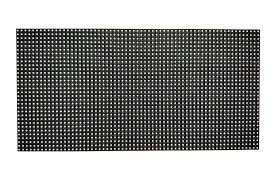
Real-world applications are rapidly expanding. Retail environments utilize holographic LED screens to create captivating product showcases that engage consumers through lifelike 3D visuals and interactive content. Museums and exhibition centers deploy them to illustrate complex scientific models or historical reconstructions in a compelling, educative manner. In entertainment, holographic LED stages enable performers to generate dynamic backgrounds or virtual characters that interact fluidly with live acts, enhancing audience immersion.
Manufacturers have also addressed challenges related to heat dissipation, viewing angle limitations, and scalability by integrating efficient thermal management systems and modular designs. The modular construction allows for flexible sizing—from small-scale signage to large-format video walls—while maintaining image integrity and holographic effect quality. Industry leaders adhere to standards such as UL 8750 for LED safety and IEC 62031 for LED module performance to ensure safe operation and longevity.
Investment in holographic LED technology is underpinned by its potential to increase engagement rates dramatically and provide competitive differentiation. The crispness, brightness, and depth perception achievable surpass traditional 2D LED panels and rear projection holographic displays. Furthermore, the viewing experience is comfortable and natural, diminishing visual fatigue often associated with stereoscopic 3D technologies.
In conclusion, holographic LED screens are not just a novel display innovation; they are a paradigm shift in how visual content is delivered and perceived. The combination of cutting-edge LED components, precise optical engineering, and adherence to stringent industry standards culminates in displays that are as practical as they are breathtaking. As research continues and component costs decrease, broader adoption across diverse industries is imminent, heralding a new era of interactive and immersive visual communication.













