

Advanced Insights into LED Display Manufacturing: Technology, Standards, and Best Practices
In the rapidly evolving field of display technology, LED (Light Emitting Diode) displays have established themselves as a superior choice for various applications, ranging from indoor advertising to control rooms and public information systems. Leveraging decades of engineering expertise and advancements in semiconductor technology, LED displays offer exceptional brightness, color accuracy, and longevity. This article provides an authoritative overview of LED display manufacturing, discussing the technical parameters, industry standards, and practical considerations essential for producing high-quality LED panels.
1. Technical Foundations of LED Displays
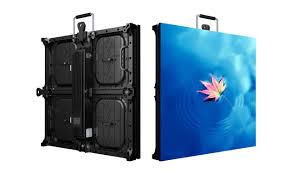
LED displays operate by illuminating arrays of tiny LEDs arranged in a matrix format. These LEDs can be monochrome or full-color (RGB) devices. The pitch, defined as the center-to-center distance between adjacent LEDs, is a critical parameter impacting image resolution and viewing distance. For example, an indoor LED display typically features a pixel pitch ranging from 1.2mm to 4mm, providing high-definition images with viewing distances as close as 1-2 meters.
The driving method for LED displays usually involves PWM (Pulse Width Modulation) for brightness control, combined with constant current sourcing to maintain color fidelity and longevity. Modern displays employ surface-mounted device (SMD) LEDs, integrating red, green, and blue diodes within a single package to achieve fine pixel resolution and wider viewing angles, often exceeding 140 degrees horizontally.
2. Industry Standards and Quality Controls
Manufacturers adhere to global standards such as IEC 62368 for electrical safety and IEC 60950 for environmental considerations. Moreover, performance metrics like brightness, contrast ratio, color gamut, uniformity, and refresh rate are tested according to standards set by organizations such as the International Electrotechnical Commission (IEC) and Society for Information Display (SID). For instance, the brightness of indoor LED displays usually ranges from 800 to 1500 nits, ensuring visibility under ambient light conditions without excessive power consumption.
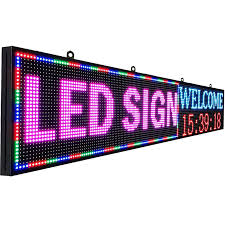
Ensuring uniformity across the LED panel is a vital quality control aspect. Techniques such as binning—sorting LEDs by luminance and chromaticity—help maintain color consistency. Automated optical inspection (AOI) systems are employed to detect dead pixels, brightness deviations, and defects during manufacturing.
3. Manufacturing Process and Material Considerations
The manufacturing process begins with substrate preparation, often aluminum or flexible PCB-based, due to thermal conductivity requirements. Thermal management is crucial; efficient heat dissipation extends LED lifespan and maintains stable chromaticity. Passive cooling via aluminum bases or active cooling with integrated fans is selected based on application and power density.
The assembly involves precise pick-and-place machines to mount SMD LEDs, followed by soldering using reflow ovens with temperature profiles tailored to the specific solder paste used. Subsequently, conformal coatings protect the LEDs from moisture and dust, especially vital for outdoor displays that must meet Ingress Protection (IP) ratings such as IP65 or higher.
4. Advanced Innovations: Mini-LED and Micro-LED Technologies
The industry is witnessing a transition towards mini-LED and micro-LED technologies, delivering finer pixel pitches below 1mm, which challenge traditional LCD panels with superior contrast, brightness, and energy efficiency. These innovations require ultra-precise manufacturing equipment and new testing methodologies for yield optimization.
5. Application Insights and Best Practices
Choosing the right LED display involves evaluating parameters such as pixel pitch, brightness, refresh rate (generally >1920Hz for flicker-free video), and power efficiency. For example, a control room screen requires high refresh rates and color accuracy to reduce operator fatigue, while an outdoor billboard prioritizes brightness and weatherproof performance.
Integration with control systems often uses DVI, HDMI, or specialized LED control cards supporting high bandwidth data transmission for real-time content display. Firmware updates and calibration software ensure long-term performance without the need for physical panel replacement.
Conclusion
As LED display technology matures, manufacturers are improving quality, energy efficiency, and reliability in compliance with international standards. Combining rigorous quality control with cutting-edge manufacturing techniques results in displays capable of meeting diverse market needs worldwide. Engineers and decision-makers must understand these comprehensive parameters and standards to select and implement LED solutions that are durable, performant, and cost-effective.
For those seeking further detailed insights, consulting sources such as the International Electrotechnical Commission (IEC), Society for Information Display (SID), and industry whitepapers from leading manufacturers (e.g., Samsung, LG Display) is highly recommended.













