

Advanced LED LCD Display Manufacturing: Technical Insights and Industry Standards
The LED LCD display industry has witnessed remarkable advancements over the past decade, driven by innovations in materials, manufacturing processes, and integration technologies. As a professional in LED display engineering, understanding these developments is critical to creating high-performance, reliable, and cost-effective LED LCD screens that meet the escalating demands of global markets.
At its core, an LED LCD display combines two pivotal technologies: Light Emitting Diodes (LEDs) as a backlight source and Liquid Crystal Display (LCD) panels for image modulation. This hybrid configuration leverages the vibrant, energy-efficient backlighting of LEDs and the established matrix pixel control of LCDs, offering superior brightness, contrast, and color accuracy compared to traditional CCFL-backlit LCDs.
Technical Parameters and Manufacturing Considerations
Typical specifications of state-of-the-art LED LCD screens include:
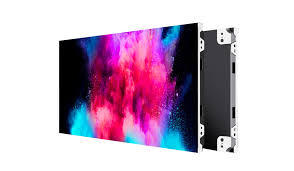
- Brightness: Ranges from 300 to over 1000 cd/m², enabling use in varied lighting environments, including direct sunlight for outdoor signage.
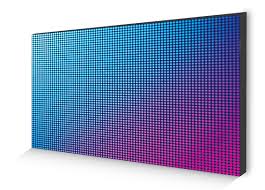
- Contrast Ratio: Typically above 3000:1, with local dimming technologies pushing the envelope towards 5000:1 and beyond.
- Color Gamut: Utilization of quantum dot enhancements or RGB LED arrays can achieve coverage exceeding 90% of the DCI-P3 color space, critical for broadcast and professional applications.
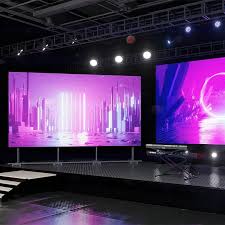
- Response Time: Normally between 1ms to 8ms, essential for gaming and video playback.
- Viewing Angle: IPS panels are preferred for their wide 178-degree viewing angles in both vertical and horizontal planes.
The manufacturing process must ensure precise placement of LEDs for uniform backlighting, rigorous quality control of LCD panels for pixel integrity, and robust assembly to avoid mechanical stresses that could degrade performance over time. Industry standards such as ISO 9241-307 for display quality and IEC 62368-1 for safety provide frameworks to guarantee durability and user safety.
Industry Insights and Case Studies
Leading manufacturers have adopted mini-LED and micro-LED backlighting to address traditional LED lamp limitations. Mini-LED technology enhances local dimming with thousands of tiny LEDs acting as discrete zones, vastly improving contrast without the exorbitant cost of full micro-LED displays. For instance, Samsung’s Neo QLED line integrates over 2000 mini-LEDs in a 65-inch panel, achieving stunning luminosity and deep blacks.
Moreover, the shift towards flexible and transparent LED LCD panels, spearheaded by companies like LG Display, expands applications into automotive heads-up displays (HUDs) and augmented reality (AR) devices, merging visibility with form factors previously unattainable.
Practical Considerations for International Deployment
Global deployment introduces challenges such as varying standards for electrical safety, differing ambient temperature ranges, and humidity exposure. IP ratings (Ingress Protection) of IP54 and above are mandatory for outdoor units, ensuring resistance against dust and moisture. Backlight dimming algorithms must account for local content standards, adapting frame rates and brightness to regional broadcasting requirements.
Energy efficiency remains a critical performance criterion, with Energy Star and EPEAT certifications guiding manufacturers toward sustainable designs. Advanced power management integrated circuits (PMICs) and OLED alternatives are being investigated for further efficiency gains.
Conclusion
The convergence of precise engineering, advanced materials, and adherence to rigorous international standards enables the production of LED LCD displays that are efficient, durable, and versatile. Continuous innovations, including quantum dot incorporation, local dimming enhancements, and flexible panel manufacturing, underpin the display industry’s dynamic growth.
For professionals in LED display engineering, maintaining awareness of technical parameters, evolving industry standards, and practical deployment considerations is vital to delivering displays that meet diverse market needs with high reliability and outstanding visual performance.
Authoritative references include the Society for Information Display (SID) technical publications, IEC and ISO standards documentation, and recent case studies published by leading manufacturers such as LG, Samsung, and TCL.













