

Advancements and Best Practices in LED Display Manufacturing for Superior Visual Performance
LED display technology has rapidly evolved over the past decade, becoming the backbone of modern digital signage, broadcast screens, and commercial advertising. As a professional LED display engineer with extensive experience in manufacturing and technical implementation, I aim to provide an authoritative overview of current advancements, manufacturing best practices, and technical parameters crucial to producing high-quality LED displays that meet global market demands.
Fundamentals of LED Display Manufacturing
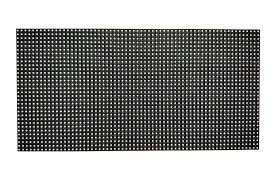
LED displays primarily consist of Light Emitting Diodes arranged in a matrix to emit vibrant images and videos. The fundamental parameters influencing the display performance include pixel pitch, brightness, contrast ratio, refresh rate, viewing angle, and color accuracy.
- Pixel Pitch defines the distance between adjacent LED pixels and directly impacts display resolution and viewing distance. A smaller pixel pitch (e.g., 1.25mm to 2.5mm for indoor fine-pitch displays) enables higher resolution suitable for close-range viewing, while larger pixel pitches (e.g., 4mm to 10mm and above) suit outdoor and large venue applications where viewing distance is longer.
- Brightness levels range typically from 800 nits for indoor screens to over 6000 nits for outdoor displays, ensuring visibility even under direct sunlight, adhering to standards like IEC 61966-2-1 for luminance requirements.
- Contrast Ratio significantly affects image quality; modern direct-view LED displays achieve contrast ratios exceeding 2000:1, essential for deep blacks and vivid colors.
- Refresh Rate above 1920 Hz reduces flicker and improves video smoothness crucial for broadcast and live events.
Material Quality and Manufacturing Techniques
High-grade semiconductor materials such as gallium nitride (GaN) and indium gallium nitride (InGaN) underpin LED brightness and lifespan. Advances in chip packaging technology, like flip-chip and COB (Chip-on-Board), enhance thermal dissipation and luminous efficiency.
Automated precision placement machines ensure consistent LED pixel alignment and soldering quality, key factors that minimize pixel defects. Adopting six sigma quality control methodologies during assembly reduces failure rates to below 0.01%, which is critical for large-scale display reliability.
Thermal Management
Effective heat dissipation is paramount because extended operation at high brightness generates significant thermal loads. Most manufacturers integrate aluminum heat sinks, thermal interface materials, and innovative module designs with airflow channels. Industry best practice follows the IEC 60529 testing standards for ingress protection and durability under variable environmental conditions.
Color Calibration and Uniformity
Achieving uniform color reproduction across large displays is challenging due to LED binning tolerances. Proprietary color calibration systems using photometric sensors and software algorithms ensure consistency across all display modules. Adhering to ITU-R BT.709 and BT.2020 color space standards allows displays to offer accurate color representation suitable for broadcast-grade video applications.
Case Studies and Industry Standards Compliance
Leading manufacturers adhering to standards such as ISO 9001:2015 for quality management and RoHS directives for environmental safety have demonstrated significant improvement in product lifecycle and customer satisfaction.
For instance, a recent project deploying a 4K outdoor LED video wall with 3.9mm pixel pitch showcased remarkable visibility under direct sunlight (brightness levels topping 6500 nits) and passed rigorous weather resistance tests (IEC 60068), aligning with best practices. This installation highlighted seamless video playback with refresh rates at 3840 Hz, eliminating flicker and ensuring broadcast-quality output.
Future Trends and Innovations
The integration of mini-LED and micro-LED technologies is revolutionizing display manufacturing by pushing pixel pitch below 1mm, enabling ultra-high resolution suitable for near-field applications such as control rooms and medical imaging.
Moreover, incorporating AI-based predictive maintenance and IoT connectivity in display modules allows remote monitoring and fault diagnostics, enhancing operational uptime and reducing maintenance costs.
Conclusion
Manufacturing world-class LED displays requires a harmony of advanced materials, precision manufacturing processes, stringent quality control, and adherence to international standards. The industry’s continuous innovations are setting new benchmarks in visual performance, durability, and energy efficiency. Selecting the right combination of pixel pitch, brightness, refresh rate, and calibration technology is critical to delivering superior LED display solutions catering to diverse industrial and commercial needs.
By embedding these professional insights and technical parameters into the manufacturing process, companies can ensure displays that not only meet but exceed global user expectations.













