

Advancements and Applications of Small Pixel Pitch LED Displays in Modern Visual Technology
In the rapidly evolving field of visual display technology, small pixel pitch LED displays have emerged as a cornerstone for delivering high-resolution, vibrant, and immersive visual experiences. Pixel pitch, defined as the distance between the centers of two adjacent pixels, significantly influences image clarity and resolution. Small pixel pitch LED displays—typically featuring pixel pitches below 2.5mm—offer unparalleled image sharpness, making them ideal for close viewing distances and applications demanding exceptional detail.
The technical evolution of small pixel pitch LEDs owes much to advancements in LED chip manufacturing, driving a reduction in pixel size without compromising brightness or color uniformity. Modern high-density LED displays integrate closely packed LEDs using surface mount technology (SMT) and fine-pitch SMD LEDs, enabling pixel pitches as minute as 0.9mm or less. This miniaturization facilitates resolutions comparable to high-end LCD and OLED panels but with the added benefits of LEDs—such as superior brightness, wider viewing angles, and longer lifespan.
Achieving and maintaining uniform brightness and color accuracy at small pixel pitches require rigorous calibration and sophisticated driving electronics. State-of-the-art LED display controllers employ advanced gamma correction algorithms and high refresh rates (typically over 3840 Hz) to eliminate flicker and ensure smooth video playback, even during slow-motion or fast-moving scenes. Furthermore, brightness levels can reach up to 1500 nits or more, which is essential for outdoor or high ambient light environments, ensuring visibility and vividness that surpass conventional display technologies.
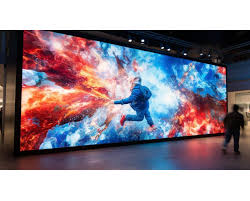
Applications of small pixel pitch LED displays are diverse and expanding. In corporate settings, these displays are replacing traditional LCD walls for control rooms, broadcast studios, and conference rooms by offering superior image quality at closer viewing distances. Retail environments leverage ultra-fine pitch LEDs for eye-catching product showcases and interactive digital signage that enhances customer engagement. Additionally, medical imaging, simulation, and research facilities benefit from the precise image reproduction capabilities, critical for diagnostic accuracy and detailed analysis.
An important consideration in the design and manufacture of small pixel pitch LED displays is thermal management. As pixel density increases, the heat generated per unit area rises, necessitating efficient heat dissipation strategies. Industry leaders incorporate aluminum substrates with high thermal conductivity and micro-channel heat sinks to maintain operational stability and prolong component longevity. Complying with international standards like IEC 62368 ensures product safety and reliability, further cementing trust in these advanced display systems.
Integration with content management systems and seamless connectivity options, including HDMI 2.1, DisplayPort, and high-speed data interfaces like SFP+ modules, empower users to deploy these displays in both fixed installations and temporary events. Furthermore, advancements in calibration tools enable real-time color tuning and uniformity adjustment, a critical feature given the sensitivity of small pixel pitch displays to manufacturing variances and environmental factors.
In summary, small pixel pitch LED displays represent a significant leap forward in digital imaging technology. They combine pixel density, color fidelity, brightness, and form factor to meet the increasing demands of diverse applications where detail and clarity are paramount. Industry experience shows that with proper design, calibration, and maintenance, these displays can deliver exceptional performance for years, proving their value as investments in cutting-edge visual communication.













