

Advancements and Technical Insights in LED Display Manufacturing for Optimal Performance
In the rapidly evolving landscape of display technologies, LED (Light Emitting Diode) displays have carved a significant niche due to their superior brightness, energy efficiency, and longevity. As a professional LED display engineer with extensive experience in LED and LCD manufacturing processes, this article aims to provide an authoritative and comprehensive overview of the technical parameters, manufacturing techniques, and industry best practices that govern the production of high-quality LED displays tailored for various international applications.
1. Understanding LED Display Fundamentals
At its core, an LED display comprises an array of tiny light-emitting diodes that serve as individual pixels to generate images. These displays can be broadly classified into Indoor and Outdoor categories, each designed around specific technical constraints such as pixel pitch, brightness, and color accuracy. For instance, in indoor environments, pixel pitch typically ranges from 0.9mm to 3mm to ensure high resolution and close viewing distances, whereas outdoor LED displays might have pixel pitches from 4mm to 20mm to support visibility from greater distances.
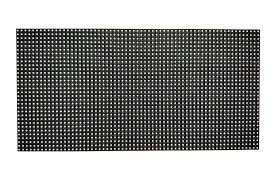
2. Critical Manufacturing Technologies
The production of LED displays involves several integral manufacturing stages that directly influence the product’s performance, durability, and reliability.
- PCB Design and Soldering: High precision Printed Circuit Boards (PCBs) form the backbone of LED modules. Employing rigid-flexible PCBs with controlled impedance optimizes signal transmission and thermal management. Next-generation soldering methods such as selective soldering and laser soldering minimize defects like cold solder joints, ensuring robust connectivity.
- LED Chip and Packaging Quality: The quality of the base LED chips and their packaging dictates light output and lifespan. Utilization of SMD (Surface Mounted Device) LEDs with stringent binning for brightness and color temperature uniformity is industry standard. High-precision die bonding techniques reduce chromatic aberration, enhancing visual consistency.
- Module and Cabinet Assembly: Modular design strategies enable ease of maintenance and scalability. Cabinets made of die-cast aluminum with robust heat dissipation fins aid in thermal management. Employing airtight and waterproof gaskets rated at IP65 or higher is crucial for outdoor installations to prevent moisture ingress.
3. Technical Parameters and Performance Benchmarks
Meeting international standards such as IEC 62471 for photobiological safety and UL 8750 for LED equipment safety ensures compliance with global market entry requirements.
- Brightness: Typically, indoor LED displays achieve brightness levels of 800-1500 nits, while outdoor displays range from 5000 to 10,000 nits or higher for sunlight readability.
- Color Calibration: Implementing 14-bit or higher color processing pipelines with 6500K white point calibration aligns with Rec. 709 and sRGB standards for color accuracy. Calibration systems often involve spectroradiometers and integrated software that allow factory and field calibration.
- Refresh Rates and Gray Scale: High refresh rates (≥3840Hz) minimize flicker, critical for video stream clarity and camera compatibility. Gray scales of 14 to 16 bits per channel ensure smooth gradient reproduction, preventing banding.
- Viewing Angle: Achieving wide horizontal and vertical viewing angles (≥160°) using finely tuned diffusion layers preserves uniform brightness and color from off-axis views, a necessity for public and advertising displays.
4. Industry Case Studies Reflecting Best Practices
- Case Study 1: Urban Digital Billboard Integration
A leading global outdoor advertising firm required a 20m x 10m LED billboard with 8mm pixel pitch for a major metropolitan location. The display had to sustain high ambient light levels (>7000 nits) while maintaining vivid color representation. By employing die-cast aluminum cabinets with advanced heat sinks, high-brightness SMD LEDs with proprietary binning, and multi-point calibration, the installation has operated continuously for over three years with minimal maintenance.
- Case Study 2: Large-Scale Indoor Event Screens
For a multi-venue sports event, seamless LED displays with 1.5mm pixel pitch and 3840Hz refresh rates were deployed, integrated with real-time color calibration systems. The modules included quick-release locks for rapid replacement during downtime. Post-event analysis showed exceptional image uniformity and zero flicker distortions during live broadcast.
5. Quality Assurance and Emerging Trends
Incorporating automated optical inspection (AOI) systems, machine vision-based defect detection, and mega-lumen efficiency testing during production has elevated quality standards. Furthermore, advancing to AI-driven predictive maintenance algorithms enables remote diagnostics through embedded IoT sensors, reducing operational costs and downtime.
Emerging trends include the development of micro-LED technology, which promises even greater pixel density and energy efficiency, and flexible LED displays leveraging bendable substrates. These innovations will further expand the applications of LED displays in automotive, wearable devices, and augmented reality arenas.
Conclusion
The manufacture of LED displays necessitates rigorous adherence to precision engineering, cutting-edge manufacturing processes, and robust quality management systems. By focusing on critical parameters such as pixel pitch, brightness, color calibration, and refresh rates, manufacturers can deliver products that meet the demanding needs of international markets. The integration of advanced materials, inspection technologies, and data-driven maintenance strategies drives the continual improvement in performance and longevity, securing the LED display's preeminence in the global display market.
Authoritative References:
- International Electrotechnical Commission (IEC) 62471:2006 - Photobiological safety of lamps and lamp systems
- Underwriters Laboratories (UL) Standard 8750: LED Equipment for Use in Lighting Products
- Society for Information Display (SID) Technical Digest
- DisplayMate Technologies – Display Calibration and Testing Methodologies
- Journal of Display Technology – Recent Advances in LED Packaging and Integration













