

Advanced LED Display Manufacturing: Technologies, Standards, and Industry Insights for Superior Visual Solutions
The LED display industry has witnessed remarkable evolution in recent years, driven by advancements in semiconductor technology, material science, and manufacturing processes. As a professional LED display engineer with extensive experience in both technical development and production optimization, this article provides a comprehensive and authoritative overview of LED display manufacturing. It integrates technical parameters, industry standards, practical insights, and case studies to offer readers a profound understanding of how high-quality LED displays are designed and fabricated to meet diverse application requirements worldwide.
1. Introduction to LED Display Technology
LED (Light Emitting Diode) displays are solid-state devices that use arrays of LEDs to present visual content ranging from simple text to high-definition video. Their advantages include high brightness, vibrant colors, wide viewing angles, low power consumption, and excellent durability compared to legacy display technologies like CRT and LCD. Modern LED displays are used in outdoor billboards, indoor signage, sports arenas, broadcast studios, and even fine pitch video walls for control rooms and large venues.
Core to their operation is the principle of electroluminescence: when electric current passes through the semiconductor diode, it emits photons. The color of light depends on the semiconductor materials used, commonly gallium arsenide (GaAs), gallium phosphide (GaP), or indium gallium nitride (InGaN). Combining red, green, and blue (RGB) LEDs enables full-color displays capable of rendering over 16 million colors through additive color mixing.
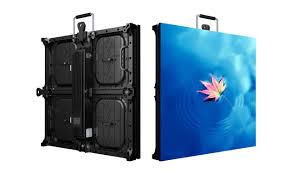
2. Key Manufacturing Processes in LED Displays
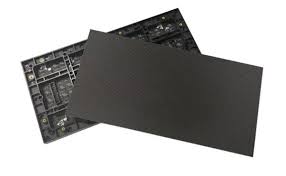
Manufacturing an LED display involves multiple interconnected processes requiring precision and strict quality control:
- LED Chip Fabrication: Utilizes epitaxial growth methods such as Metal-Organic Chemical Vapor Deposition (MOCVD) to deposit semiconductor layers on sapphire or silicon substrates. Parameters like wafer thickness, layer uniformity, and doping concentration are optimized for high quantum efficiency and long lifespan.
- LED Packaging: The bare LED chips are mounted on lead frames and encapsulated with phosphor coatings for wavelength conversion if necessary (e.g., blue LEDs coated with yellow phosphor to produce white light). Packages are designed to ensure thermal dissipation, mechanical protection, and consistent light output.
- Module Assembly: LED packages are arranged in specific pixel configurations — common pitches range from 0.7 mm (fine pitch) to over 20 mm for large-scale outdoor displays. Rigorous attention is given to soldering quality, alignment accuracy, and optical calibration.
- Driver and Control Electronics: High-refresh-rate driver ICs manage PWM (Pulse Width Modulation) dimming and gray scale rendering, crucial for video fidelity. Control systems incorporate field-programmable gate arrays (FPGAs) or microcontrollers with image processing algorithms synchronized to input content.
- Quality Assurance: In-line testing monitors parameters such as luminance uniformity, chromaticity coordinates (CIE 1931 standards), contrast ratio, response time, and failure rate. Thermal cycling and humidity exposure tests ensure reliability under operating conditions.
3. Technical Parameters Critical for Performance and Quality
Understanding and optimizing the following parameters is essential in manufacturing LED displays that comply with stringent international standards and user expectations:
- Pixel Pitch: Defines the center-to-center distance between adjacent pixels and inversely relates to resolution. Fine-pitch displays (<2 mm) require higher density LED placement and advanced manufacturing techniques to minimize cross-talk and enhance sharpness.
- Brightness: Measured in nits (cd/m²), typical outdoor displays achieve 5,000–8,000 nits for visibility under direct sunlight, while indoor models usually require 500–1,000 nits.
- Color Gamut and Accuracy: Utilizing standards like Rec. 709 or DCI-P3, color calibration ensures high fidelity reproduction. Real-time calibration systems adjust colors to compensate for aging LEDs or ambient light pollution.
- Refresh Rate and Gray Scale: To avoid flicker and motion blur, refresh rates of at least 1,920 Hz are recommended, especially for camera shooting environments. Gray scales exceeding 16-bit enable smooth gradients without banding artifacts.
- Viewing Angle: LED modules are engineered to maintain color and brightness uniformity over wide angles (≥160° horizontal and vertical), crucial for audience immersion.
- Thermal Management: LED lifetime and performance are heavily dependent on thermal dissipation strategies. Aluminum PCBs, heat sinks, and airflow management prevent overheating, extending product life beyond 100,000 hours.
4. Industry Standards and Certifications
Adherence to international standards underpins the credibility and acceptability of LED displays globally. Key standards include:
- IEC 62471: Photobiological safety of lamps and LED luminaires.
- UL 8750: Safety standards for LED equipment.
- RoHS: Restriction of hazardous substances compliance ensures environmental friendliness.
- IP Rating (Ingress Protection): Defines resistance to dust and water, with IP65 or higher required for outdoor applications.
- EMC (Electromagnetic Compatibility): Ensures devices do not emit or succumb to interference.
Manufacturers must also incorporate best practices from the Display Industry Standards Association (DISA) and consult specifications like UHD Alliance’s Ultra HD Premium for high-resolution LED video walls.
5. Case Studies in LED Display Manufacturing
- Case Study 1: Fine Pitch Indoor LED Video Walls for Broadcast Studios
A leading manufacturer collaborated with a global broadcasting company to deliver 0.9 mm pixel pitch LED walls. Challenges included precise LED binning, minimizing pixel failures, and integrating ultra-fast driver ICs to handle 3840 Hz refresh rates. Through implementation of automated optical inspection (AOI) systems and dynamic real-time calibration, the solution exceeded color fidelity and reliability expectations.
- Case Study 2: Large Outdoor LED Billboards with IP67 Protection
Designing a 20 mm pitch outdoor display that withstands tropical environmental conditions required careful selection of waterproof sealing materials and enhanced thermal management. Use of aluminum alloy frames combined with conformal coating of PCBs ensured resistance against moisture and corrosion, while modular design facilitated easy field maintenance.
6. Emerging Trends and Future Directions
Advances in mini-LED and micro-LED technologies promise higher contrast ratios, deeper blacks, and lower power consumption, potentially revolutionizing home and commercial display markets. Integration of AI-driven calibration and predictive maintenance is increasing display reliability and reducing operational costs.
Flexible and transparent LED displays are also transforming architectural and automotive design, enabling innovative forms of information presentation.
Conclusion
Manufacturing state-of-the-art LED displays demands a multifaceted approach encompassing semiconductor physics, materials engineering, precise assembly, and stringent quality control aligned with global standards. Industry professionals must continuously adopt new technologies and methodologies to maintain excellence and meet evolving market demands. By understanding technical parameters and adhering to best practices, manufacturers can produce visually stunning, durable, and efficient LED displays that drive superior user experiences worldwide.
Author’s Note: The insights shared in this article are derived from over a decade of hands-on experience, engagement with international standards bodies, and collaborations with leading LED display manufacturers globally.
References:
1. International Electrotechnical Commission (IEC) 62471: Photobiological safety standard.
2. Underwriters Laboratories (UL) Standard 8750 for LED equipment.
3. Display Industry Standards Association (DISA) Technical Guidelines.
4. "LED Displays: Fundamentals and Technical Principles," Journal of Display Technology, IEEE, 2022.
5. High Brightness LED Displays, Nichia Technical Papers, 2023.
6. UHD Alliance Ultra HD Premium Specifications, 2021.













