

Advanced Techniques and Industry Standards in LED LCD Screen Manufacturing
In the rapidly evolving display technology sector, LED LCD screen manufacturing stands as a critical field marrying innovation with precision engineering. As a seasoned LED display engineer with extensive hands-on experience, this article delves deep into the technical nuances, production parameters, and industry standards governing LED LCD screen fabrication.
Understanding LED LCD Technology
LED LCD (Light Emitting Diode Liquid Crystal Display) screens combine the strengths of traditional LCD panels with LED backlighting methods. Unlike conventional cold cathode fluorescent lamps (CCFL), LEDs provide brighter, more energy-efficient backlighting with enhanced color accuracy and contrast ratios.
Key technical specifications typically include:
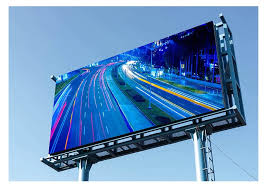
- Pixel Pitch: For high-resolution displays, pixel pitch ranges from 0.9mm (fine pitch) for indoor professional screens up to 10mm or larger for outdoor signage. The smaller the pixel pitch, the higher the display clarity.
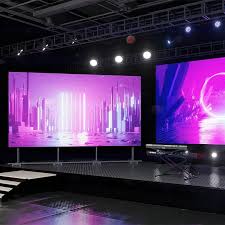
- Refresh Rate: Standard LED LCD panels support refresh rates of 60Hz to 240Hz, critical in minimizing motion blur, especially for video and gaming applications.
- Color Gamut and Depth: Compliant with industry color standards such as sRGB or DCI-P3, modern LED LCDs achieve a color depth of 10-bit or higher, enabling smooth gradients and true-to-life reproduction.
- Brightness and Contrast: Typical indoor panels range from 300 to 800 nits brightness, whereas direct view LED LCD variants can reach above 1000 nits. Contrast ratios often exceed 1000:1, supported by local dimming zones in brand-leading products.
Manufacturing Workflow and Quality Control
The production of LED LCD screens involves multiple highly controlled stages:
1. Substrate Preparation and Thin-Film Transistor (TFT) Fabrication: High precision photolithography creates the TFT arrays on glass substrates ensuring pixel responsiveness.
2. Liquid Crystal Injection and Alignment: The liquid crystal layer requires uniform thickness and precise molecular alignment (typically using polyimide coatings) to achieve the desired electro-optical properties.
3. Backlighting Module Assembly: Utilizing LED arrays or strips, manufacturers optimize thermal management via heat sinks and light-guide plates to ensure uniform illumination.
4. Panel Assembly and Driver Integration: Application-Specific Integrated Circuit (ASIC) drivers control pixel switching with millisecond response times, critical in preventing ghosting and latency in displays.
5. Environmental and Durability Testing: According to IEC 60068 and MIL-STD-810 standards, extensive testing for temperature, humidity, shock, and vibration assures product longevity and reliability.
Industry Trends and Challenges
The push towards ultra-high definition (UHD), HDR support, and flexible displays demands improvements in material science and manufacturing precision. Recent developments include:
- MicroLED Technology: A step beyond traditional LED backlighting, MicroLED offers pixel-level control leading to higher contrast and energy efficiency.
- Quantum Dot Enhancement: Integration of quantum dots in LED LCD manufacture boosts color performance while maintaining cost-effectiveness.
- Sustainability Focus: Manufacturers increasingly adopt lead-free soldering, low-voltage operation, and recyclable materials to meet global environmental regulations such as RoHS and WEEE directives.
Case Studies and Practical Insights
A prominent example is the collaboration between Samsung and AU Optronics producing high-end LED LCD panels with a 120Hz refresh rate and 1,200 nits peak brightness, catering to professional monitors and premium TVs. This partnership embraced advanced TFT designs and heat dissipation techniques, setting benchmarks in commercial display markets.
Moreover, application-specific demands, such as medical-grade displays, push the envelope on color accuracy and reliability, often requiring adherence to DICOM standards for grayscale rendering, further underscoring the complexity and specialization involved in LED LCD manufacturing.
Conclusion
The manufacture of LED LCD screens is a multifaceted engineering discipline requiring the integration of advanced materials science, circuit design, and rigorous quality control. Staying abreast of industry standards (IEC, MIL-STD), technological trends (MicroLED, quantum dots), and practical user requirements is essential for producing displays that meet the global demand for performance, efficiency, and sustainability.
As this sector continues to innovate, engineers and manufacturers must balance cost, durability, and visual excellence to deliver products capable of supporting a wide range of applications from consumer electronics to mission-critical industrial systems.













