

Comprehensive Guide to LED Display Manufacturing: Technical Insights and Industry Best Practices
LED display technology has revolutionized visual communication across diverse sectors including advertising, entertainment, transportation, and public information systems. As a professional LED display engineer with extensive experience in design, manufacturing, and deployment, I aim to provide a comprehensive analysis of LED display manufacturing processes, critical technical parameters, and industry benchmarks essential for producing high-quality and reliable LED screens.
Fundamental Components and Principles
At the heart of LED displays lie Light Emitting Diodes (LEDs) which are semiconductor devices that emit light when an electrical current passes through them. These diodes are arranged into pixels, grouped in modules, and combined to form large display panels. Modern displays employ either surface-mount device (SMD) or through-hole LED packages, with SMD technology dominating due to its superior visual uniformity and energy efficiency.
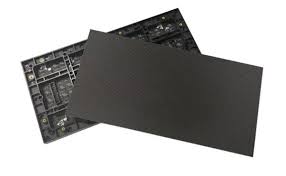
The fundamental technical parameters for LED displays include pixel pitch, brightness, refresh rate, contrast ratio, and color accuracy. Pixel pitch, measured in millimeters, represents the distance between adjacent pixel centers and directly affects the display resolution and viewing distance. Typical pixel pitches for indoor LED screens range from 0.9mm to 4mm, whereas outdoor screens feature larger pitches between 4mm and 20mm due to greater viewing distances.
Manufacturing Process and Quality Control
The manufacturing pipeline begins with sourcing high-quality LED chips meeting industry standards such as JEDEC reliability guidelines and RoHS compliance for environmental safety. The LED chips undergo rigorous binning based on luminance, color temperature, and forward voltage to ensure uniformity in the final display.
Next, the manufacturing process involves PCB (printed circuit board) assembly, where LEDs are precisely mounted according to layout designs. Automatic pick-and-place machines combined with reflow soldering guarantee accuracy and reliable electrical connections. The PCBs are then integrated into modules, which go through optical alignment and encapsulation to protect against environmental factors.
Display modules are assembled into cabinet frames constructed often from aluminum alloys for durability and heat dissipation. The final unit undergoes extensive testing procedures including:
- High Temperature and Humidity Testing: Ensures performance stability in varied climate conditions, typically maintaining functionality within -20°C to 50°C and humidity up to 95% non-condensing.
- Color Uniformity and Calibration: Advanced colorimeters and spectroradiometers assess chromaticity coordinates in accordance with CIE 1931 standards for precise color reproduction. Uniformity correction algorithms are applied to counterbalance LED bin disparities.
- Refresh Rate and Flicker Testing: Critical for applications like broadcasting, where flicker-free displays require refresh rates exceeding 1920Hz.
- Ingress Protection (IP) Rating Validation: Outdoor LED displays necessitate IP65 or higher to withstand dust and water exposure.
Industry Standards and Certifications
Industry credibility hinges on rigorous adherence to global standards. Key certifications include:
- UL (Underwriters Laboratories) Certification: Ensures electrical safety for components and final assemblies.
- CE Marking: Confirms conformity with European health, safety, and environmental protection standards.
- FCC (Federal Communications Commission) Certification: Ensures electromagnetic interference compliance in North America.
- Energy Star Compliance: Increasingly relevant given trends toward energy-efficient display solutions.
Emerging Trends and Technological Innovations
Recent advances have introduced micro-LED technology, promising higher brightness, deeper contrast ratios, and longer lifespan while significantly lowering power consumption compared to conventional SMD LEDs. Additionally, smart calibration systems incorporating AI are enabling real-time image optimization adapting to ambient light levels and content types.
Flexible and transparent LED displays, developed through flexible PCB substrates and transparent conductive materials, are opening new avenues in architectural integration and digital signage. These innovations require stringent manufacturing adjustments but represent the future frontier for LED display applications.
Practical Insights and Case Study
For instance, in a project deploying a 500m² indoor LED screen with a pixel pitch of 1.2mm, extensive emphasis was placed on color consistency and thermal management. Employing a multi-point calibration system combined with an active cooling mechanism ensured high-fidelity images and extended operational lifespan exceeding 100,000 hours under continuous use.
Conclusion
Producing high-quality LED displays demands a holistic approach incorporating component selection, precision manufacturing, adherence to industry standards, and rigorous testing. By staying abreast with advancements in LED technologies and regulatory requirements, manufacturers and engineers can create reliable, high-performance displays that meet the growing demands of global markets.













