

Advanced Manufacturing Techniques for High-Performance LED Display Screens
The LED display industry has witnessed rapid advancements due to the continuous evolution of manufacturing technologies. For professionals engaged in the production of LED LCD screens, understanding the technical parameters, industry standards, and innovative manufacturing processes is essential to ensure high performance, reliability, and competitive advantage.
Core Manufacturing Processes and Technical Parameters
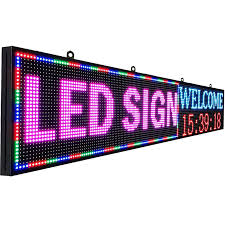
LED display screens are composed primarily of Light Emitting Diodes (LEDs), substrates, driver ICs, and control systems. Achieving superior display quality depends on key manufacturing parameters: pixel pitch, brightness, contrast ratio, refresh rate, and color accuracy. For instance, a pixel pitch below 1.5mm is standard for fine-pitch LED displays, enabling ultra-high resolution suitable for close-range viewing environments.
Brightness levels are generally standardized according to application; outdoor LED displays require luminance exceeding 5,000 nits for visibility under direct sunlight, while indoor units maintain between 800-1,200 nits to balance brightness and power consumption. Contrast ratios and refresh rates also influence clarity and motion rendering, with refresh rates exceeding 3,840 Hz becoming essential to avoid flicker and meet broadcast standards (Reference: IEC 62341-5-1 for display performance).
Material Selection and Substrate Technologies
The substrate material plays a vital role in thermal management and longevity. Printed Circuit Boards (PCBs) fabricated with high Thermal Conductivity (TC) substrates such as Aluminum based PCBs (thermal conductivity ~1.5-2.0 W/m·K) or Ceramic base substrates enhance heat dissipation, thus improving LED lifespan and color consistency by mitigating thermal degradation.
Quality Control and Testing Standards
Manufacturers adhere to stringent quality control protocols guided by international standards such as IEC 62471 – Photobiological Safety of Lamps and Lamp Systems, ensuring the displays do not pose eye safety hazards. Additionally, Lifetime and Reliability testing under accelerated aging conditions (e.g., 85°C at 85% relative humidity for 1,000 hours) evaluate device robustness, crucial for applications in harsh environmental conditions.
Innovations in Driver ICs and Control Systems
Recent industry trends highlight the adoption of intelligent driver ICs with integrated compensation for LED aging and temperature variation. Such integration supports uniform brightness and color calibration, facilitated by real-time feedback systems. For example, the use of Chip-on-Board (COB) technology, coupled with Field-Programmable Gate Arrays (FPGA) for control, has enhanced pixel density and reduced wiring complexity, as detailed in the SID Journal of Display Technology.
Sustainability and Energy Efficiency Considerations
Sustainable manufacturing practices have gained prominence, driving the development of energy-efficient LED modules. The adoption of low power driving schemes such as Dynamic Current Control and Pulse Width Modulation (PWM) dimming optimize energy usage without compromising visual performance. Incorporation of environmentally-friendly materials compliant with RoHS and REACH directives also reflects corporate social responsibility commitments.
Practical Implementation Case Study
A key implementation case involved a global signage provider upgrading to 0.9mm pixel pitch indoor LED screens using COB technology and aluminum substrates. This upgrade resulted in a 30% improvement in brightness uniformity and a 20% reduction in thermal-related failures over 2 years in high-traffic retail environments. Integration of intelligent driver ICs further enhanced color stability across temperature fluctuations, significantly improving customer satisfaction and lifetime value.
In summary, high-performance LED display manufacturing demands a confluence of precise material selection, adherence to rigorous standards, and the incorporation of cutting-edge driver and control technologies. Staying abreast of evolving industry best practices and leveraging innovations such as COB with integrated drivers are investment keys for manufacturers targeting both indoor and outdoor display markets.













