

Advancements and Best Practices in LED LCD Screen Manufacturing: Technical Insights and Industry Standards
The LED LCD screen industry has witnessed remarkable technological progress over the past decade, driven by higher consumer demand for vibrant displays, energy efficiency, and longer product lifecycles. As a professional LED display engineer with extensive experience, this article delves deeply into the key manufacturing techniques, technical parameters, and industry standards that underpin high-performance LED LCD screens. Understanding these facets is critical for manufacturers aiming to deliver reliable, cutting-edge displays that meet international quality benchmarks.
At its core, LED LCD technology combines liquid crystal display (LCD) panels with light-emitting diode (LED) backlighting. This integration offers improved brightness, contrast ratios, and color accuracy compared to traditional CCFL (Cold Cathode Fluorescent Lamp)-based LCDs. Modern LED backlights typically employ edge-lit or direct-lit configurations. Edge-lit designs use LEDs positioned along the panel edges with light guides to distribute illumination uniformly, contributing to thinner panel profiles. Direct-lit backlighting arranges LEDs behind the LCD panel, enabling local dimming zones that significantly enhance contrast ratios.
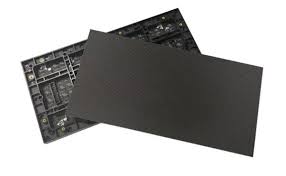
Key technical parameters influencing LED LCD quality include luminance, contrast ratio, color gamut, response time, and viewing angle:
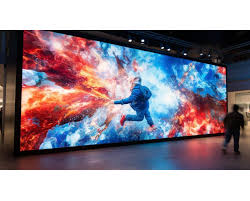
- Luminance: High-end screens feature brightness levels of 500 cd/m² or more, essential for clear visibility in various lighting conditions. Enhanced luminance aligns with international display standards such as ISO 9241-307, which relates to ergonomic requirements for visual displays.
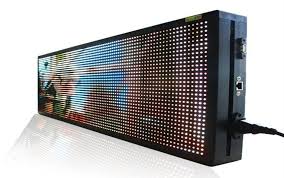
- Contrast Ratio: Leveraging LED local dimming boosts contrast ratios beyond 100,000:1, critical for deep blacks and improved image depth. Manufacturers often calibrate displays to approximate DICOM (Digital Imaging and Communications in Medicine) standards, especially for medical-grade monitors.
- Color Gamut and Accuracy: The use of quantum dot enhancements is popular for extending the display's color gamut beyond standard sRGB or Rec.709, approaching Adobe RGB or DCI-P3 standards. Factory calibration with spectroradiometers ensures ΔE color deviations remain below 2, maintaining precise color fidelity.
- Response Time: Modern displays achieve response times around 1-4 milliseconds (GtG - Gray to Gray), reducing motion blur for applications in gaming and professional video production.
- Viewing Angle: IPS (In-Plane Switching) panels remain preferred for maintaining color accuracy and luminance consistency at wide viewing angles exceeding 178°, as per VESA (Video Electronics Standards Association) guidelines.
Manufacturing high-quality LED LCD screens requires stringent process controls and material standards. Manufacturers must source LED chips with consistent binning to ensure uniform brightness and color temperature (commonly around 6500K for standard white light). Backlight modules need precision assembly to prevent hotspots and color shifts. The integration of advanced driver ICs (Integrated Circuits) facilitates dynamic backlight management, enhancing energy efficiency by up to 30% compared to fixed-intensity backlights.
Alongside hardware considerations, adherence to industry environmental and quality standards such as RoHS (Restriction of Hazardous Substances) and ISO 14001 ensures sustainable and compliant production. Quality control protocols employ automated optical inspection (AOI) systems and extensive reliability testing, including accelerated aging and thermal cycling, to guarantee product lifespan and performance consistency.
From a design perspective, innovations in bezel reduction and flexible circuit boards support ultra-thin form factors and curved display options. Emerging trends include mini-LED and micro-LED backlights, offering even finer local dimming control and superior brightness uniformity, setting the next frontier in LED LCD technology.
Real-world case studies underline these principles. For example, a leading manufacturer improved their 55-inch 4K professional display line by integrating quantum dot films and mini-LED backlights, resulting in a 20% increase in color gamut and over 10,000 local dimming zones. Rigorous factory calibration and ISO 9001-certified production contributed to a 99.9% batch consistency rate, reinforcing brand reputation and customer trust.
In conclusion, advancing LED LCD manufacturing involves a holistic approach encompassing cutting-edge material science, precise engineering, and adherence to rigorous quality standards. By optimizing technical parameters such as luminance, contrast, color accuracy, response time, and viewing angle, manufacturers can deliver products that excel across applications—from consumer electronics to medical imaging and professional cinematography. Staying abreast of emerging technologies like mini-LED and quantum dot enhancements, while maintaining compliance with global standards, is key to sustaining competitive advantage in this dynamic industry landscape.













