

Advancements and Best Practices in LED Display Manufacturing: A Comprehensive Guide for Industry Professionals
The LED display industry has seen remarkable advancements over the past decade, driven by technological innovation, consumer demand, and evolving application fields ranging from advertising and entertainment to transportation and control rooms. As an experienced LED display engineer with over 15 years in product design, manufacturing, and quality assurance, I aim to provide an in-depth analysis of modern LED display manufacturing processes, critical technical parameters, quality control standards, and practical insights to help manufacturers, integrators, and end-users make informed decisions.
Introduction to LED Display Technology
LED (Light Emitting Diode) displays consist of numerous pixels formed by discrete LEDs capable of emitting light of various colors. The primary distinctions in LED displays are based on pixel pitch, brightness, color calibration, and refresh rates. These factors determine the display’s resolution, visibility, and suitability for indoor or outdoor environments.
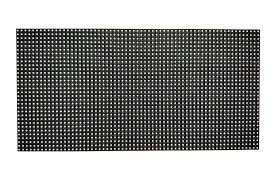
The manufacturing process spans from LED chip fabrication to structural assembly, calibration, and final installation. A typical LED display module includes the LED package, driver ICs, flexible printed circuit board (FPCB), and mechanical housing.
Key Technical Parameters and Their Influence
1. Pixel Pitch: Defined as the center-to-center distance between two adjacent pixels, pixel pitch directly affects both resolution and viewing distance. High-resolution displays use pitches as low as 0.7mm (for close-range indoor applications), while outdoor stadium screens might utilize pitches upwards of 10mm to balance visibility and cost.
2. Brightness: Measured in nits (cd/m²), brightness levels vary significantly. Indoor displays typically require 800-1200 nits, while outdoor displays often exceed 5000 nits to maintain visibility under direct sunlight. Advances in LED chip technology enable higher luminous efficacy, reducing power consumption and heat generation.
3. Refresh Rate: High refresh rates (≥1920 Hz) prevent flickering and support smooth video playback, critical for live broadcasting and dynamic content. LED driver ICs from market leaders such as Texas Instruments and Macroblock offer native high-frequency driving capabilities.
4. Color Calibration and Uniformity: Accurate color reproduction mandates meticulous calibration of red, green, and blue LEDs. Integrated sensor systems and software tools perform factory-level calibration for gamma correction and color temperature balance, ensuring uniformity over large installations.
5. Viewing Angle: A wide viewing angle (≥140° horizontal and vertical) ensures image integrity across audiences. The LED encapsulation and optics design, including diffusion lenses, play significant roles here.
Manufacturing Process Overview
Manufacturing LED displays involves multiple stages each requiring rigorous process controls:
- LED Chip Selection and Testing: High-quality LED chips are sourced from trusted manufacturers complying with JEDEC and IEC standards. Incoming chips undergo binning based on brightness, wavelength, and forward voltage.
- PCB Fabrication and Assembly: The FPCB or rigid PCBs must incorporate fine copper traces with impedance control to reduce signal distortion. Automated pick-and-place machines place LEDs and driver ICs with precision.
- Soldering and Inspection: Reflow soldering ensures solid electrical connections. Post-soldering inspection via automated optical inspection (AOI) systems catches defects such as solder bridges or misaligned components.
- Module Testing and Calibration: Modules pass through full functional tests including luminance uniformity, color accuracy, and electrical stress tests. Advanced calibration software performs pixel-level adjustments.
- Cabinet and Structural Assembly: Robust mechanical designs use aluminum or lightweight alloys for heat dissipation and structural integrity. Weatherproof sealing meets specific IP65 or higher ratings for outdoor units.
Quality Control and Industry Standards
Adhering to international standards such as ISO 9001 (Quality Management Systems), IEC 62368 (Safety), and RoHS (Restriction of Hazardous Substances) is fundamental. Additionally, certification from organizations like UL and TÜV helps assure compliance with electrical safety and electromagnetic compatibility (EMC) requirements.
Lifetime testing – including accelerated aging tests at elevated temperatures and humidity – verifies LED module durability, typically guaranteeing operation for over 100,000 hours at 50% brightness.
Case Studies and Applications
A prominent LED signage manufacturer recently deployed a 4K resolution indoor LED wall with 0.9mm pixel pitch in a globally recognized retail flagship store. The project utilized ultra-high refresh rate driver ICs and extensive factory calibration to ensure vibrant color output and flicker-free visuals, even under continuous operation.
On the outdoor front, large-scale LED billboards in urban centers must withstand wide temperature fluctuations and intense solar radiation. Material selection for protective coatings and heat dissipation mechanisms, including passive and active cooling, proved essential for operational stability.
Sustainability and Future Trends
Energy efficiency is an ongoing focus, with new LED epitaxial structures reducing power consumption by over 20% compared to previous generations. Innovations in mini-LED and micro-LED technologies promise higher pixel densities and improved brightness with even lower energy consumption.
The integration of IoT and AI facilitates real-time diagnostics and adaptive brightness control, extending product lifetime and reducing maintenance costs.
Conclusion
Manufacturing state-of-the-art LED displays requires a deep understanding of electronic components, material science, optical physics, and mechanical engineering. By implementing stringent quality controls, adhering to proven industry standards, and embracing continual innovation, manufacturers can produce displays that offer unmatched image quality, durability, and energy efficiency.
Industry professionals are encouraged to continuously monitor emerging technologies such as micro-LED integration, advanced driver ICs, and enhanced calibration techniques to remain competitive in this rapidly evolving market.
References
- International Electrotechnical Commission (IEC) Standards: IEC 62368-1
- Society for Information Display (SID): Display Industry Reports
- Texas Instruments: LED Driver IC Datasheets
- JEDEC Solid State Technology Association: LED Chip Binning Guidelines
- ISO 9001 Quality Management Systems Standards
- Recent publications in the Journal of the Society for Information Display (JSID)













