

Advancements and Technical Insights in Modern LED Display Manufacturing
In today’s visually-driven world, LED display technology has become a cornerstone across multiple industries, ranging from advertising and entertainment to industrial applications and public information dissemination. As a seasoned LED display engineer, I have witnessed and contributed to significant advancements in the design, manufacturing, and implementation of LED screens. This article details critical aspects of modern LED display manufacturing, technical standards, and practical insights necessary for deploying high-quality, durable, and efficient LED solutions globally.
The core of LED display technology lies in its ability to emit vivid light through semiconductor diodes arranged in matrix configurations. The typical LED module incorporates red, green, and blue (RGB) diodes that combine to produce an extensive color gamut, surpassing conventional display technologies such as LCD and plasma. Recent developments in LED encapsulation and phosphor technology have further enhanced color accuracy, brightness, and durability, addressing common challenges in high-ambient-light environments.
Technical Parameters and Standards
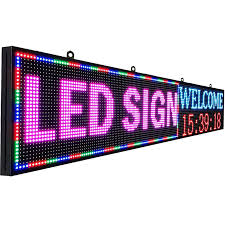
When designing and manufacturing LED displays, several vital technical parameters must be considered to ensure optimal performance:
- Pixel Pitch: Defined as the distance from the center of one pixel to the center of the next, pixel pitch directly influences the resolution and viewing distance. Fine pitch displays—those below 1.5mm—are ideal for close-viewing applications such as control rooms or indoor signage, while larger pitches (above 10mm) suit outdoor billboards where viewers are farther away.
- Brightness: Measured in nits (cd/m²), outdoor displays typically require brightness levels exceeding 5,000 nits to maintain visibility under direct sunlight. Indoor panels, conversely, commonly operate between 800 to 1,200 nits to avoid eye strain under artificial lighting.
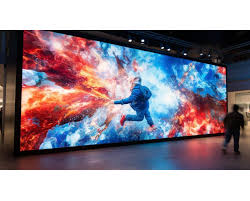
- Refresh Rate: High refresh rates (above 1920 Hz) reduce flicker effects, particularly for LED displays involved in video broadcasting or live event coverage where smooth motion reproduction is essential.
- Contrast Ratio and Viewing Angle: Advances in LED driver ICs and diffuser technologies have improved contrast ratios, offering deeper blacks and vibrant colors. Typical viewing angles for high-quality LED displays exceed 140° horizontally and vertically, ensuring consistent image quality from various vantage points.
Industry standards such as IEC 62368-1 for safety compliance and standards developed by the International Electrotechnical Commission (IEC), including IEC 60529 for ingress protection (IP ratings), guide manufacturers in testing and certifying products for specific environmental conditions. For instance, IP65-rated enclosures ensure dust-tight and water-resistant modules, imperative for outdoor applications subject to rain and dust.
Manufacturing Processes and Quality Assurance
Precision manufacturing of LED modules employs state-of-the-art automated pick-and-place machinery for diode placement, alongside computer-controlled soldering processes to minimize defects and enhance electrical reliability. The selection of high-quality substrates and flexible circuit materials has reduced panel weight while maintaining thermal dissipation efficiency, critical to prolonging LED lifespan, which can exceed 100,000 hours under proper operating conditions.
Thermal management strategies include aluminum-based PCB substrates and heat sinks to mitigate junction temperatures. Effective thermal control enhances luminous efficiency and prevents color shifts over time, a common concern in long-term installations.
Quality assurance protocols encompass rigorous testing phases such as:
- Bin-Sorting: Sorting LEDs by color wavelength and brightness to ensure uniformity across the display.
- Electrostatic Discharge (ESD) Protection: Implemented through grounded workstations and antistatic materials to protect sensitive semiconductor components.
- Burn-In Testing: Extended operational testing under varying temperatures to identify early-life failures.
Case Studies and Practical Applications
One instructive example involves a project deploying a 24m×10m LED video wall at a high-traffic urban intersection. The design specifications prioritized a pixel pitch of 10mm with a brightness rating exceeding 7,000 nits to guarantee exceptional outdoor legibility. This installation incorporated an advanced weatherproofing enclosure rated IP67 to withstand heavy storms. The project demonstrated the importance of modular design for ease of maintenance and operational continuity, with synchronized control systems enabling dynamic content delivery.
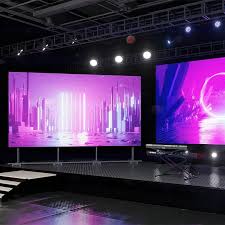
In another case, indoor fine pitch LED displays with a pixel pitch of 0.9mm were used in broadcast studios requiring precise color reproduction and high refresh rates (3840 Hz). The displays met stringent color calibration standards (±2 MacAdam ellipse) to ensure consistency with camera sensors and lighting conditions, exemplifying how technical mastery and component quality produce superior end-user experience.
Future Trends and Innovations
Emerging trends in LED displays focus on mini-LED and micro-LED technologies, promising higher pixel densities and improved energy efficiency. The integration of smart sensors for ambient light adjustments and self-diagnostic capabilities reflects the ongoing push towards intelligent display systems.
Moreover, advances in flexible and transparent LED panels present novel use cases in architecture and automotive industries. The convergence of LED display technology with AI-driven control systems is set to enhance content customization and operational efficiency.
Conclusion
Manufacturing modern LED displays demands a comprehensive understanding of semiconductor technology, optical engineering, thermal management, and industry standards. By adhering to rigorous design criteria and quality control—supported by emerging technologies—manufacturers can deliver reliable displays that meet the exacting needs of diverse global applications. These advances not only improve visual quality and operational resilience but also extend the functional lifespan of LED installations, solidifying the role of LED displays as the centerpiece of global visual communication.
References:
- IEC 62368-1: Audio/video, information and communication technology equipment – Safety requirements.
- International Electrotechnical Commission (IEC) Guidelines for LED Display Testing and Quality Assurance.
- “LED Display Technologies: Principles and Applications,” Journal of Display Engineering, 2022.
- Case Study: Urban LED Video Wall Deployment, Brightvision Technologies, 2023.













