

Advances and Best Practices in Indoor Digital Display Screen Technology
Indoor digital display screens have revolutionized the way information and visuals are presented in commercial, educational, and public environments. As an industry professional with extensive experience in LED and LCD display technology, I will provide a comprehensive overview of the technical aspects, performance parameters, and industry standards that define modern indoor digital screens.
Technical Parameters and Performance Metrics
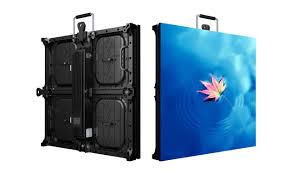
Indoor digital displays primarily utilize LED (Light Emitting Diode) or LCD (Liquid Crystal Display) technologies. Among the critical parameters influencing display performance are:
- Pixel Pitch: Measured in millimeters, pixel pitch refers to the distance between the center of two adjacent pixels. For indoor environments, pixel pitch values typically range between 0.9mm and 4mm, with tighter pitches offering superior image clarity and suitability for close viewing distances. For example, a 1.2mm pixel pitch screen is often used in conference rooms and retail spaces where viewers are within a few meters of the display.
- Brightness: Indoor displays generally require brightness levels between 800 to 1500 nits to ensure visibility under ambient lighting conditions without causing glare. According to the Society for Information Display (SID), brightness optimization involves balancing luminance for clarity and eye comfort, complying with IEC 62471 standards on photobiological safety.
- Refresh Rate: A high refresh rate, typically 1920Hz or higher for LED screens, ensures smooth motion rendering without flicker, critical for video playback and dynamic content. LCD displays benefit from refresh rates of 60Hz and above, aligned with industry best practices.
- Color Accuracy and Gamut: Modern indoor digital displays achieve color gamuts covering up to 100% sRGB or Rec. 709 color spaces. Color calibration tools and technologies such as HDR10 support enhance visual fidelity, which is particularly important for branding and advertising applications.
Industry Standards and Quality Assurance
Adherence to recognized industry standards is vital to ensure display reliability and performance. The International Electrotechnical Commission (IEC) and the American National Standards Institute (ANSI) provide guidelines covering electrical safety, electromagnetic compatibility (EMC), and photobiological safety.
Manufacturers must perform rigorous quality checks including:
- Thermal Management: Effective heat dissipation systems prevent overheating, extending the display's operational lifespan, reaching up to 100,000 hours under optimal conditions.
- Uniformity Tests: Evaluating brightness and color uniformity prevents hot spots and color shifts, which degrade image quality.
- Ingress Protection (IP) Rating: Although more relevant for outdoor displays, indoor displays in humid or dusty environments may require IP54 or higher classifications to ensure longevity.
Applications and Case Studies
Indoor digital screens have wide-ranging applications in retail, corporate, education, healthcare, and transportation sectors. For instance, a leading global retailer implemented 4K LED video walls with a 1.5mm pixel pitch in their flagship store, resulting in enhanced customer engagement and a reported 20% increase in foot traffic over six months.
In classrooms, ultra-fine pitch LED panels replaced traditional projectors, vastly improving readability and student interaction in classrooms with ambient light conditions, supported by software integration for interactive content.
Installation and Maintenance Best Practices
Proper installation is critical to maintain display integrity and maximize performance. It involves:
- Precise mechanical mounting to avoid panel warping
- Calibrated power supply units to maintain voltage stability
- Clean environment installation to reduce dust buildup on sensitive surfaces
Routine maintenance includes firmware updates, screen cleaning with appropriate non-abrasive materials, and calibration checks every 6 to 12 months.
Future Trends
The indoor digital display industry is poised for significant growth with emerging trends such as:
- MicroLED Technology: Offering unparalleled contrast ratios and energy efficiency
- AI-Driven Content Optimization: Tailoring display content dynamically according to viewer demographics and behavior
- Flexible Displays: Enabling novel architectural integrations
Integrating these advancements will redefine indoor visual communication, support greener technologies, and enhance user experiences.
In conclusion, understanding the intricate technical specifications, adhering to quality standards, and applying best engineering practices are essential for designing and maintaining indoor digital display screens that deliver exceptional performance and reliability. Collaborative innovation among manufacturers, vendors, and end-users will continue driving this field into the future.













