

Advanced Technologies and Quality Control in LED LCD Screen Manufacturing
The manufacturing of LED LCD screens involves a complex integration of cutting-edge technologies, precise engineering, and stringent quality control measures. As a professional LED display engineer with extensive experience in the industry, I have observed significant advancements that have revolutionized LED LCD screen production, offering improved durability, enhanced display quality, and greater energy efficiency. This article explores critical technical parameters, key manufacturing stages, and best practices employed in leading companies to ensure optimal product performance and reliability.
Raw Material Selection and Quality Assurance
The foundation of a high-quality LED LCD screen lies in the selection of raw materials. High-purity indium tin oxide (ITO) glass substrates, advanced liquid crystal compounds with superior electro-optic properties, and premium LED backlight components are essential. According to the International Electrotechnical Commission (IEC 62677-2:2017), materials should meet standardized criteria for thermal stability, electrical conductivity, and light transmission.
Manufacturers employ rigorous supplier qualification processes, including statistical sampling and destructive testing, to verify consistency. For example, Samsung Display’s quality protocol mandates that ITO substrates maintain ≥90% transmittance at 550 nm wavelength and surface roughness below 0.2 nm root mean square (RMS), both critical for ensuring crisp image quality without light loss.
Precision Manufacturing Processes
The LED LCD assembly process demands tight control over numerous steps to guarantee uniformity and performance. Photolithography, which patterns ITO electrodes, requires submicron accuracy. Automated robotic systems reduce human error and improve repeatability, achieving patterning precision within ±0.1 µm.
Liquid crystal alignment using rubbing techniques or photo-alignment technology is optimized to achieve uniform molecular orientation, which directly influences contrast ratio and viewing angles. According to Society for Information Display (SID) guidelines, alignment uniformity should not exceed ±2 degrees deviation over the panel surface.
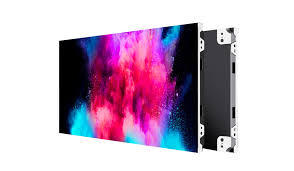
Backlight assembly is another critical stage. The LED module design must balance luminance, color gamut, and power consumption. State-of-the-art LED chips employed have luminous efficacy exceeding 180 lm/W and color rendering index (CRI) ≥90, promoting vibrant and natural images. LED placement and light guide plate (LGP) engineering minimize hot spots and ensure uniform brightness distribution, typically within ±5% variation across the display area.
Advanced Driver Electronics and Firmware
Modern LED LCD screens integrate sophisticated driver circuits based on thin-film transistors (TFT) technology, commonly employing amorphous silicon or low-temperature polysilicon for improved electron mobility. These drivers regulate pixel states with high precision, supporting refresh rates from 60 Hz up to 240 Hz for specialized applications such as gaming or broadcast displays.
Firmware development addresses power management and signal processing to optimize performance and lifespan. Techniques like dynamic voltage scaling and pulse-width modulation (PWM) dimming reduce power usage without degrading image stability. These strategies conform to standards such as the Video Electronics Standards Association (VESA) DisplayHDR certification, ensuring compliance with dynamic range and brightness benchmarks.
Testing and Quality Control Procedures
Reliable LED LCD screen production requires comprehensive testing throughout the manufacturing cycle. Inline electrical tests validate pixel response times (<8 ms typical), contrast ratios (>1000:1 for consumer panels), and leakage currents according to JEDEC standards.
Environmental stress tests simulate operating conditions, including thermal cycling from -20°C to 70°C and humidity exposure up to 90% RH over 1000 hours, assessing resistance to environmental degradation. Mechanical robustness tests involve vibration and shock, crucial for automotive and industrial applications.
Final optical performance assessments employ colorimeters and spectroradiometers to verify color accuracy (ΔE<2), brightness, and viewing angle consistency. These benchmarks are essential for sectors like medical imaging and aerospace, where precision display performance is non-negotiable.
Industry Case Studies and Trends
Leading manufacturers like LG Display and BOE Technology Group continuously invest in R&D to enhance LED LCD technologies. For instance, BOE’s development of quantum dot-enhanced backlights has expanded the color gamut beyond 90% Rec. 2020, delivering ultra-vivid visuals suitable for next-generation content.
The trend towards flexible and transparent LED LCD screens also presents new engineering challenges. Materials must accommodate bending stresses while maintaining electrical continuity and maintaining image uniformity. Research published by the IEEE Journal of Display Technology highlights innovations in polymer-based substrates achieving flexibility without performance loss.
Conclusion
The field of LED LCD screen manufacturing is marked by rapid technological advancements and meticulous quality control practices that ensure superior product performance. Achieving high-quality displays depends on rigorous raw material selection, precision manufacturing, sophisticated driver electronics, and comprehensive testing protocols aligned with international standards. Continued innovation and adherence to best practices will be critical as demand for advanced LED LCD screens grows globally across consumer electronics, industrial, healthcare, and automotive sectors.













